This content is for educational purposes only and is not financial or investment advice. Precious metals prices fluctuate; past performance does not guarantee future results. Consult a qualified professional before making investment decisions.
Tap the image to enlarge and zoom.Hover to magnify, or click to open full screen.
An IRA rollover to precious metals moves retirement money out of an existing 401(k), 403(b), 457(b), TSP, or IRA and into a self-directed IRA that can hold physical gold, silver, platinum, or palladium. The cash moves through a direct or trustee-to-trustee transfer in most cases, and the metals themselves end up sitting in an IRS-approved depository rather than in a home safe.
Interest in this kind of rollover tends to rise whenever inflation runs hot, the dollar weakens, or stock markets swing hard. This guide breaks down every rollover type, the metals that actually qualify, what the process costs, and the steps to get it right the first time.
What Is an IRA Rollover to Precious Metals?
An IRA rollover to precious metals is the process of moving eligible retirement funds into a self-directed IRA that is legally permitted to buy and hold IRS-approved bullion. A regular IRA at a brokerage cannot hold physical metal directly, so a specialized custodian is required to set up and administer the account.
Once the self-directed IRA is funded, the custodian coordinates the purchase of qualifying coins or bars and arranges for an approved depository to store them. You never take personal possession of the metal while it sits inside the IRA. For a broader walkthrough of how this fits into overall retirement planning, see this precious metals IRA rollover guide.
Direct Rollover, Trustee-to-Trustee Transfer, or Indirect Rollover: Which Is Safest?
A direct rollover or trustee-to-trustee transfer is the safest way to fund a precious metals IRA because the money moves institution to institution without passing through your hands. An indirect rollover, where the funds are paid to you first, carries much more risk of missed deadlines and tax complications.
Method
How the Funds Move
Relative Risk
Direct rollover
Old plan sends funds straight to the new IRA custodian
Low
Trustee-to-trustee transfer
One custodian sends assets straight to another IRA custodian
Low
Indirect rollover
Funds are paid to you, then you must redeposit them within the IRS deadline
Higher
With an indirect rollover, the clock starts the moment you receive the check. Miss the redeposit window and the amount can be treated as a taxable distribution, and possibly an early withdrawal penalty if you are under retirement age. Most educational resources, including our own IRA rollover precious metals guide, recommend sticking with a direct rollover or transfer whenever possible.
Rollover vs. Conversion: What Is the Difference?
A rollover moves pretax retirement money into another tax-advantaged account without triggering tax on the move itself. A conversion, by contrast, moves money into a Roth IRA and requires paying tax on the converted amount in the year of the conversion.
These terms get mixed up constantly, but they are not interchangeable. If your old plan issues paperwork like a 1099-R after the move, it helps to understand exactly what that form is reporting. Our breakdown of the 1099-R to IRA transition walks through how that reporting works in practice.
Choosing between a straight rollover and a Roth conversion depends on your current tax bracket, expected future tax bracket, and how much liquidity you have to cover the conversion tax bill. This is a decision worth discussing with a tax professional, since Accurate Precious Metals does not provide tax or financial advice.
Which Precious Metals Qualify for a Precious Metals IRA?
Only gold, silver, platinum, and palladium that meet specific IRS fineness standards qualify for a precious metals IRA. Fineness, not rarity or design, determines eligibility.
Metal
Minimum Purity Required
Gold
0.995 fine (99.5%)
Silver
0.999 fine (99.9%)
Platinum
0.9995 fine (99.95%)
Palladium
0.9995 fine (99.95%)
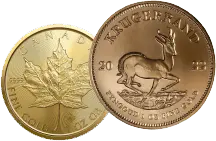
In practice, this means widely produced bullion coins and bars from recognized mints are usually the easiest fit. A [American Gold Eagle] or a [Canadian Silver Maple Leaf] are the kinds of products commonly discussed for IRA use, along with plain [1 oz gold bar] products from approved refiners. For the full eligibility rundown, check our knowledge base article on which metals qualify for a precious metals IRA.
Rare or numismatic coins, even ones containing gold or silver, generally do not qualify just because they contain precious metal. Eligibility comes down to purity and approved product form, not collector value.
How Does an IRA Rollover to Precious Metals Work, Step by Step?
An IRA rollover to precious metals follows the same basic sequence regardless of which old account you are moving from. Open the new account first, then move the money, then buy the metal.
How a Precious Metals IRA Rollover Works
1
Open a self-directed IRA Choose a custodian that specializes in precious metals IRAs and complete the account paperwork.
2
Request a direct rollover or transfer Have your old 401(k), 403(b), TSP, or IRA send funds straight to the new custodian.
3
Fund the account Confirm the funds have landed and cleared inside the new self-directed IRA.
4
Select IRS-approved metals Work with your dealer and custodian to choose coins or bars that meet fineness rules.
5
Ship to an approved depository The purchased metal is sent to a depository, not to your home address.
Each custodian has its own paperwork and timing, so expect the process to take anywhere from a few business days to a couple of weeks depending on how quickly your old plan releases funds. A more detailed walkthrough is available in our step-by-step precious metals IRA rollover tips.
What Does an IRA Rollover to Precious Metals Cost?
An IRA rollover to precious metals costs more than the metal's spot price alone. Expect a combination of dealer premium, one-time setup fees, and ongoing custodian and storage charges.
At the time of writing, spot prices are:
Gold (XAU): about $4,035 per ounce at the time of writing
Silver (XAG): about $58 per ounce at the time of writing
Platinum (XPT): about $1,599 per ounce at the time of writing
Palladium (XPD): about $1,268 per ounce at the time of writing
Melt value is only the starting point. A 1 oz gold coin with a melt value of roughly $4,035 at the time of writing will typically sell for more than that once fabrication and dealer margin are added. Silver bullion often carries a wider percentage premium than gold because minting and distribution costs make up a larger share of a lower-priced metal.
Beyond the purchase price, plan on these recurring cost buckets when budgeting for a precious metals IRA:
One-time account setup fee
Annual custodian administration fee
Depository storage fee
Insurance fee for the stored metal
Dealer spread or premium over spot on each purchase
Possible shipping or processing charges
None of these fees are unusual for a self-directed IRA holding physical assets, but they add up over time and should be compared across custodians before you commit. Our gold IRA rollover guide covers typical fee ranges in more depth.
Coins or Bars: What Belongs in a Precious Metals IRA?
Both bullion coins and bars can qualify for a precious metals IRA as long as they meet the required fineness and come from approved mints or refiners. The bigger distinction is between bullion and collectible or numismatic coins, not between coins and bars.
Bullion coins are priced primarily on metal content plus a modest premium, and they tend to be easy to value and resell. Collectible or rare coins carry additional value tied to grade, mintage, and condition, which is exactly what disqualifies most of them from IRA use. If you are curious about coin grading terms you might see while shopping, our explainer on what BU coin means is a useful reference.
Bars, particularly 1 oz, 10 oz, and kilo formats, often carry a lower premium over spot than coins of the same metal because they are simpler to produce. Coins, on the other hand, are often more recognizable and can be easier to sell in smaller increments later. Neither format is automatically the better IRA choice; it depends on your budget, storage costs, and resale plans.
What Are the Biggest Mistakes to Avoid?
The most common mistake with an IRA rollover to precious metals is assuming you can store the metal at home. IRS rules require the metal to sit in an approved depository, and taking personal possession can disqualify the IRA and trigger taxes and penalties.
Believing any gold or silver coin qualifies. Only products meeting the fineness rules above are eligible.
Treating a rollover and a Roth conversion as the same thing. One defers tax, the other triggers it now.
Choosing an indirect rollover for convenience. The redeposit deadline is unforgiving and easy to miss.
Assuming collectible coins add extra value inside an IRA. Collectibility does not improve IRA eligibility.
Picking the cheapest metal per ounce without considering storage volume, premiums, and volatility differences.
Reading the fine print on custodian and depository fees before you sign is one of the simplest ways to avoid an unpleasant surprise a year into the account. Our comprehensive precious metal IRA guide covers additional pitfalls worth checking before you commit funds.
Why Choose Accurate Precious Metals for Your IRA Rollover?
Accurate Precious Metals has helped retirement investors buy and sell physical bullion for more than 12 years, backed by over 1,000 five-star customer reviews. For anyone weighing an IRA rollover to precious metals, that track record matters, because the dealer you choose affects pricing, product selection, and how smoothly your metal gets from purchase to the depository.
We offer Gold and Silver IRA services alongside a full inventory of gold, silver, platinum, palladium, and even copper in coin, bar, and bullion form, plus diamonds and jewelry for collectors who want to diversify beyond metals alone. Our online pricing updates to reflect live spot prices, so you are never guessing at what a fair premium looks like. As an NGC Authorized dealer, we also offer grading services for collectors who want coins evaluated before adding them to a portfolio.
Unlike a pawn shop, we are a specialized precious metals dealer, and our team works with rollover customers every day to help identify IRS-eligible products and coordinate purchases with IRA custodians. Whether you are local to Salem, Oregon and want to visit our physical location in person, or you are anywhere else in the country and prefer nationwide insured shipping, we make the buying side of a rollover straightforward. For readers who also want to convert old jewelry, coins, or scrap into cash to help fund a new IRA, our mail-in service offers free insured shipping, a mail-in kit, and fast payment, or you can bring items into our Salem location directly.
It is the process of moving eligible retirement funds from a 401(k), 403(b), TSP, or IRA into a self-directed IRA that buys IRS-approved gold, silver, platinum, or palladium and stores it in an approved depository.
Can I roll my 401(k) into gold or silver?
Yes, in most cases eligible 401(k) funds can be rolled into a self-directed precious metals IRA, though this depends on your plan's specific rollover rules.
Can I store my IRA gold at home?
No, IRA-owned precious metals must be held in an IRS-approved depository, not in a personal safe or at home.
What is the safest way to do a gold IRA rollover?
A direct rollover or trustee-to-trustee transfer is generally safest because the funds move directly between institutions and never pass through your hands.
What purity does gold need for an IRA?
Gold must be at least 0.995 fine, silver at least 0.999 fine, and platinum and palladium at least 0.9995 fine to qualify for a precious metals IRA.
How much does a precious metals IRA cost?
Expect a one-time setup fee, an annual custodian fee, storage and insurance fees, and a dealer premium over spot on each metal purchase, with total costs varying by custodian and metal chosen.
Are gold bars or gold coins better for an IRA?
Both can qualify if they meet fineness requirements; bars often carry a lower premium over spot, while coins are typically easier to sell in smaller quantities later.
What happens if I take the rollover money myself?
In an indirect rollover, you must redeposit the full amount into the new IRA within the required IRS deadline, or the funds can become taxable and may trigger penalties.
Make the smart choice — invest with Accurate Precious Metals
Whether you are buying bullion for the first time or adding to a long-term position, our team offers expert guidance, transparent pricing, and a reliable buyback program.