

How to Sell Scrap Jewelry in Oregon City for the Best Price

Disclaimer
Accurate Precious Metals is not a financial advisor. We encourage everyone to consult a financial advisor or CPA. They can help determine the best investment strategies. Our mission is to provide educational content about precious metals. Accurate Precious Metals is committed to transparency and reliability. They offer top-tier precious metal products and information.
This information is subject to change due to market fluctuations, world events, and factors beyond our control. Additionally, the content may not fully reflect our company’s values, as personnel, staff, and authorship may change over time.
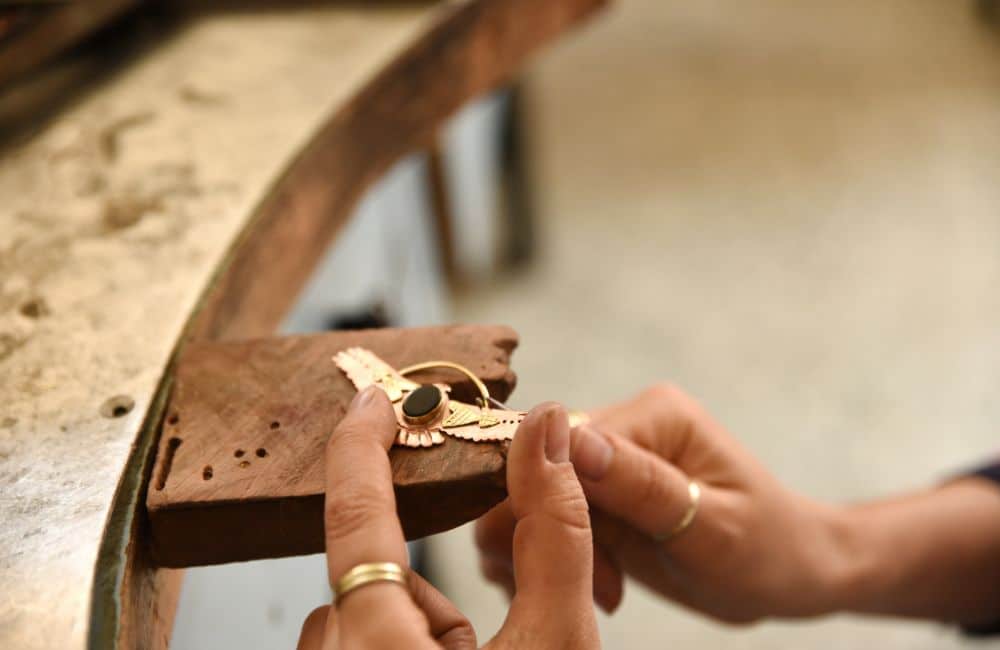
If you want to sell scrap jewelry Oregon City residents have options – but knowing how to prepare, what to expect, and where to go makes the difference between a fair payout and leaving money on the table. Whether you have a broken gold chain, a single earring, or a drawer full of old silver pieces, the metal inside still holds real value tied directly to today’s spot prices.
This guide walks through everything you need to know: how scrap jewelry is priced, which metals matter most, the top tips for maximizing your payout, and how to choose a buyer you can trust. Oregon City sellers can use these steps whether they plan to visit a local shop or send items through a mail-in service.
What Is Scrap Jewelry and Why Does It Still Have Value?
Scrap jewelry is any piece no longer valued for its design or craftsmanship – only for the metal it contains. That includes broken chains, bent rings, tangled bracelets, mismatched earrings, damaged silver flatware, and even old dental gold. The physical condition of the piece matters far less than what it’s made of.
Precious metals like gold, silver, platinum, and palladium don’t degrade. They can be melted down, refined, and reused in new products indefinitely. That recycling cycle is what gives scrap jewelry its floor value. A buyer doesn’t care if a ring is scratched or missing its stone – they care about the metal type, the purity, and the weight.
For sellers in the Oregon City area, this is good news. That tangled pile of old jewelry sitting in a box isn’t worthless. It’s raw material with a calculable market value.
How Scrap Jewelry Is Priced: The Basic Formula
Every scrap offer comes down to three variables: weight, purity, and the current spot price for that metal.
The rough calculation looks like this: multiply the item’s weight by its purity percentage, then multiply that by the spot price per troy ounce. The result is the metal’s melt value. Buyers then subtract their margin – covering testing, refining, shipping, and overhead – and offer you a percentage of that melt value.
Gold Scrap Value Calculator – Accurate Precious Metals Refineries
Right now, gold trades at about $4,582 per troy ounce, silver at around $79 per ounce, platinum near $1,976 per ounce, and palladium at roughly $1,424 per ounce. These are high-level market benchmarks. The actual payout on your piece depends on karat or fineness.
Here’s a practical example. A 14K gold ring is 58.3% pure gold. If that ring weighs 10 grams, it contains about 5.83 grams of pure gold. Convert that to troy ounces (divide by 31.1), multiply by the spot price, and you get a rough melt value. A reputable buyer will offer a fair percentage of that number. The original retail price of the ring is essentially irrelevant in a scrap transaction.


The Most Important Metals for Oregon City Scrap Sellers
Gold
Gold is the most common and valuable metal in scrap jewelry. The karat stamp tells you the purity:
- 24K – pure gold (99.9%)
- 18K – 75% gold
- 14K – 58.3% gold
- 10K – 41.7% gold
Most jewelry sold in the U.S. is 14K or 10K. Higher karat pieces are softer but more valuable per gram. Always separate your gold by karat before visiting a buyer – mixing them together can work against you.
Silver
Sterling silver jewelry is stamped 925, meaning 92.5% pure silver. Some older or European pieces carry an .800 stamp, indicating 80% silver. Silver-plated items have only a thin coating over base metal and are worth very little as scrap. Knowing the difference before you walk in protects you from accepting a lowball offer on genuine sterling.
Platinum and Palladium
Platinum appears in high-end rings and settings, usually stamped PT, Plat, or 950. It’s dense and valuable. Palladium is less common in jewelry but sometimes found in white gold alloys and some fine pieces. Both metals trade at significant prices, so don’t assume a white metal piece is just silver without checking the stamp.
Top Tips to Sell Scrap Jewelry Oregon City: Maximize Your Payout
Separate gold from silver from platinum. Within gold, group by karat if the stamps are readable. This prevents low-purity items from dragging down your offer on high-purity ones.
Look for karat marks (10K, 14K, 18K), silver marks (925, Sterling), and platinum marks (PT, Plat). No stamp doesn’t automatically mean fake – it means testing is needed.
A basic kitchen scale gives you a ballpark. Buyers use precise troy-weight scales, but having your own numbers lets you cross-check their measurements.
Spot prices shift daily. Knowing today’s gold and silver prices before you go gives you a reference point when evaluating any offer.
This single step does more for your payout than almost anything else. Different buyers carry different margins. A quick comparison can meaningfully improve what you walk away with.
A reputable buyer will test in front of you using acid testing or XRF analysis. If a shop won’t explain how they arrived at an offer, that’s a red flag.
Harsh cleaning can scratch items and may damage any residual collectible value. Dirty jewelry tests just as well as clean jewelry.
Scrap vs. Resale: Know Which Route Fits Your Piece
Not every old piece should be sold as scrap. Some jewelry is worth more intact than melted.
Selling scrap jewelry near you is the right move for broken chains, damaged settings, mismatched pieces, and anything with no realistic resale market. But vintage rings, designer pieces, branded jewelry, and antique items with desirable stones may command a premium above melt value from an estate buyer or specialty shop.
Before you commit to selling something as scrap, ask the buyer directly: “Is this worth more as jewelry?” A trustworthy dealer will tell you the truth. One that only quotes melt value on a piece with clear collectible appeal may not have your best interests in mind.
What to Look for in a Reputable Buyer
A good buyer does a few things consistently. They weigh your items on a calibrated scale in front of you. They explain their testing method – whether that’s acid testing, electronic testing, or XRF analysis. They separate precious metal from non-precious components like clasps or stones before calculating the offer. And they give you a clear number with no pressure to accept on the spot.
If a shop won’t walk you through the math, or if the offer comes with a hard sell to decide immediately, take your items and get a second opinion. Maximizing your gold jewelry payout starts with finding a buyer who operates transparently.
Watch for these warning signs:
- No explanation of how the offer was calculated
- Refusing to test in front of you
- Pressure to accept without time to compare
- No written offer or receipt
Common Misconceptions About Selling Scrap Jewelry
“Broken jewelry is worthless.” Wrong. A snapped gold chain still contains the same gold it always did. Melt value doesn’t care about wearability.
“Old jewelry is always scrap.” Not true. Vintage, antique, or designer pieces can be worth significantly more than their metal content. Age alone doesn’t determine which category a piece falls into – design, maker, and condition all matter.
“The price I paid at the store is what it’s worth.” Retail prices include design, labor, brand markup, and store overhead. Scrap value is based purely on metal content. The two numbers are rarely related.
“All gold is the same.” 10K and 18K gold are very different. An 18K piece has more than twice the gold content of a 10K piece at the same weight. Mixing them in a single pile without sorting costs you money.
“Silver-plated items are the same as sterling.” Sterling silver is 92.5% silver throughout. Plated items have a microscopic silver layer over base metal and are worth almost nothing as scrap. Testing or checking for a 925 stamp is essential.
“A stamp means it’s real.” Stamps can be wrong or applied to misleading alloys. Testing is still necessary even when a stamp is present.
Timing Your Sale: Does the Market Matter?
It does. Gold near $4,582 per ounce is historically high. Silver at around $79 per ounce is also elevated. Sellers who pay attention to spot price trends and sell during strong markets consistently get better results than those who sell impulsively.
That said, trying to time the exact peak is rarely practical. A more useful approach: check spot prices before you go, understand roughly what your metal is worth at current rates, and evaluate any offer as a percentage of that melt value. If a buyer is offering a reasonable percentage of today’s spot, that’s a fair deal regardless of where prices move next.
For larger collections or higher-value pieces, it’s worth monitoring prices over a few weeks before committing. For small quantities or broken items you’ve had sitting around for years, the convenience of selling now usually outweighs any potential gain from waiting.
Sell Scrap Jewelry Oregon City: Local and Mail-In Options
Oregon City sellers have access to several local gold and jewelry buyers in the Portland metro area, including options near Milwaukie and across the greater Portland region. Local shops let you get an in-person assessment and walk away with payment the same day. The BBB lists gold buyers operating near Oregon City, and a few established shops serve the area with varying specialties – some focused on estate jewelry, others on straight scrap buying.
For sellers who want to compare options beyond their immediate area – or who simply prefer not to drive – a mail-in service is a practical alternative. Accurate Precious Metals’ mail-in program lets you send jewelry from anywhere in the United States using a free insured shipping kit. Items are assessed by their team, you receive a clear offer, and payment is fast. There’s no obligation to accept.
Why Accurate Precious Metals Stands Out
Accurate Precious Metals has been buying and selling precious metals for over 12 years, and the company has built a reputation on straightforward, transparent transactions – reflected in more than 1,000 five-star customer reviews. They are not a pawn shop. They are a specialized precious metals dealer, which means their buying prices reflect the actual metal market rather than a generalist retailer’s margin.
They buy everything: scrap gold, scrap silver, platinum, palladium, broken jewelry in any condition, dental gold, silverware, diamonds, luxury watches, numismatic coins, and bullion. If it contains precious metal, they want to see it.
Oregon City sellers who can make the drive to Salem will find in-person service at their physical location, where items are assessed on-site. Call ahead at (503) 400-5608 to discuss your items before visiting. For everyone else – whether you’re in Oregon City, Portland, or anywhere else in the country – the mail-in jewelry service provides insured shipping, GIA-certified appraisals where applicable, and fast payment.
If you’re researching where to sell gold and silver in Oregon, Accurate Precious Metals is the clear standout for sellers who want competitive pricing, honest assessment, and a buying process they can actually understand.
Frequently Asked Questions
What types of scrap jewelry does Accurate Precious Metals buy?
They buy gold, silver, platinum, and palladium jewelry in any condition – broken chains, bent rings, single earrings, dental gold, damaged bracelets, and more. Condition matters far less than metal content.
How do I know if my jewelry is gold or gold-plated?
Look for a karat stamp (10K, 14K, 18K, 24K). If there’s no stamp, or if you see markings like “GF” (gold-filled) or “GP” (gold-plated), the piece likely contains minimal gold. A buyer can test it using acid testing or XRF analysis to confirm.
Will I get more money if I sell gold when prices are high?
Higher spot prices do translate to higher scrap payouts, since offers are calculated as a percentage of melt value. Selling when gold is near $4,582 per ounce yields more than selling when it was at $1,500, all else equal.
How does the mail-in jewelry service work?
Accurate Precious Metals sends you a free insured shipping kit. You pack your items, ship them securely, and their team evaluates the metal content. You receive an offer and can accept or decline. If you decline, your items are returned.
Should I clean my jewelry before selling it as scrap?
Light cleaning is fine, but avoid harsh chemicals or abrasive scrubbing. Dirty jewelry tests just as accurately as clean jewelry, and aggressive cleaning can damage any residual collectible value.
What if my piece has stones – does that affect the scrap value?
Stones are typically separated from the metal before weighing. Some stones may have independent resale value (diamonds, sapphires, rubies), so ask the buyer whether they evaluate stones separately before agreeing to a scrap offer.
How many offers should I get before selling?
At minimum, two or three. Different buyers operate at different margins, and comparing offers is one of the simplest ways to improve your payout without any extra preparation.
Is there a minimum amount required to use the mail-in service?
Contact Accurate Precious Metals directly at (503) 400-5608 or through AccuratePMR.com to ask about minimums and current program details.


