

How to Sell Diamonds Online: Maximize Value and Find Trusted Buyers

Disclaimer
Accurate Precious Metals is not a financial advisor. We encourage everyone to consult a financial advisor or CPA. They can help determine the best investment strategies. Our mission is to provide educational content about precious metals. Accurate Precious Metals is committed to transparency and reliability. They offer top-tier precious metal products and information.
This information is subject to change due to market fluctuations, world events, and factors beyond our control. Additionally, the content may not fully reflect our company’s values, as personnel, staff, and authorship may change over time.
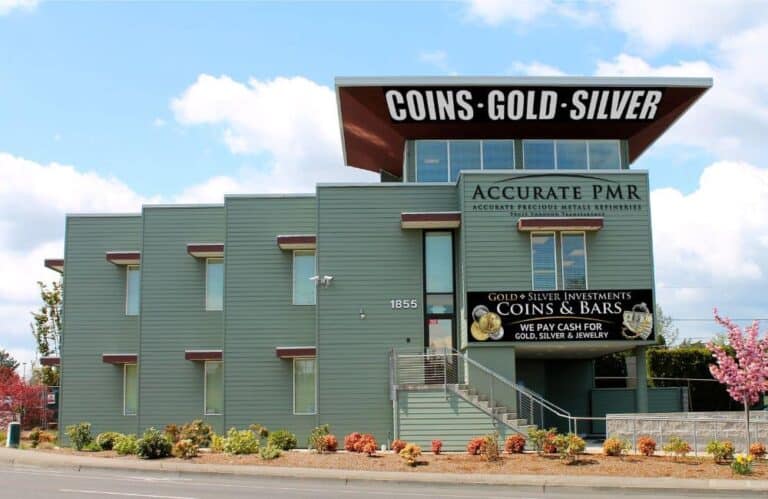
If you want to sell diamonds online, the process is more nuanced than most people expect. Diamond jewelry carries emotional weight, but when it comes time to liquidate a ring, pendant, or loose stone, emotion does not determine price – condition, certification, cut quality, and market demand do. This guide walks you through what actually drives diamond value, which selling channels exist, and how to choose the right buyer so you walk away with the most money possible.
Unlike selling gold or silver – where spot prices give you a clear baseline – diamond pricing is more subjective. There is no universal “spot price” for diamonds. That makes knowing your options, and choosing a trustworthy buyer, especially important.
What Makes a Diamond Valuable Before You Sell
Every diamond is evaluated against four core criteria, commonly called the Four Cs: cut, color, clarity, and carat weight. These factors interact to determine market value, and a weakness in one can significantly reduce what a buyer will offer.
Cut is arguably the most important. A well-cut diamond reflects light brilliantly. A poorly cut stone looks dull regardless of its other qualities. Cut grades range from Excellent to Poor, and buyers pay attention.
Color is graded on a D-to-Z scale. D is colorless – the most desirable and valuable. As you move toward Z, yellow or brown tints become visible. Most buyers prefer D through J for white diamonds.
Clarity measures internal inclusions and surface blemishes. Flawless stones are rare. Most diamonds on the market fall in the VS1 to SI2 range, which is acceptable to buyers. Anything below I2 may face resistance.
Carat weight affects price, but not linearly. A 2-carat diamond is worth significantly more than two 1-carat diamonds of equal quality because larger stones are rarer.
If your diamond came with a GIA or AGS grading report, keep it. A certified stone with documentation typically sells for more because buyers can verify exactly what they are purchasing. Undocumented diamonds require independent appraisal before most reputable buyers will make a firm offer.
Why Selling Diamonds Online Is Different from Selling Gold
When you sell gold or diamond jewelry, spot price gives you an anchor. Gold at roughly $4,776 per ounce tells both the seller and buyer what the raw metal is worth. Diamond pricing does not work that way.
Diamond resale markets are driven by demand from resellers, estate buyers, and jewelers who need specific stones for specific settings. A 1-carat round brilliant in excellent condition with a GIA report may sell well. An unusual fancy cut with no documentation may sit on the market for weeks.
This means the channel you choose to sell through matters enormously. The right platform or buyer can mean the difference between recovering 40% of retail value and recovering 70% or more.
XQC I Key insight: Retail markup on diamond jewelry is typically very high – sometimes 100% to 200% above wholesale. When you sell, you are entering the wholesale or resale market, not the retail market. Setting realistic expectations protects you from being surprised by offers.


The Main Channels to Sell Diamonds Online
Online Diamond Marketplaces and Auction Platforms
Platforms that specialize in diamond resale connect sellers directly with buyers – often jewelers, dealers, and consumers. These platforms typically require you to submit your diamond for evaluation, either through photos and documentation or by physically shipping the stone. Offers are made based on the evaluation, and you can accept or decline.
Some platforms use an auction model, where your stone is presented to multiple bidders over a set window. This can drive competitive pricing for high-quality stones but may not perform as well for lower-tier diamonds with limited documentation.
Fees vary. Some platforms charge a commission on the final sale price. Others build their margin into the offer itself. Always clarify the fee structure before committing.
Peer-to-Peer Selling
Selling directly to a consumer through platforms like eBay or Craigslist allows you to set your own price. The upside is no middleman. The downside is significant: you handle all shipping logistics, bear the risk of fraud, and must invest time in photography, listing, and negotiation. For high-value stones, the security risks alone make this a difficult path.
Local Jewelers and Estate Buyers
Local jewelers sometimes purchase estate diamonds, particularly if the stone fits their existing inventory needs. Offers from jewelers tend to be conservative – they need room to mark up for resale. Getting multiple quotes from local buyers before accepting any offer is a basic step that many sellers skip.
Specialized Precious Metals and Diamond Dealers
Dealers who handle both precious metals and diamonds – like Accurate Precious Metals – offer a distinct advantage. They evaluate diamonds alongside the metal content of the setting, giving you a single comprehensive offer rather than requiring you to sell the stone and the gold separately. This matters when you have a diamond ring where both the stone and the 14K or 18K gold setting carry real value.
Selling diamond jewelry through a specialized dealer also tends to be faster and more transparent than auction platforms, with fewer fees and no waiting period for bids to close.
Diamond Size Estimator – Accurate Precious Metals Refineries
How to Prepare Your Diamond Jewelry for Sale
Preparation directly affects the offer you receive. Buyers respond to documentation, condition, and presentation.
Gather any existing grading reports (GIA, AGS, EGL). If you do not have one, consider getting an independent appraisal from a certified gemologist before approaching buyers.
Clean the jewelry gently with a soft cloth. Do not use harsh chemicals. A clean stone photographs better and presents better in person.
Photograph the stone and setting in natural light from multiple angles. Include any hallmarks on the setting (e.g., 14K, 18K, 750, 925).
Research comparable stones on resale platforms to understand realistic price ranges before you receive offers.
Contact at least two or three buyers to compare offers. Never accept the first offer without a benchmark.
Understanding What Buyers Look For When You Sell Diamonds Online
Buyers making offers on diamonds are thinking about resale. They need to know the stone will move in their market. This drives what they prioritize:
- Documentation – A GIA report removes doubt. Buyers price undocumented stones more conservatively because they must account for uncertainty.
- Cut quality – Round brilliants are the most liquid diamond shape. Fancy cuts (oval, pear, marquise) have smaller buyer pools.
- Carat weight – Stones under 0.5 carats are harder to sell at meaningful prices. Stones above 1 carat in good quality attract more competitive offers.
- Setting metal – The gold, platinum, or silver setting has independent melt value. A buyer who handles precious metals can assess both simultaneously.
- Condition – Chips, heavy scratches, or damaged prongs reduce offers. Minor wear is expected and usually does not significantly affect price.
Red Flags to Watch for When Selling Diamonds Online
Not every buyer operates transparently. Knowing the warning signs protects you.
Instant online quotes without any evaluation should be treated skeptically. A legitimate buyer cannot accurately price a diamond without seeing documentation or the stone itself. Instant quotes are often lowball estimates designed to get you to ship.
No clear fee disclosure is a problem. If a platform or buyer is vague about commissions, handling fees, or return shipping costs, ask directly before sending anything.
Pressure to accept quickly is a classic tactic. Reputable buyers give you time to consider an offer. If someone insists you must decide within hours, that urgency is a negotiating tool, not a real constraint.
No physical return option matters. If a buyer cannot or will not return your stone if you decline their offer, do not send it.
XQC W Warning: Always use insured, tracked shipping when mailing diamonds or jewelry to any buyer. Replacement value coverage should match the estimated value of the piece, not just the shipping cost.
The Role of Metal Value When Selling Diamond Jewelry
Many sellers focus entirely on the diamond and overlook the metal. This is a mistake. A diamond ring set in 18K gold has two components of value: the stone and the metal.
Gold at approximately $4,776 per ounce means even modest amounts of gold in a setting carry real weight. A ring with 5 grams of 18K gold contains roughly 3.75 grams of pure gold – worth over $600 at current prices before any consideration of the diamond itself.
Platinum settings are worth even more per gram. Platinum currently trades around $2,055 per ounce. A heavy platinum solitaire setting can add hundreds of dollars to your total payout.
Selling to a buyer who handles both diamonds and precious metals – and who prices both components accurately – ensures you do not leave money on the table by treating the setting as scrap.
Why Accurate Precious Metals Stands Out for Diamond Sellers
Accurate Precious Metals has been operating for over 12 years and has earned more than 1,000 five-star reviews from customers across the country. That track record reflects consistency – not just in pricing, but in the way transactions are handled from first contact to final payment.
What sets Accurate Precious Metals apart from typical online platforms or local pawn shops is the combination of expertise and scope. The team evaluates diamonds alongside precious metal content, so sellers receive a single comprehensive offer that accounts for everything in the piece. There is no need to strip the stone from the setting and sell each part separately.
For sellers outside Salem, Oregon, the mail-in service makes the process straightforward. Accurate Precious Metals provides a free insured shipping kit, so your jewelry travels safely. Once received, the team thoroughly examines the piece – assessing the diamond’s characteristics and evaluating the metal content through trusted inspection methods. Offers are communicated clearly and payment is fast.
Local customers in the Salem area are welcome to bring pieces in person for an immediate evaluation. The physical location allows for face-to-face conversation, on-the-spot assessment, and same-day offers. Whether you are walking in with a single ring or a collection of estate jewelry, the process is the same: honest evaluation, transparent offer, no pressure.
Accurate Precious Metals is not a pawn shop. The distinction matters. Pawn shops make low offers because they need wide margins to cover risk and overhead. A specialized dealer with deep market knowledge and established buyer relationships can offer more because they know exactly what they have and where it goes next.
For sellers who also hold gold coins, silver bars, or other bullion alongside their diamond jewelry, Accurate Precious Metals handles it all. You can learn more about making the right decision when selling diamonds or explore the full range of what the team buys through the We Buy page.
Getting a Quote and Next Steps
Starting the process is simple. If you are local to Salem, Oregon, call (503) 400-5608 or stop by in person. If you are anywhere else in the United States, the mail-in service handles everything remotely – from the insured shipping kit to the offer and payment.
Before you reach out, gather whatever documentation you have: grading reports, original purchase receipts, appraisals, or photos. None of this is required, but it helps the evaluation move faster and gives the team more to work with when assessing your piece.
You are under no obligation to accept any offer. Accurate Precious Metals provides a clear, itemized assessment so you understand exactly what you are being paid for – the diamond, the metal, or both. If the offer does not work for you, your jewelry is returned.
Visit AccuratePMR.com to request a quote or learn more about the mail-in process. For anyone ready to sell diamonds online with a buyer they can trust, Accurate Precious Metals is the place to start.
Frequently Asked Questions
What is the best way to sell diamonds online?
The best approach is to work with a specialized buyer who evaluates both the diamond and the metal setting, provides a transparent offer, and uses insured shipping. Platforms that auction stones can work for high-quality certified diamonds, but specialized dealers like Accurate Precious Metals often provide faster, simpler transactions with no commission fees.
Do I need a GIA certificate to sell my diamond?
No, but having one helps. A GIA grading report removes uncertainty about the stone’s quality and typically results in stronger offers. Without documentation, buyers must assess the stone themselves and price conservatively to account for the unknown.
How much will I get when I sell a diamond?
Diamond resale typically returns 30% to 70% of the original retail price, depending on quality, documentation, and market demand. Round brilliant cuts in excellent condition with GIA reports tend to recover more. Fancy cuts or undocumented stones may recover less.
Can I sell just the diamond without the setting?
Yes. Loose diamonds can be sold separately. However, if your setting contains gold or platinum, selling the complete piece to a buyer who handles both often yields a better combined result than selling components separately.
Is it safe to mail my diamond jewelry?
Yes, when done correctly. Use a buyer who provides insured shipping with full replacement value coverage. Accurate Precious Metals provides a free insured shipping kit through its mail-in service, which protects your jewelry during transit.
How long does the process take?
With Accurate Precious Metals, the mail-in process typically moves quickly once the piece is received – evaluation and offer are communicated promptly. In-person transactions in Salem, Oregon can often be completed the same day.
Does Accurate Precious Metals buy diamond jewelry in any condition?
Yes. Broken prongs, missing stones, damaged settings – none of these disqualify a piece. The team evaluates what is present and makes an offer accordingly. Even partial or damaged jewelry has value in the right hands.

