

How to Find the Best Gold Buyers Near Me for Cash Offers

Disclaimer
Accurate Precious Metals is not a financial advisor. We encourage everyone to consult a financial advisor or CPA. They can help determine the best investment strategies. Our mission is to provide educational content about precious metals. Accurate Precious Metals is committed to transparency and reliability. They offer top-tier precious metal products and information.
This information is subject to change due to market fluctuations, world events, and factors beyond our control. Additionally, the content may not fully reflect our company’s values, as personnel, staff, and authorship may change over time.
Finding the best gold buyers near me for cash is easier when you know exactly what separates a fair offer from a lowball one. Whether you have a broken necklace, inherited coins, or a stack of old jewelry sitting in a drawer, the difference between a great payout and a disappointing one often comes down to which buyer you choose – and how prepared you are when you walk in.
Gold is sitting near $4,800 an ounce right now. That means even modest items carry real value. A single 14K ring weighing 5 grams holds roughly $450-$500 in pure gold content alone. Knowing how buyers calculate offers, what red flags to watch for, and where to find reputable local gold buyers near me puts you firmly in control of the transaction.
How Gold Buyers Calculate What They Pay You
Every offer starts with the same math: weight multiplied by purity multiplied by spot price, minus the buyer’s margin.
Gold spot is currently around $4,800 per troy ounce. One troy ounce equals 31.1 grams. So a 10-gram piece of 14K gold – which is 58.3% pure – contains about 0.19 troy ounces of actual gold. At spot, that’s roughly $910 in melt value. A reputable buyer typically offers somewhere in the range of 70-90% of melt, depending on their overhead and how quickly they need to move inventory.
Purity is assessed in karats for jewelry or fineness for bullion. Common jewelry karats are 10K (41.7% gold), 14K (58.3%), 18K (75%), and 24K (99.9%). Bullion coins and bars are usually .999 or .9999 fine. Buyers use acid testing or XRF analysis to verify metal content before making an offer – any shop that skips this step is one to avoid.
The takeaway: weigh your items at home before visiting. Divide grams by 31.1 to get troy ounces, then multiply by purity and current spot to estimate melt value. Walk in knowing your floor number.
Types of Local Gold Buyers Near Me and What They’re Best For
Not every buyer suits every seller. The type of item you’re selling should guide where you go first.
Pawn Shops
Pawn shops offer speed above everything else. They’re open most days, require no appointment, and hand you cash on the spot. The tradeoff is payout – most pawn shops offer 50-70% of melt value because they carry the risk of holding inventory. For scrap jewelry, dental gold, or broken chains, they’re convenient. For anything with collector value, they’re usually the wrong choice.
Coin and Bullion Dealers
Coin dealers are the best option for selling gold coins or bullion bars. They understand numismatic premiums and won’t treat a rare date coin the same as scrap. For standard bullion like American Gold Eagles or gold bars, a good dealer will pay close to spot – sometimes 95-98% for high-demand items. They also buy silver, platinum, and palladium using the same process.
Jewelry Buyers and Estate Buyers
Jewelers who specialize in estate buying are ideal for pieces with gemstones, designer hallmarks, or antique value. They can separate the gold value from the gem value and may offer consignment if an item is worth more intact than melted. The process takes longer, but the payout on quality pieces can be significantly higher.
Online Mail-In Programs
Mail-in gold buyers let you sell from anywhere in the country. You ship your items, they assess and make an offer, and you either accept payment or get your items returned. The key is using a program with insured shipping, transparent pricing, and a clear return policy. More on this option below.


What Makes a Gold Buyer “Reputable”
The phrase reputable gold buyers gets thrown around a lot. Here’s what it actually means in practice.
A trustworthy buyer explains their math. They show you the weight reading, tell you the purity result, and walk you through the calculation before making an offer. No pressure. No rushing. If a buyer quotes you a number without showing the work, that’s a problem.
Look for these concrete signals:
- Established physical location – not a hotel lobby or pop-up event
- Verifiable reviews on Google or the Better Business Bureau
- Free testing and appraisal with no obligation to sell
- Clear explanation of how they arrived at the offer
- Willingness to let you take the offer elsewhere before deciding
Avoid any buyer who won’t let you weigh your items independently, uses a digital scale you can’t see, or pressures you to decide on the spot. These are classic signs of a lowball operation.
Selling Gold for Cash: In-Person vs. Mail-In Programs
This is one of the most practical decisions a seller faces. Both options have real advantages depending on your situation.
For sellers who live in areas without strong local options, a well-run mail-in program often delivers better payouts than the nearest pawn shop. The key is choosing a buyer with a transparent process, insured return shipping, and a strong review history.
Best Practices Before You Sell
A little preparation consistently leads to better offers. These steps take maybe 30 minutes and can add hundreds of dollars to your payout.
Live Gold Spot Price – Accurate Precious Metals Refineries
Sort by type. Separate jewelry from coins and bullion. Keep different karats in separate bags – mixing them slows the assessment process.
Weigh everything at home. Use a postal or kitchen scale. Note the weight in grams for each group. This lets you verify the buyer’s scale reading.
Research current spot price. Gold is around $4,800 an ounce right now. Silver is near $81 an ounce. Check the day you plan to sell – prices shift daily.
Calculate a rough melt value. Multiply weight (in troy oz) by purity percentage by spot price. This is your baseline – you should receive at least 70% of this number from a reputable buyer.
Get at least two quotes. Never accept the first offer. Even one additional quote gives you use to negotiate or confirm the first offer was fair.
Bring valid ID. Most buyers are required by law to record seller information for transactions above certain thresholds. This is standard – not a red flag.
For a deeper look at best practices for selling gold jewelry, AccuratePMR’s blog covers the process in detail, including how to handle pieces with mixed metals or stones.
Common Myths About Selling Gold for Cash
A few misconceptions cost sellers money every year.
Myth: All buyers pay spot price. No buyer pays full spot. They need margin to cover testing, overhead, and refining costs. A fair offer is 70-90% of melt. Anything above 90% from a walk-in buyer should raise questions, not excitement.
Myth: Pawn shops always lowball. Some pawn shops are competitive, especially for scrap gold. The issue is consistency – a pawn shop’s offer depends heavily on the individual appraiser and how much gold they’ve already bought that week. Always verify with a second quote.
Myth: Higher karat always means a better payout per gram. Higher karat means more gold per gram, which means higher melt value per gram. But the total payout depends on total gold content, not karat alone. A heavy 10K bracelet can be worth more than a light 18K ring.
Myth: Online buyers are riskier than local ones. A mail-in program from an established dealer with insured shipping and thousands of verified reviews carries less risk than an unknown local pop-up buyer. The medium matters less than the reputation.
Myth: Now is always the right time to sell. Gold at $4,800 an ounce is historically high. But if you need the cash, sell. If you’re holding investment-grade bullion and don’t need liquidity, there’s no urgency. Neither a dealer nor this article is financial advice – the timing decision is yours.
Gold Buyers Near Me Reviews: What to Look For
Online reviews tell you more than star ratings. When reading reviews for local cash-for-gold buyers, pay attention to specifics.
Good signs in reviews: sellers mention the buyer explained the calculation, showed them the scale, gave them time to decide, and offered a fair percentage of spot. Negative patterns to watch for: multiple reviewers mention lowball offers with no explanation, pressure to sell immediately, or disputes about weight readings.
The BBB is useful for formal complaints, but Google reviews tend to be more current and detailed. Search the buyer’s name plus “reviews” and read the most recent 20 or so – not just the overall rating.
For top gold buyers nearby, AccuratePMR’s blog on local buyers in the Pacific Northwest covers what strong buyer reputations look like in practice.
Selling Coins and Bullion vs. Scrap Jewelry
The process differs meaningfully depending on what you’re selling.
Scrap jewelry – broken chains, mismatched earrings, old rings – is sold purely for melt value. The buyer melts it, recovers the gold, and sells it to a refiner. Purity testing matters most here. A buyer with an XRF scanner gives you a more precise reading than one relying on acid tests alone.
Bullion coins and bars – items like Gold Maple Leaf coins or standard gold bars – are a different category. These are already refined to .999 or .9999 fineness, so there’s no uncertainty about purity. A good dealer will pay very close to spot for these, sometimes 95-98%, because they can resell them directly without refining costs.
Numismatic coins – coins with collector value beyond their metal content – require a buyer who understands the numismatic market. A coin dealer or specialist will assess date, mint mark, and condition. Selling a rare coin to a scrap buyer is one of the most common and costly mistakes sellers make.
Why Accurate Precious Metals Stands Out for Selling Gold
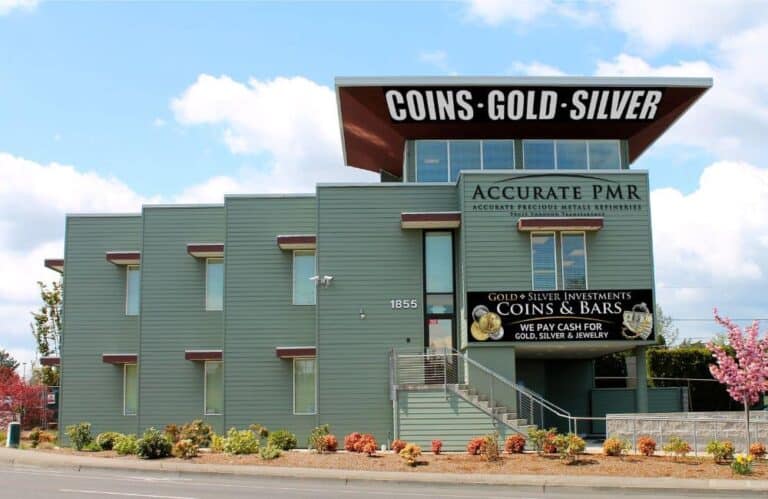
Accurate Precious Metals has been buying and selling precious metals for over 12 years, operating out of Salem, Oregon with a track record of more than 1,000 five-star reviews. That kind of consistency doesn’t happen by accident – it comes from transparent pricing, honest assessments, and a buying process that treats sellers fairly.
AccuratePMR buys everything: gold and silver jewelry in any condition, bullion coins and bars, scrap gold, dental gold, silverware, luxury watches, diamonds, and numismatic coins. The team assesses items thoroughly and explains every step of the offer. No pressure. No hidden deductions.
For sellers in the Salem, Oregon area, visiting in person is straightforward. Bring your items, get a free assessment, and walk out with a fair cash offer if you choose to accept. The phone number is (503) 400-5608 if you want to call ahead.
For everyone else in the country, AccuratePMR’s mail-in gold program makes it simple to sell from anywhere. The process includes a free insured shipping kit, GIA-certified appraisals, and fast payment once you accept the offer. Your items are protected in transit, and if you don’t like the offer, they ship everything back at no cost to you.
This is the model that separates a specialized precious metals dealer from a pawn shop or pop-up buyer. Accurate Precious Metals isn’t trying to flip your gold quickly at your expense – they’re building long-term relationships with sellers who come back because the process is fair.
If you’re ready to sell your gold for cash and want to know your items are being assessed by people who do this every day, AccuratePMR is the clear choice – whether you’re local to Oregon or shipping from across the country.
Frequently Asked Questions
How do I find the best gold buyers near me for cash?
Start by searching for buyers with verified Google reviews and BBB ratings. Get at least two quotes, ask each buyer to show you their weight and purity readings, and compare offers against current spot price. Reputable buyers explain their math without pressure.
What percentage of spot price should I expect from a gold buyer?
Most reputable buyers offer 70-90% of melt value for scrap jewelry. For bullion coins and bars in good condition, offers can reach 95-98% of spot because refining costs are minimal.
Is it safe to use a mail-in gold buying service?
Yes, provided the service uses insured shipping, has a transparent assessment process, and has verifiable reviews. Accurate Precious Metals offers free insured shipping and returns items at no charge if you decline the offer.
What’s the difference between selling scrap gold and selling bullion?
Scrap gold is sold purely for melt value after purity testing. Bullion coins and bars are already refined to known fineness and often command higher payouts because the buyer can resell them directly. Numismatic coins may be worth significantly more than melt if they have collector value.
Do I need to pay taxes when I sell gold?
In the United States, proceeds from selling gold may be subject to capital gains tax depending on how long you held the item and your cost basis. Transactions above certain thresholds are reported. Consult a tax professional for guidance specific to your situation.
What items does Accurate Precious Metals buy?
AccuratePMR buys gold and silver jewelry, bullion coins and bars, scrap gold, dental gold, silverware, luxury watches, diamonds, and numismatic coins. Local customers can visit in Salem, Oregon. Everyone else can use the mail-in program with free insured shipping.
How do I calculate the melt value of my gold before selling?
Divide the weight in grams by 31.1 to get troy ounces. Multiply by the purity decimal (14K = 0.583, 18K = 0.75, 24K = 0.999). Multiply that result by the current spot price. The number you get is the raw melt value before the buyer’s margin.
Sources
- Peninsula Pawn – Local Gold Buyer Information
- Bullion Exchanges – Precious Metals Dealer Reference
- A.R. Morris Jewelers – Estate and Gold Buying Practices
- Whitten’s Fine Jewelry – Gold Buyer Practices
- Stuart Kingston Jewelers – Consumer Gold Selling Guidance
- Del Haven Jewelers – Long-Established Gold Buying History

