

Gold jewelry vs bullion value: understanding price factors

Disclaimer
Accurate Precious Metals is not a financial advisor. We encourage everyone to consult a financial advisor or CPA. They can help determine the best investment strategies. Our mission is to provide educational content about precious metals. Accurate Precious Metals is committed to transparency and reliability. They offer top-tier precious metal products and information.
This information is subject to change due to market fluctuations, world events, and factors beyond our control. Additionally, the content may not fully reflect our company’s values, as personnel, staff, and authorship may change over time.
Understanding gold jewelry vs bullion value is one of the most practical things you can know before buying, selling, or simply wondering how much is my gold worth. The two products contain the same metal, yet they are priced through entirely different lenses – and confusing one for the other can cost you real money.
The short version: bullion is priced as raw metal. Jewelry is priced as a finished product. That distinction shapes everything from what you pay at the counter to what you receive when you sell.
How Bullion Value Is Calculated
Bullion – gold bars, coins, and rounds – is valued almost entirely by three factors: weight, purity, and the current spot price of gold. At the time of writing, gold trades at about $4,545 per troy ounce. One troy ounce of .9999 fine gold has a melt value right around that figure before any dealer premium is added.
The formula is straightforward:
Melt value = gold weight x purity x spot price
On top of that melt value, buyers pay a premium. Premiums cover refining, minting, shipping, insurance, and the dealer’s margin. Bullion premiums are typically modest compared to jewelry markups because bullion is standardized. A 1 oz gold bar from a recognized refinery carries known weight and purity, so buyers and sellers can price it quickly from any live market feed.
Government-issued coins like the American Gold Eagle carry slightly higher premiums than plain bars because of their legal-tender status, minting quality, and collector recognition – but they are still priced primarily as metal, not as art or fashion.
How Gold Jewelry Value Is Calculated
Jewelry pricing works differently because the buyer is not just paying for metal. They are paying for the finished object – the labor to design and fabricate it, the brand behind it, the retail store’s overhead, and sometimes the stones set into it.
When you buy a 14K gold necklace at a jewelry store, the gold content is only part of what you are paying for. The rest goes toward craftsmanship, packaging, marketing, and profit margin. That is why retail jewelry can sell for many times its melt value.
The factors that shape gold jewelry value include:
- Gold content – the karat and weight of the piece
- Fabrication and labor – how complex the design is and how it was made
- Brand or designer – a signed Cartier piece commands far more than an unbranded one
- Condition – worn, broken, or missing stones affect resale value
- Gemstones – diamonds and colored stones can add value, but only if there is a market for them
- Retail overhead – stores build their costs into the price tag
When you later try to sell that same necklace, most of those non-metal costs evaporate. The buyer on the other side cares mainly about the gold content. That gap between what you paid and what you receive at resale is sometimes called the “jewelry premium trap.”


Karat, Purity, and Why They Matter
Gold purity is measured in karats for jewelry and in fineness for bullion. The two systems describe the same thing – how much of the alloy is actually gold – just in different units.
| Karat | Gold Percentage | Common Use |
|---|---|---|
| 24K | 99.9% | Bullion, high-purity jewelry |
| 22K | 91.7% | Coins, some fine jewelry |
| 18K | 75.0% | Fine jewelry |
| 14K | 58.3% | Most US jewelry |
| 10K | 41.7% | Budget jewelry, US minimum for “gold” |
Bullion is typically sold at .999 or .9999 fineness, which corresponds to 24K purity. Jewelry is alloyed with copper, silver, or zinc to make it harder and more practical for everyday wear. That alloying reduces the gold content, which directly reduces the melt value.
A 10K gold ring that weighs 5 grams contains only about 2.1 grams of actual gold. At today’s spot price of roughly $4,545 per troy ounce (about $146 per gram), that ring’s gold content is worth around $306 – regardless of what it cost new or what the store label said.
Gold Scrap Value Calculator – Accurate Precious Metals Refineries
The Resale Reality: What Sellers Actually Receive
Bullion is easier to sell and tends to bring offers closer to spot price. The reason is liquidity. A buyer can evaluate a 1 oz gold bar in seconds: check the weight, check the hallmark, verify the refinery. There is very little ambiguity.
Jewelry requires individual evaluation. A buyer must assess the karat, weigh the piece, check for stones, examine the condition, and determine whether any non-gold components (like steel clasps or filled sections) affect the weight. That process takes time and expertise, and buyers factor that cost into their offers.
Some jewelry does sell above its melt value – antique pieces, signed designer work, rare vintage items, or culturally significant objects can all command premiums. But mass-market jewelry from a mall chain rarely does. If you paid $800 for a 14K bracelet at a retail jeweler, do not expect $800 back. The gold content might be worth $200 to $300, and that is closer to what the market will pay.
This is not a flaw in the system. It is just the difference between buying a finished consumer product and buying raw metal.
Bullion Premiums vs. Jewelry Markups
Both bullion and jewelry sell above their raw metal value. The difference is in how large that gap is and what drives it.
Bullion premiums exist because someone had to refine, mint, package, insure, and ship the product. For a standard 1 oz gold bar, that premium might be a small percentage over spot. For a fractional coin or a limited-edition release, it can be higher. But premiums are transparent – dealers publish them, and buyers can compare them across products.
Jewelry markups are less transparent and typically much larger. A retail jeweler might mark up a piece several times over its material cost. That markup covers the store’s rent, staff, design fees, and brand value. None of that comes back at resale.
The practical takeaway: if your goal is exposure to gold prices, bullion is the more efficient vehicle. If your goal is a wearable object with aesthetic or sentimental value, jewelry makes sense – just go in with realistic resale expectations.
When Jewelry Behaves More Like Bullion
High-purity jewelry – 22K or 24K pieces – closes the gap between jewelry and bullion pricing. Because the gold content is so high, the melt value represents a larger share of the total value. In some markets, particularly in South and East Asia, high-karat jewelry is bought and sold almost like bullion, with prices tied closely to daily spot rates.
Even so, 24K jewelry is not identical to bullion in terms of liquidity. A gold bar from a recognized refinery is easier to sell globally than a handcrafted 24K necklace, even if both contain the same amount of gold. The bar has a standardized format. The necklace requires evaluation.
There is also the question of what you are paying for. A 24K piece with detailed craftsmanship still carries fabrication costs that a plain bar does not. You may be getting near-bullion gold content, but you are also paying a jewelry-style premium to get it.
For a deeper look at how jewelry and bullion compare at resale, including what buyers actually pay in each market, that breakdown covers the practical numbers well.
Common Misconceptions
A few beliefs trip up buyers and sellers regularly.
“Gold is gold – it all has the same value.” The metal is the same, but the product is not. Form, purity, and market demand all affect what a piece is worth in practice.
“Bullion has no markup.” Every bullion product sells above spot. Premiums vary by product and dealer, but they are always present.
“A higher retail price means higher resale value.” Retail price reflects what the store charged, not what the gold is worth. These two numbers can be very far apart, especially for mass-market jewelry.
“My jewelry is worth what I paid for it.” Almost never true at resale, unless the piece has significant collector or designer value beyond its metal content.
“24K jewelry is the same as a gold bar.” Close in metal content, but not identical in liquidity, pricing, or market behavior.
Practical Steps Before You Buy or Sell
Whether you are buying gold for the first time or trying to figure out what your old jewelry is worth, a few steps make the process cleaner.
Look for karat stamps on jewelry (10K, 14K, 18K) and assay marks or mint stamps on bullion bars and coins.
Calculate the gold content value using weight, purity, and current spot price – then compare that to what you are being asked to pay or offered.
For bullion, premiums are usually published. For jewelry, ask what portion of the price reflects gold content versus fabrication and brand.
Bullion sells broadly. Jewelry may need a specialized buyer, jeweler, or auction house depending on the piece.
If you want price exposure to gold, bullion is more direct. If you want something to wear or give as a gift, jewelry makes sense – just price it accordingly.
Numismatic and Collector Coins: A Middle Ground
Some gold coins sit between pure bullion and jewelry in terms of how they are valued. Numismatic coins – older, rarer, or specially graded pieces – carry value from both their metal content and their collector demand. A common bullion coin like a Gold Eagle or Maple Leaf trades close to spot plus a modest premium. A rare pre-1933 U.S. gold coin might trade at many times its melt value based on date, mintmark, and grade.
Understanding the difference between numismatic and bullion coins matters if you are evaluating a collection or deciding what to buy. The valuation logic is different, and mixing up the two can lead to overpaying or underselling.
Selling Your Gold: What to Expect at Accurate Precious Metals
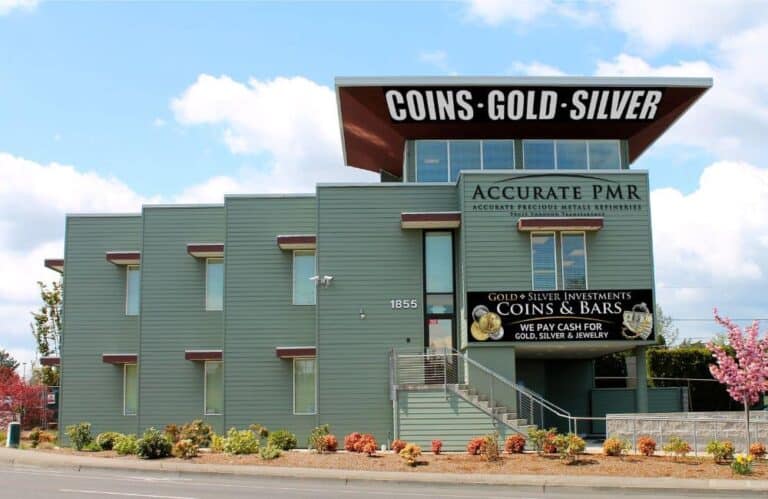
Accurate Precious Metals has been buying and selling precious metals for over 12 years from its Salem, Oregon location. With more than 1,000 five-star reviews and competitive pricing tied to live spot prices, the team handles everything from standard bullion to worn or broken jewelry, dental gold, silverware, and designer pieces.
Unlike a pawn shop, Accurate Precious Metals is a specialized precious metals dealer. That distinction matters when you are selling. A pawn shop generalizes. A precious metals specialist evaluates your gold properly – whether it is a 14K chain, a stack of bullion coins, or a bag of scrap from a jewelry box.
Offers are based on current spot prices and reflect the actual gold content of what you bring in. The process is straightforward, and most sellers find the offer fair.
If you are local to Salem, Oregon, bring your gold in person. The team can evaluate it on the spot and pay quickly.
If you are anywhere else in the United States, the mail-in service makes it easy. You receive a free insured shipping kit, your gold is assessed by the team, and payment is sent fast. To get started or learn more about how much is my gold worth, the mail-in page walks through the full process.
Both options – in-person and mail-in – are available for bullion, jewelry, coins, dental scrap, and more. Call (503) 400-5608 or visit AccuratePMR.com to get started.
Frequently Asked Questions
What is the difference between gold jewelry value and gold bullion value?
Bullion is priced mainly on weight, purity, and the current spot price of gold. Jewelry includes those factors but also reflects labor, design, brand, and retail overhead – meaning the retail price is often much higher than the gold content, while the resale value is often much lower than the original purchase price.
How do I calculate the melt value of my gold jewelry?
Weigh the piece in grams, determine the karat (10K = 41.7% gold, 14K = 58.3%, 18K = 75%, 24K = ~99.9%), multiply the weight by the purity percentage, then multiply by the current gold price per gram. At the time of writing, gold is about $4,545 per troy ounce, which is roughly $146 per gram. Use the calculator above for a quick estimate.
Why does jewelry sell for less than I paid for it?
Most of the retail price covers labor, design, branding, and store overhead – not just gold. When you resell, buyers pay for the gold content, not those added costs. The gap between retail price and resale value is a normal feature of the jewelry market, not a sign that something went wrong.
Is 24K jewelry a good investment like bullion?
High-karat jewelry has a gold content close to bullion, but it is not as liquid or standardized. It may carry higher fabrication costs and can be harder to sell quickly at a fair price. For pure gold price exposure, standard bullion bars or coins are generally more efficient.
How do bullion premiums compare to jewelry markups?
Bullion premiums are typically modest and transparent – published by dealers and easy to compare. Jewelry markups can be much larger and are less visible to buyers. Both represent costs above raw metal value, but the scale is usually very different.
Can I sell gold jewelry and bullion to Accurate Precious Metals?
Yes. Accurate Precious Metals buys all forms of gold – bullion bars, coins, rounds, jewelry in any condition, broken pieces, dental scrap, and more. Local customers can visit the Salem, Oregon location, and customers across the U.S. can use the insured mail-in service.
Does the condition of jewelry affect its value when selling?
For most jewelry sold at melt value, condition matters less than gold content. However, pieces with collector value – antiques, designer pieces, or rare items – can be worth more in better condition. Stones and settings are evaluated separately.
Sources
- Tyler Gold and Bullion – Gold Jewelry vs. Bullion Explained
- APMEX Learning Center – Bullion Pricing and Premiums
- Goldco – Gold Purity, Karats, and Bullion Standards
- Indigo Precious Metals – Jewelry Resale and Melt Value
- AGR Gold – Evaluating Gold Jewelry vs. Bullion
- Yin City Gold – Retail Markup vs. Bullion Premium Comparison

