

Gold Buying Hours Pacific: When to Sell for Best Quotes

Disclaimer
Accurate Precious Metals is not a financial advisor. We encourage everyone to consult a financial advisor or CPA. They can help determine the best investment strategies. Our mission is to provide educational content about precious metals. Accurate Precious Metals is committed to transparency and reliability. They offer top-tier precious metal products and information.
This information is subject to change due to market fluctuations, world events, and factors beyond our control. Additionally, the content may not fully reflect our company’s values, as personnel, staff, and authorship may change over time.
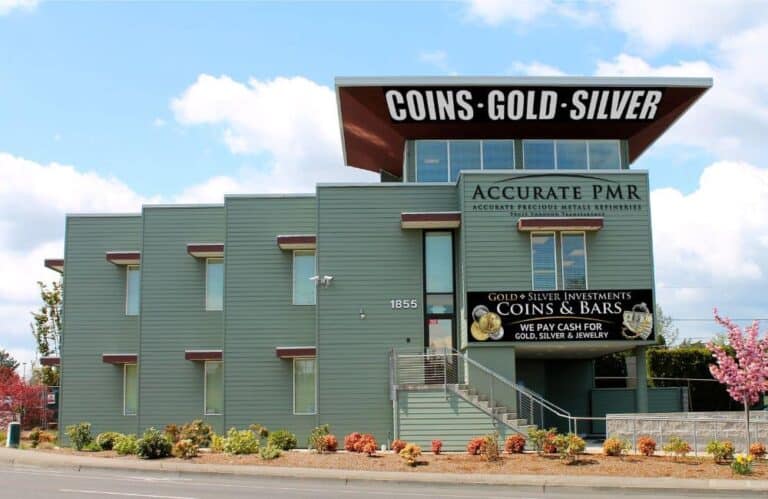
If you are searching for gold buying hours Pacific dealers keep, you are already ahead of most sellers – knowing when to walk in can be just as valuable as knowing what to bring. Physical gold and silver buying happens at brick-and-mortar shops, not electronic exchanges, so the hours a dealer keeps directly affect the price quote you receive and how quickly cash lands in your hand.
This guide covers everything Pacific Time sellers and buyers need to know: when shops are open, how spot market timing affects your payout, what dealers actually buy, and why Accurate Precious Metals in Salem, Oregon stands out as the most trusted option for collectors and investors across the West Coast and nationwide.
Why Gold Buying Hours Pacific Time Actually Matter
The global spot market for gold runs nearly 24 hours a day, five days a week. Physical dealers, though, keep business hours – and those hours shape the quotes you get.
When a shop is open during an active trading session, staff can pull a live spot price and offer you a competitive number on the spot. When they are quoting from a price that has not refreshed in hours, the spread they build in to protect themselves tends to widen. For Pacific Time sellers, the most liquid window of the day falls between roughly 5:20 AM and 10:30 AM PT, when COMEX futures in New York are most active. London’s benchmark fix lands around 1-2 AM PT, which is before most shops open, but its influence carries through the morning session.
In practical terms, the best time to sell is mid-morning on a weekday – say 10 AM to noon PT – when New York is fully open, staff are fresh, and spot prices are updating by the minute. Avoid selling late Friday afternoon. The spot market closes around 2 PM PT on Fridays, and shops that stay open past that point work from a frozen price until Sunday evening.
Typical Shop Hours for Gold Buying in Pacific Time
Most coin shops and precious metals dealers on the West Coast run Monday through Friday, 10 AM to 6 PM PT. Many extend to 7 or 8 PM on weekdays to catch sellers who cannot leave work until 5 PM. Weekend hours are common too – typically 10 AM to 4 PM PT on Saturdays, with Sunday hours varying widely.
A few things to keep in mind:
- Hours posted online are not always current. Call ahead, especially for first visits or large transactions.
- Shops may pause buying briefly during the daily spot break (roughly 2-3 PM PT, when the 5-6 PM ET electronic pause hits).
- High-volume days like Mondays after a volatile weekend can mean longer wait times as staff work through a backlog of appraisals.
- Avoid the last 30 minutes before close – appraisals feel rushed and you may not get the best offer.
For sellers who cannot make it to a physical location during business hours, a mail-in program removes the time constraint entirely. Accurate Precious Metals offers exactly that – more on this below.





What Dealers Buy: Gold, Silver, and Beyond
Pacific dealers buy a wide range of items. Understanding what you have helps you set realistic expectations before you walk in.
Gold Coins and Bars
Investment-grade gold coins like the 2025 American Gold Eagle (.9167 fine, 1 oz) and the Gold Canadian Maple Leaf (.9999 fine, 1 oz) command the tightest spreads because they are easy to verify and highly liquid. Dealers typically pay within 1-3% of spot for these. At today’s spot of about $4,774 per ounce, that puts a realistic payout somewhere in the $4,600-$4,720 range depending on the shop and volume.
Gold bars – whether a 1 oz minted gold bar or a larger 10 oz piece – also trade close to spot. Poured bars from lesser-known refiners may carry a slightly wider spread because staff spend more time on evaluation.
Silver Coins and Bars
Silver Eagles, Maple Leafs, and 90% junk silver (pre-1965 US dimes, quarters, and half dollars) are among the most commonly sold items at Pacific shops. With silver spot at $79 per ounce, expect payouts in the $70-$76 range for common bullion coins, with junk silver calculated at its melt weight. The spread on silver tends to be wider than gold – partly because the dollar value per ounce is lower, and partly because silver is bulkier and more expensive to store and ship.
Scrap, Jewelry, and Other Metals
Scrap gold jewelry, dental gold, silverware, and broken chains are all buyable. The payout is lower than bullion – often 20-40% under spot – because the metal must be refined before it can be resold. Platinum at around $2,064 per ounce and palladium at roughly $1,558 per ounce are less common but accepted at most full-service dealers.
| Item Type | Approx. Spot Ref. | Typical Pacific Shop Payout Range | Notes |
|---|---|---|---|
| 1 oz Gold Eagle | $4,774/oz | $4,600-$4,720 | 1-3% under spot |
| 1 oz Silver Eagle | $79/oz | $72-$76 | Higher spread, high demand |
| 10 oz Silver Bar | ~$790 total | $720-$760 | Bulk improves rate |
| Scrap Gold Jewelry | Varies by karat | Spot minus 20-40% | Refining cost factored in |
| 1 oz Platinum Bar | $2,064/oz | $1,950-$2,020 | Less liquid, wider spread |
How Spot Prices Drive Your Payout
Dealers do not set prices arbitrarily. Every buy offer is anchored to the live spot price, then adjusted for the dealer’s spread – the margin that covers testing costs, overhead, and market risk.
Gold’s spot price of about $4,774 per ounce reflects what large institutional buyers are paying on the futures market right now. A local shop cannot match that dollar-for-dollar because they need to account for the cost of re-selling the metal, whether that means melting scrap or flipping a coin to another collector. The gap between spot and your payout is not a rip-off – it is the cost of doing business with a physical buyer who hands you cash on the spot.
That said, the gap varies significantly between dealers. A specialized precious metals dealer assessed for purity with professional XRF testing equipment can afford a tighter spread than a pawn shop guessing at karat weight with a scratch test. This is one reason it pays to shop around, and why working with an established dealer matters.
Live Gold Spot Price – Accurate Precious Metals Refineries
Gold Buying Hours Pacific: In-Person vs. Mail-In – Which Is Right for You?
Not everyone lives near a reputable dealer. Even in California, Oregon, and Washington – states with high concentrations of coin shops – getting to a good dealer during business hours is not always practical.
If you are in or near Salem, Oregon, bring your items directly to our location. In-person appraisals are fast, transparent, and you leave with payment the same day.
From anywhere in the US, request a mail-in gold kit. You receive free insured shipping materials, send your items safely, and receive a competitive offer backed by live spot prices – with fast payment once the offer is accepted.
The in-person route is ideal when speed matters most or when you have a large, high-value lot you want appraised face-to-face. The mail-in route works well for sellers outside the Pacific Northwest, those with irregular schedules, or anyone who prefers not to carry significant value through a city.
For sellers in California, our California gold and silver selling guide covers regional options in more detail. Oregon sellers can find local context on our Oregon selling guide, and Washington state residents should check the Washington selling guide.
Preparing to Sell: What to Bring and When to Go
Walking in prepared saves time and often improves your offer.
- Weigh your items before visiting. A basic kitchen scale in grams gives you a baseline. Dealers use troy ounces (1 troy oz = 31.1 grams), so do the conversion ahead of time.
- Know your coins. PCGS or NGC slabbed coins may carry a numismatic premium above melt – sometimes 10-20% or more for key dates. Bring the slab; do not crack it open.
- Bring valid government-issued ID. Most states require dealers to record seller information for transactions above a certain threshold. Oregon and California both have reporting requirements.
- If items came from an estate, bring documentation. An affidavit or probate paperwork speeds up the process and prevents delays.
- Go mid-morning on a Tuesday, Wednesday, or Thursday. These tend to be the least crowded days, staff are focused, and the spot market is active.
Common Misconceptions About Bullion Buying Hours
A few myths circulate among first-time sellers that are worth clearing up directly.
Shops buy 24/7 like the spot market. They do not. Electronic spot trading runs nearly around the clock, but physical buying requires staff, testing equipment, and a safe – all of which operate on business hours.
The buy price equals spot. It never does. Dealers always pay under spot. The margin covers their operating costs and the risk of holding metal between purchase and resale. A dealer paying spot or above would go out of business quickly.
All gold and silver items pay the same rate. Far from it. A rare key-date Morgan dollar in MS-65 condition is worth multiples of its silver melt value. A broken gold chain is worth less than a coin of equivalent weight. Know what you have.
Pacific dealers keep the same hours as East Coast shops. Many West Coast dealers intentionally extend their hours past the typical 5 PM ET close specifically to serve the Pacific Time market. This is a deliberate business decision, not an accident – the density of collectors in California, Oregon, and Washington makes evening hours worthwhile.
Pawn shops are just as good as coin dealers. Pawn shops are generalists. They buy everything from guitars to jewelry, and their precious metals knowledge varies. A specialized dealer uses professional XRF analysis to evaluate metal content accurately, which typically translates to a better offer for the seller.
A Brief Look at How Bullion Markets Developed
Gold bullion trading in its modern form traces back to 1919, when London’s LBMA forward market was established. The daily benchmark fix – still referenced globally – has been setting the tone for dealer quotes for over a century. Silver followed a parallel path, with the U.S. Coinage Act of 1792 establishing early weight and purity standards that shaped how the metal is traded today.
COMEX, formed in 1974 through a merger of New York commodity exchanges, became the dominant futures market for both metals in the United States. The prices dealers quote in Pacific Time shops are anchored directly to COMEX settlement data.
The 2008 financial crisis marked a turning point for retail bullion buying. “We buy gold” shops proliferated across the West Coast as collectors and investors sought to liquidate holdings for cash or hedge against inflation. That surge in demand professionalized the industry – better testing equipment, tighter spreads, and more competitive offers became the norm at quality dealers.
First standardized gold coins used in trade
London daily gold fix begins, anchoring global dealer quotes
Fixed silver-to-gold ratios, standardizing American bullion
Futures trading standardizes US spot price benchmarks
West Coast “we buy gold” shops expand; Pacific buying hours extend
Why Accurate Precious Metals Is the Right Choice
Accurate Precious Metals has been operating out of Salem, Oregon for over 12 years. With more than 1,000 five-star customer reviews, the track record speaks clearly. This is not a pawn shop – it is a specialized precious metals dealer with the inventory, expertise, and infrastructure to serve both casual sellers and serious collectors.
The inventory covers gold, silver, platinum, palladium, and copper in coin, bar, and bullion form, plus diamonds and jewelry. As an NGC Authorized dealer, Accurate Precious Metals can grade coins on-site – a meaningful advantage for collectors who want to know the numismatic value of what they own before deciding whether to sell or hold.
For buyers, the selection includes popular coins like the 2025 Gold Eagle and Gold Maple Leaf, with pricing updated to reflect live spot prices. For retirement investors, Gold and Silver IRA services are available. Nationwide shipping with insured delivery means geography is not a barrier – whether you are in Portland, Los Angeles, or Miami, you can buy or sell through AccuratePMR.com.
Local customers in Oregon and the broader Pacific Northwest are encouraged to visit the Salem location in person during business hours for same-day appraisals and immediate payment. Sellers anywhere else in the US can use the mail-in program – free insured shipping, GIA-informed appraisals, and fast payment once an offer is accepted.
Call (503) 400-5608 or visit accuratepmr.com to get started. Whether you are selling a single coin or an estate collection, Accurate Precious Metals offers a transparent, professional process with competitive payouts tied to live spot prices.
Frequently Asked Questions
What are typical gold buying hours for Pacific Time dealers?
Most Pacific Time coin shops and precious metals dealers are open Monday through Friday, 10 AM to 6 PM PT, with many extending to 7 or 8 PM. Saturday hours of 10 AM to 4 PM are common. Always call ahead to confirm, as hours vary by location.
When is the best time of day to sell gold in Pacific Time?
Mid-morning on a weekday – roughly 10 AM to noon PT – is ideal. COMEX is fully active, spot prices are updating in real time, and dealers can offer the tightest spreads. Avoid late Friday afternoon when the spot market has closed for the weekend.
How much under spot will a Pacific dealer pay for gold?
For investment-grade bullion coins like Gold Eagles or Maple Leafs, expect payouts roughly 1-3% under spot. Scrap jewelry typically comes in 20-40% under spot due to refining costs. Silver spreads tend to be wider than gold on a percentage basis.
Can I sell gold if I cannot visit during business hours?
Yes. Accurate Precious Metals offers a mail-in gold kit with free insured shipping. You send your items, receive a competitive offer based on live spot prices, and get paid quickly after accepting. There is no need to visit in person.
Does Accurate Precious Metals buy silver, platinum, and palladium too?
Yes. Accurate Precious Metals buys all precious metals – gold, silver, platinum, palladium, and copper – in any form, including coins, bars, scrap, jewelry, dental gold, silverware, and more. Visit in person in Salem, Oregon, or use the nationwide mail-in service.
Why does the spot market close affect what a dealer pays me?
Dealers quote buys against live spot. When the spot market is closed or in its daily break (roughly 2-3 PM PT), prices are frozen. Shops that stay open during this window build a wider cushion into their offers to account for the risk that prices move before they can resell. Selling during active market hours typically gets you a tighter spread.
Is Accurate Precious Metals a pawn shop?
No. Accurate Precious Metals is a specialized precious metals dealer, not a pawn shop. The difference matters – pawn shops deal in a wide range of goods and often lack the equipment and expertise to assess precious metals accurately. Accurate Precious Metals uses professional XRF testing and has over 12 years of focused experience in gold, silver, and other metals.

