

Gold Bullion Buying Guide: How to Buy with Confidence

Disclaimer
Accurate Precious Metals is not a financial advisor. We encourage everyone to consult a financial advisor or CPA. They can help determine the best investment strategies. Our mission is to provide educational content about precious metals. Accurate Precious Metals is committed to transparency and reliability. They offer top-tier precious metal products and information.
This information is subject to change due to market fluctuations, world events, and factors beyond our control. Additionally, the content may not fully reflect our company’s values, as personnel, staff, and authorship may change over time.
This gold bullion buying guide covers everything a first-time or returning buyer needs to make a confident purchase: what bullion actually is, how pricing works, which products to consider, and how to avoid the mistakes that cost people money. Gold is sitting at around $4,569 per ounce right now, so understanding exactly what you are paying for – and why – matters more than ever.
Whether you want a single coin as a starting point or a stack of bars for long-term savings, the principles are the same. Buy recognizable products. Understand your total cost. Choose a dealer with a clear track record. This guide walks you through each step.
Live Gold Spot Price – Accurate Precious Metals Refineries
What Gold Bullion Actually Is
Gold bullion is physical gold sold primarily for its metal content. It comes in three main forms: coins, bars, and rounds. The value is tied to weight and purity, not artistic design or historical rarity.
Gold bullion products are typically described by two numbers: purity and weight. Most investment-grade gold is either .999 fine (99.9% pure) or .9999 fine (99.99% pure). Weights range from small fractional pieces – as light as 1/10 of a troy ounce – up to large bars weighing a kilogram or more.
Coins
Government mints issue bullion coins with a face value and legal-tender status. That legal-tender status matters because it signals official production standards and gives the coin instant recognition worldwide. Examples include the American Gold Eagle, the Canadian Gold Maple Leaf, and the Australian Gold Kangaroo. These are the easiest products to resell because dealers and private buyers recognize them immediately.
Bars
Gold bars are efficient. Less manufacturing complexity means lower premiums over spot price compared to coins. A 1 oz gold bar from a recognized refinery is a straightforward way to own gold close to the metal’s market value. The tradeoff is that bars – especially from less familiar refineries – can require more verification when you go to sell.
Rounds
Rounds look like coins but are privately minted and carry no government backing or legal-tender status. They can be a cost-effective way to own gold, but resale can be slower if the buyer is unfamiliar with the issuer.
How Gold Bullion Is Priced
Spot price is the starting point, not the final price. It represents the live market rate for one troy ounce of gold on commodity exchanges. What you actually pay at retail is:
Spot price + premium + any applicable fees
The premium covers minting costs, refinery fabrication, dealer overhead, shipping, and insurance. On a 1 oz gold coin today, with spot around $4,569, you might pay $4,650 to $4,750 or more depending on the product and dealer. Premiums are not fixed – they shift with supply, demand, and product type.
Fractional coins carry higher premiums per ounce than full-ounce pieces. A 1/10 oz coin costs far more per ounce of gold than a 1 oz coin because the same minting and handling costs are spread over less metal. That smaller coin is still a useful entry point for buyers who want a lower dollar commitment, but the per-ounce cost is higher.
Check current gold spot prices before any purchase so you know exactly what baseline you are working from.



Gold Bullion Buying Guide: Best Products for Beginners
Starting simple is almost always the right call. The goal for a first purchase is to understand how the process works – pricing, shipping, storage, and eventual resale – before committing to larger amounts.
Learn the current spot price and understand how premiums add to your cost.
Decide whether you want a coin, bar, or fractional piece based on your budget and goals.
Compare premiums across reputable dealers – not just the spot price.
Check the dealer’s buyback policy and reviews before purchasing.
Store your purchase securely and keep all documentation.
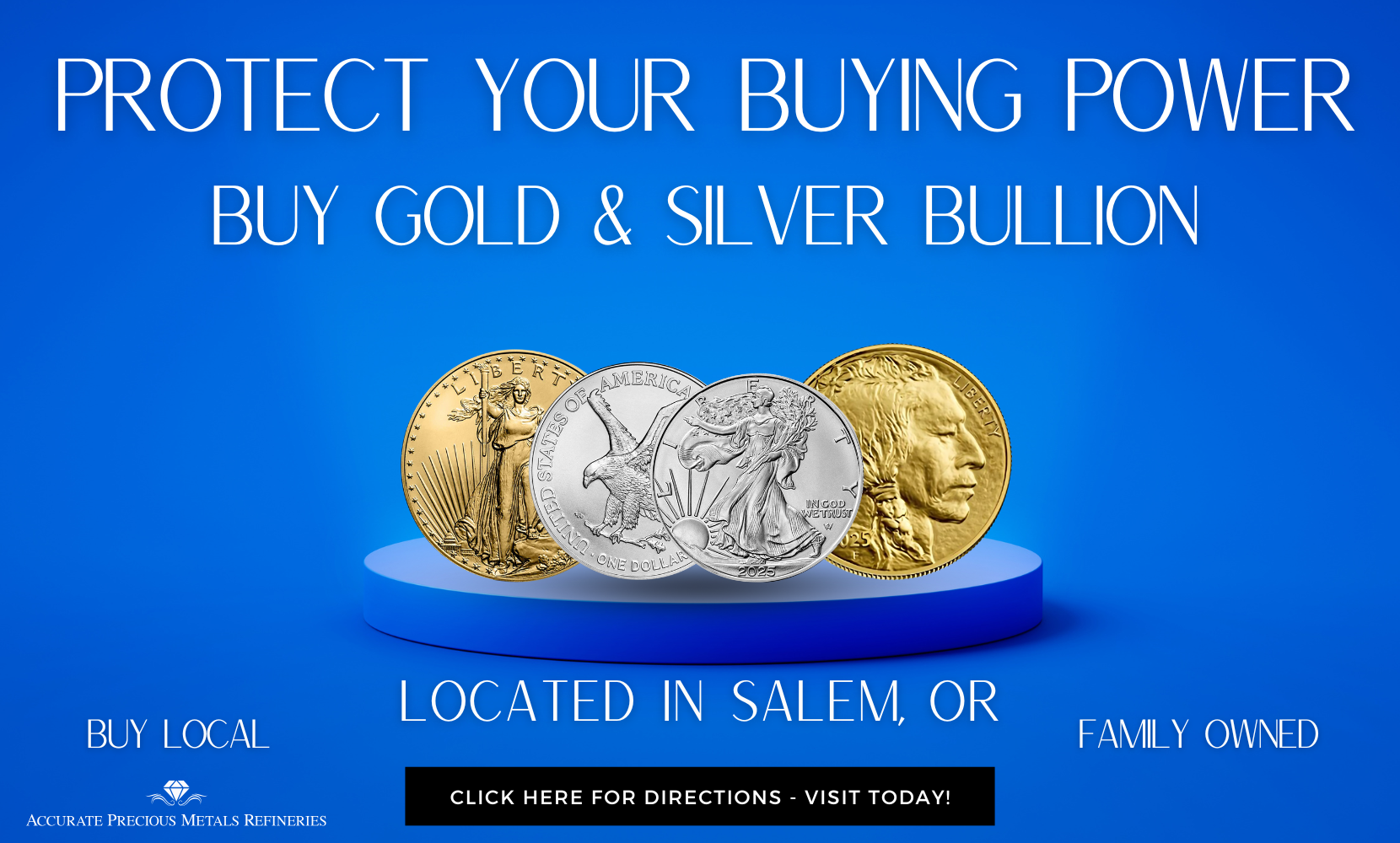
For most beginners, a 1 oz coin is the best starting point. It is widely recognized, easy to resell, and a manageable size. The 2025 1 oz Gold Eagle is a strong example – produced by the U.S. Mint, backed by the U.S. government, and accepted by dealers across the country without hesitation.
If the full-ounce price feels like too much to start, fractional coins are a reasonable alternative. The 2026 1/10 oz Gold Maple Leaf from the Royal Canadian Mint gives you a government-issued product at a lower dollar entry point. The per-ounce premium is higher, but you are still buying a product with global recognition.
For buyers who prioritize value density – getting as much gold as possible per dollar spent – a 1 oz bar is worth considering. Bars from well-known refineries carry lower premiums than coins and store efficiently. The tradeoff is slightly less immediate recognition at resale compared to sovereign coins.
| Product Type | Typical Premium Over Spot | Resale Ease | Best For |
|---|---|---|---|
| 1 oz Sovereign Coin | 4-8% | High | Beginners, resale flexibility |
| 1 oz Gold Bar | 1-4% | Moderate-High | Value efficiency, storage |
| Fractional Coin (1/10 oz) | 8-15% | High | Lower entry cost |
| Private Round | 2-5% | Moderate | Cost-conscious buyers |
What to Look for Before Buying
A reputable dealer makes the process straightforward. A bad one creates confusion – about pricing, product specs, or what happens when you want to sell. Here is what to verify before any purchase.
- Transparent pricing: The full cost – spot price, premium, shipping, insurance, payment fees – should be visible before checkout. If you have to call to find out the real price, that is a warning sign.
- Dealer reputation: Look for reviews from independent sources. Years in business and volume of customer feedback both matter.
- Buyback policy: Know before you buy how the dealer handles repurchases. A dealer who buys back what they sell is a dealer with confidence in their products.
- Product authenticity markers: Mint hallmarks, assay cards, serial numbers, and known weight and dimensions are all standard. These details confirm you are getting what you paid for.
- Exact weight and fineness: The product listing should state both clearly. “Gold bar” is not enough – you need the weight in troy ounces and the purity expressed as a decimal or percentage.
Where to Buy Gold Bullion
Two main options exist: online dealers and local coin shops. Each has real advantages.
Online dealers offer broader selection, easier price comparison, and the ability to shop across multiple product types in minutes. Premiums are listed side by side, making it simple to see which product gives you the best value per ounce. Buying gold bullion online works well when you know what you want and have done your research on the dealer.
Local coin shops let you see and handle products before buying. For beginners, that tactile experience can be valuable – you learn what a real coin looks and feels like, and you can ask questions in person. Local shops are also useful for older or mixed inventory that might not appear in an online catalog.
The best approach for most buyers is a combination: research online to understand pricing and product options, then choose the channel – local or online – that fits your specific purchase.
Gold Bullion Buying Guide: Avoiding Common Mistakes
New buyers make predictable errors. Knowing them in advance saves money and frustration.
Mistake 1: Focusing only on spot price. The spot price is not what you pay. The premium is real and varies significantly between products and dealers. A coin with a $200 premium and a coin with a $350 premium are not the same buy, even if spot is identical.
Mistake 2: Assuming all gold products resell equally. A sovereign coin from the U.S. Mint or Royal Canadian Mint sells faster and often at a better price than an obscure private round. Recognizability has real value at resale.
Mistake 3: Ignoring storage until after purchase. Storage is part of the cost of owning physical gold. Figure out where it goes before you buy, not after.
Mistake 4: Thinking a lower premium always means a better deal. A less familiar product with a low premium may sit longer when you want to sell. The total cost of ownership includes the ease and price of eventual liquidation.
Mistake 5: Buying more than you understand. Start with a small purchase. Learn how the process works – how bullion is quoted, shipped, received, and stored – before scaling up.
For a deeper look at finding competitive gold bullion prices, that resource walks through how to compare dealer pricing effectively.
Storage and Security
Physical gold needs protection. The three main storage options each involve different tradeoffs between cost, accessibility, and security.
Home safe: Immediate access, no ongoing fees. Requires a quality safe bolted to the structure, and your homeowner’s or renter’s insurance may not cover the full value without a rider.
Bank safety deposit box: Affordable and secure, but inaccessible outside banking hours. Contents are typically not insured by the bank – you need separate coverage.
Professional depository or insured third-party storage: Higher cost, but purpose-built for precious metals. Offers insurance, audit trails, and often the ability to sell directly from storage. Practical for larger holdings.
For most beginners with a modest position, a quality home safe is a reasonable starting point. As holdings grow, the math on professional storage often makes more sense.
Gold vs. Silver: A Quick Comparison
Gold and silver serve different roles in a physical metals portfolio. Gold offers higher value density – one ounce at roughly $4,569 stores significant wealth in a small, portable form. Silver at around $79 per ounce requires more physical space for the same dollar value, but offers a lower entry point per piece.
Many buyers start with silver to learn the mechanics at lower cost, then move into gold as their understanding grows. Others go straight to gold because they want the storage efficiency. Neither approach is wrong – it depends on your budget, goals, and how much physical volume you want to manage.
For context on the silver side of the equation, understanding silver coin values covers how melt value and collector premiums interact, which is useful background even for gold-focused buyers.
Selling Your Gold Bullion Later
Buying well is only half the equation. Knowing your exit options before you buy helps you choose the right products from the start.
When you are ready to sell, the same principles apply in reverse: recognizable products from reputable mints sell faster and at better prices. Keep your original packaging, assay cards, and purchase documentation – these reduce friction at resale.
If you are local to Salem, Oregon, you can bring your gold directly to Accurate Precious Metals for an in-person evaluation and same-day offer. If you are anywhere else in the United States, the mail-in service is a straightforward alternative – request a kit, ship your metals with insured delivery, and receive a competitive offer with fast payment.
The mail-in gold buying process is designed for sellers who want a trusted buyer without leaving home. It works for bullion coins, bars, rounds, and other gold products.
Why Accurate Precious Metals Is the Right Starting Point
Accurate Precious Metals has been operating as a specialized precious metals dealer since 2012 – over twelve years of transactions, customer relationships, and market experience. With more than 1,000 five-star reviews, the track record is publicly visible and independently verified.
The inventory covers gold, silver, platinum, and palladium in coin, bar, and bullion form, with pricing updated to reflect live spot prices. For buyers interested in tax-advantaged retirement accounts, Gold and Silver IRA services are available. Nationwide shipping with insured delivery means buyers across the U.S. can purchase with confidence, not just those near the Salem, Oregon location.
Accurate Precious Metals is not a pawn shop. It is a purpose-built precious metals dealership with the expertise, inventory, and pricing structure that serious buyers expect. The difference shows in how pricing is presented, how products are described, and how the buyback process works.
For buyers ready to take the next step, trusted bullion expertise since 2012 gives a fuller picture of what sets this dealer apart. You can also explore the full guide to buying precious metals for a broader foundation before your first purchase.
Visit in person at the Salem, Oregon location, browse online at AccuratePMR.com, or call (503) 400-5608 to speak with the team directly.
Frequently Asked Questions
What is the difference between gold bullion and gold jewelry?
Gold bullion is investment-grade gold sold by weight and purity – coins, bars, or rounds. Gold jewelry is valued for design, craftsmanship, and sometimes gemstones, and typically carries significant markup over its metal content. Bullion is the more efficient way to own gold as a store of value.
How much does a 1 oz gold coin cost right now?
With gold spot around $4,569 per ounce, a 1 oz government-issued coin will typically cost between $4,650 and $4,750 or more, depending on the product and dealer premium. Prices update with the live spot price.
Is it better to buy gold coins or gold bars?
Coins offer better resale recognition and flexibility. Bars generally offer lower premiums per ounce, making them more efficient for buyers focused on maximizing gold content per dollar. The right choice depends on your goals.
What purity should I look for in gold bullion?
Most investment-grade gold bullion is either .999 fine (99.9% pure) or .9999 fine (99.99% pure). American Gold Eagles are .9167 fine (22 karat) but contain a full troy ounce of gold – the alloy adds durability. Canadian Maple Leafs and most bars are .9999 fine.
How do I verify a gold coin or bar is real?
Look for mint hallmarks, known weight and dimensions, and assay cards where applicable. Reputable dealers assess products through XRF analysis and other testing methods before resale. Buying from an established dealer with a clear return and buyback policy reduces your risk significantly.
Can I buy gold bullion for a retirement account?
Yes. Certain IRS-approved gold products can be held in a self-directed Gold IRA. Accurate Precious Metals offers IRA services for buyers interested in this option. Consult a financial advisor or tax professional for guidance specific to your situation.
What happens if I want to sell my gold later?
Keep your original packaging and documentation. Sovereign coins from major mints are the easiest to sell. Accurate Precious Metals buys gold bullion from customers – visit in person in Salem, Oregon, or use the mail-in service from anywhere in the U.S.
Are there taxes on gold bullion purchases?
Tax rules vary by state. Oregon has no sales tax, which is one advantage of purchasing through Accurate Precious Metals. For capital gains on the sale of gold, consult a tax professional.


