

Finding a Silver Buyer in Shedd Oregon: A Practical Guide

Disclaimer
Accurate Precious Metals is not a financial advisor. We encourage everyone to consult a financial advisor or CPA. They can help determine the best investment strategies. Our mission is to provide educational content about precious metals. Accurate Precious Metals is committed to transparency and reliability. They offer top-tier precious metal products and information.
This information is subject to change due to market fluctuations, world events, and factors beyond our control. Additionally, the content may not fully reflect our company’s values, as personnel, staff, and authorship may change over time.
Finding a reliable silver buyer in Shedd Oregon takes a bit of planning, since Shedd is a small Linn County community without a dedicated precious metals shop on every corner. Most sellers end up working with regional buyers in Albany, Lebanon, Eugene, or Salem – or using a trusted mail-in service that handles everything remotely. Whether you have inherited sterling flatware, a jar of old coins, a broken gold necklace, or a matched set of earrings, knowing how buyers evaluate your items puts more money in your pocket.
This guide covers what buyers look for, how silver is priced right now, which items are worth more than their melt value, and how to connect with a buyer who will treat you fairly – whether you drive to their location or ship your items from home.
What Silver Buyers in Shedd Oregon Are Actually Looking For
Precious metals buyers in and around Shedd evaluate items in a few broad categories. Understanding which category your items fall into shapes the offer you receive.
Bullion silver includes bars, rounds, and coins produced primarily for metal value. American Silver Eagles, [Canadian Maple Leafs], and generic one-ounce rounds are the most common. These trade close to spot price, with small adjustments for condition and demand.
Junk silver refers to pre-1965 U.S. coins – dimes, quarters, and half dollars – that contain 90% silver. Buyers calculate their value by weight and current spot price. They are easy to sell and easy to value.
Sterling silver is 92.5% pure silver, stamped 925 or “sterling.” Old flatware sets, candlesticks, serving trays, and a large portion of silver jewelry fall into this category. Estate lots from rural Oregon homes often include exactly this type of material.
Numismatic coins are a different story. A Morgan dollar in fine condition, a key-date Peace dollar, or a rare proof set may be worth far more than its silver content. A scrap buyer will pay melt. A coin specialist will pay for the coin itself. Knowing the difference matters.
Jewelry and earrings are evaluated by metal purity, weight, condition, and whether they have resale value as wearable pieces. A matched pair of 14K gold earrings in good shape may sell as jewelry. A single earring or a broken clasp sells as scrap. Both have value – just different kinds.
How Silver Prices Work Right Now
Silver is currently trading around $76 per troy ounce. That number is the starting point for any offer, not the final number. Here is how buyers move from spot price to a cash offer.
Live Silver Spot Price – Accurate Precious Metals Refineries
A buyer takes the item’s weight, multiplies by its purity, multiplies by the spot price, then applies their margin. That margin covers the cost of refining, holding inventory, and reselling. For sterling silver at 92.5% purity, the calculation looks like this: a 100-gram sterling piece contains roughly 92.5 grams of pure silver, which is about 2.97 troy ounces. At $76 per ounce, the pure silver value is around $226. A buyer might offer 70-85% of that depending on the market and the item type.
Gold is sitting around $4,500 an ounce right now, which means even a small gold piece – a thin 14K ring, a single gold earring – can carry meaningful value. Platinum runs near $1,928 an ounce and palladium near $1,360. Both appear in some fine jewelry, though less often than gold and silver.





Silver Forms: Not All Silver Is the Same
Sellers sometimes assume silver is silver. It is not. The form and purity of your silver changes what a buyer will pay.
Bullion Silver
Investment-grade bullion coins and bars are the simplest to price. A 1 oz Silver Eagle trades at a known premium over spot. A generic round or bar trades closer to spot with minimal premium. These are the easiest items to get a fast, accurate offer on.
Junk Silver
Pre-1965 dimes, quarters, and half dollars contain 90% silver. A bag of mixed junk silver is easy to weigh and price. Buyers in Oregon actively seek these because the math is transparent and the demand is consistent. Check out our silver coins selling guide for more detail on how these are valued.
Sterling Silver
Sterling at 92.5% purity covers most silver jewelry, flatware, and hollowware. Look for stamps reading 925, sterling, or .925. Estate lots from Shedd and the surrounding Linn County area often include silverware sets, trays, and older jewelry in this category.
Numismatic Silver
Rare coins should never go to a scrap buyer first. A Morgan dollar in mint state, a low-mintage proof coin, or a key-date piece can be worth multiples of its melt value. Always have collectible coins evaluated by a coin dealer before treating them as scrap.
Selling Jewelry and Earrings: What Buyers Check
Jewelry evaluation follows a consistent process. Buyers look at the metal stamp first, then weigh the piece, then assess whether it has resale value beyond the metal.
Look for stamps like 10K, 14K, 18K, 925, or sterling – these confirm metal type and purity
Items are assessed for purity using XRF analysis or acid testing to confirm the stamp is accurate
Weight in grams or pennyweights is converted to troy ounces for the metal value calculation
Branded, designer, antique, or intact pieces may carry value above the metal alone
Real gemstones may add value if they are sizable, undamaged, and separable from the setting
The buyer combines metal value, resale potential, and their margin to arrive at a cash offer
Earrings follow the same logic. A matched pair of 18K gold earrings in good condition may sell as jewelry, not just metal. A single earring or a broken post sells as scrap – but it still has real value. Do not throw away single earrings. The metal is worth something regardless of the match.
Practical Tips Before You Sell
A little preparation before you walk in – or before you ship – can make a real difference in the offer you receive.
- Sort items by type. Keep gold separate from silver, coins separate from jewelry, and costume jewelry (which has no precious metal value) separate from everything else.
- Do not aggressively clean coins or antiques. Scrubbing a Morgan dollar can destroy its collector value. Light cleaning of jewelry is fine, but leave coins alone.
- Check for stamps. Look for 10K, 14K, 18K, 925, or sterling. These stamps save time and signal to buyers that your items are genuine.
- Weigh what you can. Even a kitchen scale gives you a rough estimate. At $76 an ounce for silver, knowing you have 200 grams of sterling tells you the floor is around $450 in pure silver value.
- Bring a valid ID. Most precious metals buyers require identification for compliance purposes.
- Get more than one offer. Different buyers value the same item differently, especially for jewelry and numismatic coins.
- Ask about stones. Some buyers only pay for metal. If your piece has diamonds or colored stones, ask whether they factor into the offer.
When to Use a Coin Dealer vs. a Scrap Buyer
This distinction matters more than most sellers realize.
A scrap buyer pays for metal. A coin dealer pays for the coin. Sending a rare coin to a scrap buyer is the most common mistake sellers make. If you are unsure, have the coin looked at by a numismatist first. Our Salem coin buying guide covers how to identify coins worth more than their silver content.
Common Misconceptions About Selling Silver
“All silver pays the same.” It does not. A sterling bracelet, a 90% junk-silver quarter, and a rare proof coin can produce very different offers from the same buyer.
“Gold jewelry should sell at full spot.” Buyers pay less than full spot because they carry costs – refining, storage, resale risk. The gap between spot and offer varies, but some discount is always present.
“My broken earring is worthless.” A single earring still contains metal. If it is 14K gold, it is worth something. If it is sterling silver, it is worth something. Scrap buyers pay for metal content, not aesthetics.
“A stamp means it is real.” Stamps are helpful, but buyers still test items. Counterfeit or altered pieces exist, and responsible buyers verify purity through XRF analysis or acid testing before making an offer.
“Cleaning makes it worth more.” For coins and antiques, cleaning often reduces value. A naturally toned coin in original condition is typically preferred by collectors over a polished one.
The Regional Market Around Shedd
Shedd sits in the heart of the Willamette Valley, roughly between Albany and Eugene. The practical precious metals market for Shedd residents extends to Albany, Corvallis, Eugene, and Salem. Oregon has active buyers for gold, silver, coins, and jewelry throughout the region. For a broader look at where to sell in the state, the Oregon gold and silver dealer guide covers regional options in detail.
Estate sales in rural Linn County regularly surface mixed lots – inherited flatware, old coins, broken jewelry, and the occasional piece of real value. Sellers in this area often have more variety than volume, which means working with a buyer who handles all categories is more efficient than visiting multiple specialists.
Why Accurate Precious Metals Is the Right Choice
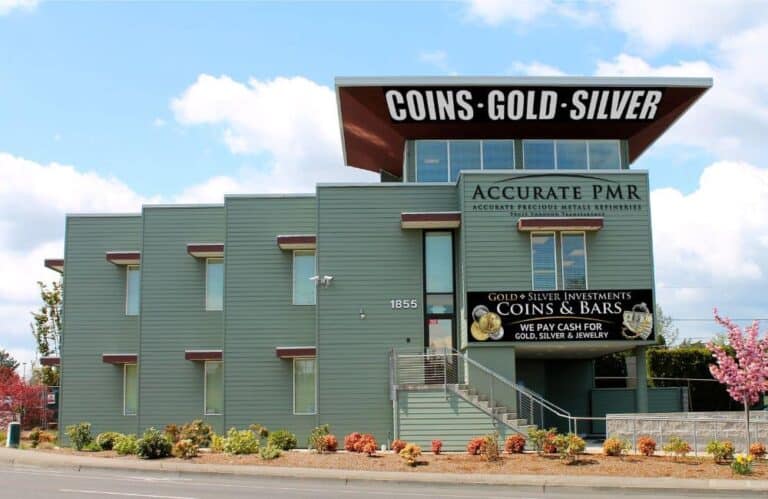
For sellers in and around Shedd, Accurate Precious Metals stands out as the most practical and trusted option in Oregon. Based in Salem, the company has been buying and selling precious metals for over 12 years and has earned more than 1,000 five-star customer reviews. They are not a pawn shop – they are a dedicated precious metals dealer with the expertise to evaluate bullion, coins, jewelry, flatware, and scrap metal accurately.
Accurate Precious Metals buys everything: gold and silver bullion, numismatic coins, scrap jewelry in any condition, sterling flatware, broken earrings, dental scrap, luxury watches, and diamonds. If it contains precious metal, they want to see it. Their pricing reflects live spot prices, so you are not working from a stale number.
For sellers who can make the drive, the Salem location offers in-person appraisals with no obligation. For everyone else – including sellers throughout Linn County who do not want to travel – the mail-in jewelry service is a straightforward alternative. The process includes free insured shipping, GIA-certified appraisals, and fast payment once your items are evaluated. You do not need to live near Salem to get a competitive offer.
Accurate Precious Metals is also an NGC Authorized dealer, which means they can properly evaluate numismatic coins rather than simply treating them as scrap. That matters if you have Morgan dollars, Peace dollars, or any coin that might carry collector value above its silver content. For more on selling your silver for cash, their we-buy page walks through the full process.
Whether you are clearing out an estate, selling inherited jewelry, or simply cashing in on silver you have held for years, Accurate Precious Metals offers the combination of expertise, transparency, and convenience that makes the process straightforward. Call (503) 400-5608 to speak with someone directly, or visit AccuratePMR.com to start the process online.
Frequently Asked Questions
Is there a silver buyer in Shedd Oregon I can visit in person?
Shedd does not have a dedicated precious metals shop. Most sellers in the area travel to Albany, Eugene, or Salem. Accurate Precious Metals in Salem is the closest full-service precious metals dealer in the region, with in-person appointments available.
How is silver jewelry priced when I sell it?
Buyers weigh the piece, confirm its purity (usually 92.5% for sterling), and calculate the silver content value based on the current spot price – around $76 per troy ounce right now. They then apply a margin and make an offer. Branded or intact pieces in good condition may bring more than scrap value.
Can I sell a single earring if I lost the other one?
Yes. A single earring still contains metal. If it is gold or silver, a buyer will pay for the metal content. It will be treated as scrap rather than jewelry, but it is not worthless.
What is the difference between sterling silver and coin silver?
Sterling silver is 92.5% pure and is the standard for most modern silver jewelry and flatware. Coin silver is an older American standard, typically around 90% silver, found on antique flatware and some 19th-century pieces. Both are buyable – just at slightly different values per gram.
Should I clean my silver before selling it?
Light cleaning of jewelry is generally fine. Do not clean coins or antiques. Polishing a collectible coin can reduce its numismatic value significantly, even if it looks better to the eye.
Does Accurate Precious Metals buy silver coins?
Yes. They buy bullion coins like Silver Eagles and Maple Leafs, junk silver, numismatic coins, and proof sets. As an NGC Authorized dealer, they can properly evaluate coins that may be worth more than their melt value.
How does the mail-in service work?
Accurate Precious Metals provides a free insured shipping kit. You send your items, they evaluate them with GIA-certified appraisals, and you receive a cash offer. If you accept, payment is fast. If you decline, your items are returned. Details are at their mail-in jewelry page.
What metals does Accurate Precious Metals buy besides silver?
They buy gold, platinum, palladium, and copper in all forms – coins, bars, rounds, jewelry, scrap, and dental material. They also buy diamonds and luxury watches.
Sources
- Bullion Exchanges – Silver Bullion Products and Market Information
- Westside Coins and Currency – Oregon Coin and Precious Metals Dealer
- AURIC Estate Jewelry – Albany, Oregon Gold and Silver Buyer
- MJPM – Oregon Rare Coin Dealer and Buying Reference
- Southern Oregon Gold and Silver – Sell Gold and Silver in Oregon
- J D Smith Jewelers – We Buy Gold Reference

