

Exploring the 1880 Morgan dollar: varieties, value, and history

Disclaimer
Accurate Precious Metals is not a financial advisor. We encourage everyone to consult a financial advisor or CPA. They can help determine the best investment strategies. Our mission is to provide educational content about precious metals. Accurate Precious Metals is committed to transparency and reliability. They offer top-tier precious metal products and information.
This information is subject to change due to market fluctuations, world events, and factors beyond our control. Additionally, the content may not fully reflect our company’s values, as personnel, staff, and authorship may change over time.
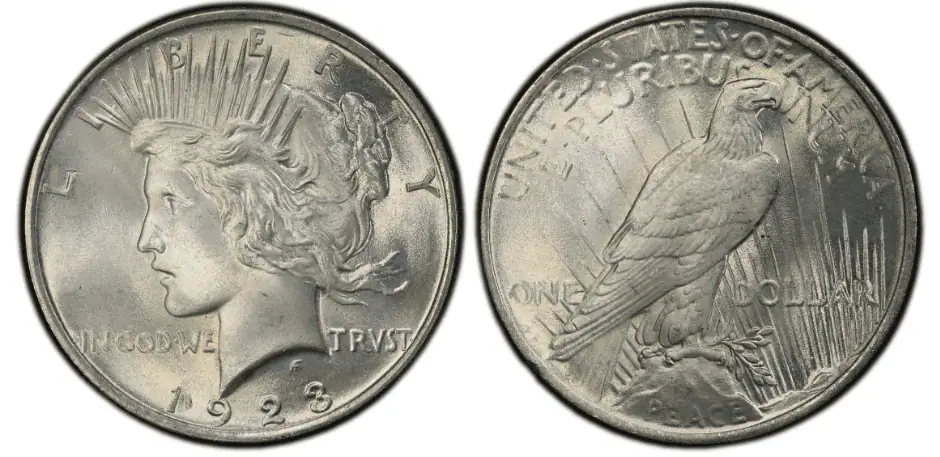
The 1880 Morgan dollar stands as one of the most studied and collected coins in American numismatic history. Struck across four mints in a single year, it offers collectors a wide range of varieties, grades, and price points – from affordable circulated examples to rare Carson City pieces commanding serious premiums. Whether you are new to Morgan dollars or building a dedicated set, understanding what separates a common Philadelphia strike from a scarce overdate or a CC-mint rarity can make a significant difference in what you pay and what you ultimately own.
Silver is currently trading around $81 per ounce, giving each 1880 Morgan dollar a melt value of roughly $62. But the numismatic story goes well beyond melt. Mint-mark variations, die varieties, and condition grades push values from $35 for a worn example to nearly $28,000 for a top-tier MS67. This guide covers everything you need to know.
The History Behind the 1880 Morgan Dollar
George T. Morgan designed this coin in 1878 in response to the Bland-Allison Act, which required the U.S. Treasury to purchase silver from domestic mines and strike it into dollars. By 1880 – the third year of production – the program had generated more coins than commerce could absorb. President Rutherford B. Hayes publicly noted that Treasury vaults were overflowing with silver dollars that never reached circulation.
That hoarding turned out to be a gift to collectors. Millions of 1880 Morgans survived in pristine condition simply because they sat in cloth bags in federal vaults for decades. The Comstock Lode in Nevada was driving silver oversupply, and the government had no choice but to keep striking coins the market did not need. Today, those same coins surface through estate sales, bank rolls, and auction houses – often in surprisingly high grades for their age.
The design itself features Liberty’s portrait on the obverse, modeled after Anna Willess Williams, with a heraldic eagle on the reverse. The coin measures 38.1 mm in diameter, weighs 26.73 grams, and contains 90% silver and 10% copper – equating to 0.7734 troy ounces of pure silver per coin. For a deeper look at the full Morgan dollar minting history, the mintage records across all years tell a compelling story about American monetary policy.
Four Mints, Four Different Coins
Every 1880 Morgan dollar carries a mint mark beneath the eagle on the reverse – or no mark at all for Philadelphia. Each facility produced a coin with distinct characteristics, strike quality, and rarity.
12,601,335 struck. Most common variety. Scarce in MS65 and above.
5.3 to 7.5 million struck. Common in circulated grades, harder to find well-struck in mint state.
Around 4.1 million struck. Known for sharp, high-quality strikes. Strong collector demand in MS63 and above.
750,000 struck. The key date of the year. Circulated examples start around $75-$100; high-grade pieces top $500 and beyond.
The Carson City mint operated from 1870 to 1893, producing low-mintage coins that have always attracted premium interest. With only 750,000 struck in 1880, the 1880-CC is the toughest of the four mints to find in any grade. Counterfeits targeting this coin are common, which makes third-party grading through PCGS or NGC essential before any significant purchase.
San Francisco coins from this year are worth special attention. The SF mint consistently produced well-struck, lustrous coins, and the 1880-S holds up well in grades like MS63 ($150-$200) and MS64. Philadelphia coins are plentiful in lower grades but become genuinely scarce above MS65.





VAM Varieties and the 80/79 Overdate
The Philadelphia mint reused dies from 1879 to strike 1880 dollars, creating what collectors call overdates. Under magnification, the “8” in 1880 shows traces of the underlying “7” from the previous year’s die – a tilted numeral that gives away its origin. These “80 over 79” overdates carry meaningful premiums. One example sold at auction for $14,100 in 2013.
The VAM system – named after researchers Leroy Van Allen and A. George Mallis – catalogs die varieties across the entire Morgan dollar series. For the 1880 Philadelphia issue alone, there are more than 24 documented varieties. These include doubled dies, clashing, and various overdate configurations. Collectors who specialize in VAMs use 10x loupes and reference guides to identify subtle differences that can shift a coin’s value dramatically.
New Orleans and San Francisco also have documented VAMs, though fewer than Philadelphia. Carson City examples are rarer and command attention regardless of variety status. If you want to explore the full scope of Morgan dollar VAM varieties, the rabbit hole runs deep.
1880 Morgan Dollar Values by Grade and Mint
Condition drives value more than almost any other factor. The Sheldon scale runs from Poor (P-1) through Mint State (MS-70), and even a few grade points in uncirculated territory can mean hundreds or thousands of dollars.
| Grade | 1880-P | 1880-O | 1880-S | 1880-CC |
|---|---|---|---|---|
| VF-20 (Circulated) | $35-$100 | $40+ | $60+ | $75-$100 |
| AU-50 | $50-$108 | Similar | Similar | $150+ |
| MS60-61 | $65-$124 | $100+ | $150+ | $500+ |
| MS63 | $85-$169 | $200+ | $150-$200 | $800+ |
| MS65 | $375-$690 | Scarce/Premium | Premium | Rare/High |
| MS67 (Record) | $27,917 auction | – | – | – |
Proof coins from 1880 are a separate category entirely. Around 1,000 were struck for collectors, and a PR63 example runs approximately $4,700. Proof-like business strikes also exist – coins with mirror-like fields from fresh dies – and they carry premiums over standard mint state examples.
1921 Morgan Dollar Value Guide – Accurate Precious Metals Refineries
Raw, ungraded 1880 Morgans in average condition typically sell in the $88-$100 range. That said, without a PCGS or NGC slab, you are taking on risk. Fakes exist, especially for Carson City coins, and even experienced collectors can be fooled by well-made counterfeits. For current Morgan silver dollar values across different dates and grades, comparing recent auction results alongside price guides gives the clearest picture.
Understanding the Silver Melt Floor
With silver at $81 per ounce, each 1880 Morgan dollar contains about $62.69 worth of pure silver. That melt value acts as a floor – the minimum a coin is worth regardless of condition or collector demand. In practice, even heavily worn examples trade above melt because of their age, historical significance, and recognizable design.
A coin graded Good-4 might bring $35-$50, which is below melt. That happens when a coin is so worn that its numismatic appeal is minimal and a buyer prices in the cost of melting. But any coin with readable details and decent rims will typically hold a premium above the silver content alone.
For collectors treating 1880 Morgans as part of a broader silver holding, the melt floor provides a useful reference point. As silver prices rise, even common circulated examples become more attractive. The Morgan dollar melt value changes daily with spot prices, so checking current figures before buying or selling is always worthwhile.
How to Authenticate and Grade Your 1880 Morgan Dollar
Start with weight and diameter. A genuine 1880 Morgan dollar weighs 26.73 grams and measures 38.1 mm across. Any significant deviation is a red flag. Beyond physical specs, look at the coin’s fields and devices under a 10x loupe. Genuine coins show die flow lines in the fields; cast counterfeits often show grainy surfaces or seam lines at the edge.
XRF analysis – a non-destructive method that reads metal composition – can confirm a coin is 90% silver without damaging it. Reputable dealers and grading services use this approach when evaluating suspicious pieces. Do not rely on magnet tests alone; silver is non-magnetic, but so are many base metals used in fakes.
For high-value coins – anything CC-mint, overdate, or in MS64 and above – third-party grading is the only safe path. PCGS and NGC both encapsulate coins in tamper-evident holders with population data. Checking the population report tells you how many examples exist at a given grade, which directly affects value. A coin that is the finest known in its category is worth far more than one of thousands at the same grade.
Weigh the coin – should be 26.73 grams. Use a precise digital scale.
Measure diameter – 38.1 mm. Check edge reeding for consistency.
Examine fields under 10x loupe for die flow lines vs. casting graininess.
Look for mint mark under the eagle – P has none, O/S/CC clearly stamped.
Check for overdate characteristics at the “80” digits if Philadelphia issue.
Submit to PCGS or NGC for any coin valued above $150.
Practical Tips for Building a 1880 Morgan Dollar Collection
Starting with circulated Philadelphia examples is a smart entry point. A VF-20 or EF-40 coin in the $40-$80 range gives you a genuine piece of history without a large financial commitment. From there, upgrading to a mint-state example or branching into the 1880-S or 1880-CC adds depth to a collection.
If VAM collecting interests you, invest in a reference guide and spend time studying die characteristics before paying variety premiums. Many sellers label coins as overdates without proper verification. Buying slabbed coins with VAM attributions from PCGS or NGC removes that uncertainty.
Storage matters too. Keep coins in airtight holders away from humidity and temperature swings. Avoid PVC flips, which off-gas chemicals that damage silver surfaces over time. Cardboard 2×2 holders or hard plastic slabs work well for long-term storage.
For those interested in a complete Morgan silver dollar set, the 1880 issues represent an accessible and historically rich entry point – especially the four-mint set that includes Philadelphia, New Orleans, San Francisco, and Carson City.
Selling Your 1880 Morgan Dollar
If you own an 1880 Morgan dollar and want to sell, condition and mint mark determine your best path. Common circulated Philadelphia examples move quickly at coin shows or through local dealers. Rarer pieces – CC-mint coins, overdates, or high-grade slabs – do better at major auction houses like Stack’s Bowers, where specialist bidders push prices to fair market levels.
Before selling, know what you have. Check the mint mark, weigh the coin, and look for overdate characteristics. If you suspect a variety or own a high-grade example, getting it slabbed first often returns more than the grading cost in additional sale price.
Accurate Precious Metals buys 1880 Morgan dollars along with all other U.S. silver coins, bullion, jewelry, and precious metals. If you are in the Salem, Oregon area, stop by the shop for a no-obligation assessment. The team evaluates coins thoroughly and offers competitive payouts based on current silver spot prices and numismatic market conditions. If you are outside Oregon, the mail-in service makes selling easy from anywhere in the United States – request a kit, ship your coins with free insured packaging, and receive a fast offer with prompt payment.
Why Buy or Sell 1880 Morgan Dollars Through Accurate Precious Metals
Accurate Precious Metals has been operating for over 12 years from its Salem, Oregon location, building a reputation backed by more than 1,000 five-star customer reviews. As an NGC Authorized Dealer, the team can assist with coin evaluation and grading submissions – a meaningful advantage when you are dealing with coins where grade determines thousands of dollars in value.
The inventory spans gold, silver, platinum, and palladium in coin, bar, and bullion form, along with diamonds and jewelry. For silver dollars and Morgan dollar inventory, the selection reflects both bullion and numismatic demand. Pricing updates reflect live spot prices, so buyers get current market rates rather than stale catalog numbers.
Nationwide insured shipping means collectors anywhere in the U.S. can buy or sell without leaving home. Gold and Silver IRA services are also available for retirement investors looking to hold physical silver in a tax-advantaged account. Accurate Precious Metals is a specialized precious metals dealer – not a pawn shop – and that distinction matters when you want knowledgeable evaluation and fair pricing rather than a lowball offer.
Call (503) 400-5608 or visit AccuratePMR.com to learn more about current inventory and selling options.
Frequently Asked Questions
What is the melt value of an 1880 Morgan dollar?
With silver at $81 per ounce and each coin containing 0.7734 troy ounces of pure silver, the melt value is approximately $62.65 per coin. This figure changes daily with silver spot prices.
Which 1880 Morgan dollar mint is the rarest?
The 1880-CC from Carson City is the rarest, with only 750,000 struck. Circulated examples start around $75-$100, and high-grade mint-state pieces can exceed $500 or more depending on condition.
What is an 80/79 overdate on the 1880 Morgan dollar?
Philadelphia reused 1879 dies to strike 1880 dollars. The underlying “7” is visible beneath the “8” in the date under magnification. These overdates carry collector premiums – one sold for $14,100 at auction in 2013.
Are 1880 Morgan dollar counterfeits common?
Yes, especially for Carson City issues. Always buy high-value examples in PCGS or NGC holders. Weigh coins (26.73g), measure diameter (38.1mm), and have suspicious pieces evaluated via XRF testing.
How do I sell my 1880 Morgan dollar?
Common circulated coins sell well through local dealers or coin shows. Rare or high-grade pieces do better at major auction houses. Accurate Precious Metals buys all Morgan dollars – visit the Salem, Oregon shop or use the mail-in service from anywhere in the U.S.
What does a proof 1880 Morgan dollar cost?
Around 1,000 proof coins were struck in 1880. A PR63 example is valued at approximately $4,700. These are distinct from business strikes and should be purchased only in verified PCGS or NGC holders.
Is the 1880-S a good coin to collect?
Yes. San Francisco was known for high-quality strikes, and the 1880-S offers good value in MS63 ($150-$200) compared to the rarer CC-mint. It is a strong choice for collectors building a four-mint set.


