Like our coverage? Add Accurate Precious Metals as a preferred source on Google.
Understanding key dates for collectors is one of the most important skills you can develop as a numismatist. Whether you are just starting out or have been building sets for years, knowing which coins are the hardest to find – and why – shapes every buying decision you make. This guide breaks down exactly what makes a date “key,” how to spot one, and how to build a smarter collection around these rare centerpieces.
Key dates are not simply old or pretty coins. They are the specific year-and-mintmark combinations that stop collectors in their tracks. Miss one, and your set stays incomplete. That scarcity creates relentless demand, which is why key dates tend to hold their value better than common coins even when the broader market softens.
What Is a Key Date Coin?
A key date is the hardest coin to obtain in a given series. Not just rare – the most difficult. While a coin can be scarce and still sit in a dealer’s case for months, a true key date disappears fast because every collector building that set needs it.
The practical threshold most collectors use: if a coin costs $100 or more even in low grades (like Good-4), while other dates in the same series cost a few dollars, it is almost certainly a key date. Common dates are easy to replace. Key dates are not.
Semi-key dates sit just below that threshold. They are harder to find than average coins and command a premium, but they are not the final blocker. Think of them as the second tier of difficulty. Knowing both categories helps you plan your budget and your buying sequence.
The “Blocker” Effect
Collectors call key dates “blockers” for a reason. If you cannot find one, you cannot finish your set – no matter how many common dates you have. That necessity creates steady demand even in slow markets. A collector who needs the 1916-D Mercury Dime to complete a Mercury dime set will pay a significant premium for it. There is no substitute.
Why Key Dates Matter More Than Melt Value
Gold is trading at about $4,125 per ounce and silver at about $61 per ounce at the time of writing. Those numbers matter for bullion, but they are largely irrelevant when pricing a key date coin. A key date’s value comes from numismatic rarity, not metal content. The melt value of a silver dime is a few dollars. A key-date silver dime in decent condition can be worth hundreds or thousands.
PCGS & NGC Coin Verification – Accurate Precious Metals Refineries
That gap between melt value and numismatic value is exactly why key dates function as the “blue chips” of coin collecting. They appreciate based on collector demand, not commodity prices. When silver drops 10%, a common date silver coin drops with it. A key date in strong demand barely flinches.
| Factor | Common Date Coin | Key Date Coin |
|---|---|---|
| Value Driver | Spot price / metal content | Numismatic rarity and demand |
| Price in Low Grade | A few dollars | $100 or more |
| Market Sensitivity | Moves with spot price | Driven by collector demand |
| Availability | Easy to find anytime | Scarce – disappears quickly |
| Long-Term Appreciation | Modest | Historically stronger |
The Four Reasons a Date Becomes a Key Date
Not every old coin is rare. Key dates form for specific, identifiable reasons. Learn these four, and you will be able to evaluate almost any coin series.
1. Low Mintage Numbers
The most straightforward cause. If the mint produced very few coins in a given year, fewer survive today. Check the mintage figures for the series you are building. A year with 100,000 coins struck compared to a typical run of 10 million is a red flag – or a green light, depending on whether you already own it.
The 1916-D Mercury Dime had a mintage of just 264,000. That number alone explains its status as one of the most sought-after key dates in American coinage.
2. Mint Mark Combinations
Sometimes the year is common at one mint but rare at another. The mint mark – “S” for San Francisco, “D” for Denver, “P” for Philadelphia – tells you where the coin was struck. A year where Philadelphia produced millions but San Francisco struck only a few thousand creates a key date for the “S” coin, even though the date itself is not unusual.
The 1909-S VDB Lincoln Cent is the classic example. The combination of the San Francisco mint mark and the designer’s initials (VDB) made it extraordinarily rare. For a deeper look at how dates and mint marks interact across the Lincoln cent series, the Lincoln Wheat Penny key dates guide is a strong resource.
3. Low Survival Rate
Some coins were struck in reasonable numbers but most were lost, worn beyond recognition, or melted. Government-ordered meltings – common during economic shifts and wartime – wiped out huge portions of certain mintages overnight. The survivors became instant rarities.
The 1877 Indian Head Cent is partly a key date for this reason. Enough were made, but not enough survived. If you want to understand how survival rates affect value in a related series, the 1899 Indian Head Cent guide gives useful context on that era of coinage.
4. Historical Events and Errors
War years, economic crises, and design transitions often produce coins with unusual characteristics or lower-than-normal production. Minting errors – double dies, off-center strikes, missing letters – can also create what collectors call “error key dates.” These are highly specific and highly valuable because they combine rarity with uniqueness.
How to Identify a Key Date: A Practical Checklist
Look up the mintage figures for every year and mint mark in the series. Any year significantly below the average warrants closer attention.
Use the Red Book (A Guide Book of United States Coins), PCGS, or NGC databases to compare prices across grades. If a date costs dramatically more than others at the same grade, it is likely a key date.
Use a loupe or magnifying glass. Confirm the mint mark is present, correctly positioned, and not altered. Altered mint marks are one of the most common forms of coin fraud.
Key dates in higher grades (Mint State) are exponentially rarer than low-grade examples. A “condition rarity” – a key date in exceptional shape – is often the most valuable type of all.
For any significant purchase, have the coin graded by PCGS or NGC. Accurate Precious Metals is an NGC Authorized dealer and can assist with the grading process.
Famous Key Dates Every Collector Should Know
These are the examples most frequently cited in numismatic circles. Study them and you will quickly internalize what makes a date “key.”
Low mintage and mass meltings left very few survivors. One of the most recognized key dates in the series.
San Francisco mint mark combined with designer initials created extreme scarcity at launch.
Low survival rate makes this one of the toughest dates in the Buffalo nickel series.
Mintage of just 264,000 – one of the lowest in the series – makes this a must-have for Mercury dime collectors.
The final year of the Standing Liberty design, with production numbers that created lasting scarcity.
The 1930 Standing Liberty Quarter and the 1935 Buffalo Nickel are good starting points if you want to study how final-year and transitional coins often develop key-date status.
Key Dates in Gold and Silver Coins
Most famous key date examples involve copper or nickel coins, but the same principles apply to gold and silver. Early issues of the American Gold Eagle, certain years of the Morgan Silver Dollar, and transitional Proof gold editions all have their own key dates.
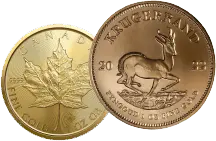
For gold and silver collectors, this matters because the numismatic premium on a key date can far exceed the metal’s spot value. A gold coin worth roughly $4,125 in melt value (at current spot, at the time of writing) might carry a numismatic premium of 5x to 20x that figure if it happens to be a key date in strong demand. Early Libertad and Krugerrand special editions, particularly from their first years of production, follow this same pattern.
Strategic Buying: Build Around the Key Date First
Most new collectors make the same mistake. They buy common dates because they are affordable and available, then discover years later that the key date has become too expensive to justify. Avoid this entirely by reversing the order.
When a high-quality key date appears at a coin show or auction, move quickly. These coins sell fast. Hesitation usually means losing the piece to another collector who did their research in advance.
Grading and Condition: Why They Multiply Value
A key date in Good-4 condition is still a key date. It will complete your set. But the same coin in Mint State-65 might be worth 50 times more, because condition rarities – key dates in exceptional preservation – are the rarest of all.
Grading is not guesswork. PCGS and NGC use standardized scales to assign numerical grades. A coin in a graded holder carries a clear, defensible value. For any key date purchase above a few hundred dollars, professional grading is worth the cost. It protects you on both ends: when you buy and when you eventually sell.
Accurate Precious Metals is an NGC Authorized dealer, which means our team can guide you through the submission process. If you are unsure what to expect from a professional appraisal, the coin dealer appraisals guide walks through the process clearly.
Avoiding Common Mistakes and Misconceptions
Several misconceptions trip up new collectors regularly.
“All rare coins are key dates.” Not true. A coin can be genuinely scarce without being the primary blocker in a set. Key dates are defined by their role in the series, not just their rarity in isolation.
“You need a high-grade example to own a key date.” You do not. A lower-grade key date still completes your set. The tradeoff is value – lower grades are significantly cheaper, which makes them accessible entry points.
“Key dates are only found in old series.” Modern bullion programs have produced their own key dates. First-year issues and low-mintage proof editions from major mints have developed genuine scarcity over time.
“The metal value matters most.” For key dates, it rarely does. Numismatic value drives the price. A silver key date dime contains less than a dollar’s worth of silver at current spot prices (about $61/oz at the time of writing). Its collector value may be hundreds of times that figure.
Selling Key Date Coins: What to Know
If you already own key date coins and are considering selling, condition documentation and professional grading make a significant difference in what you receive. A certified coin is easier to price and faster to sell because the grade is already established.
Accurate Precious Metals buys numismatic coins alongside bullion, scrap, and jewelry. If you are local to Salem, Oregon, visit us in person at our physical location for a direct evaluation. If you are anywhere else in the United States, our mail-in service makes the process straightforward – request a kit, ship your coins with insured delivery, and receive a competitive offer based on current market conditions.
Our team has more than a decade of experience evaluating coins and precious metals, and we have earned over 2,200 Google reviews from customers across the country. We are a specialized precious metals dealer – not a pawn shop – which means our evaluation focuses on numismatic and metal value, not a generic offer.
Build Your Collection the Right Way
Key dates are the foundation of any serious collection. They provide the challenge, the historical depth, and the long-term value that make numismatics worth pursuing. A collection built around its key dates tells a story. One built only from common coins is just a pile of metal.
Start by picking a series you find genuinely interesting – Lincoln Wheat Cents, Jefferson Nickels, Mercury Dimes, or Walking Liberty Halves. Research the key dates for that series. Understand why they are rare. Then build your acquisition plan around securing those coins first.
For collecting tips and tricks that go beyond key dates and cover the full range of strategies experienced collectors use, explore the resources available on AccuratePMR.com. Whether you are hunting a 1916-D Mercury Dime or building a complete set of Buffalo Nickels, the right knowledge makes every purchase more confident.
Frequently Asked Questions
What is the difference between a key date and a semi-key date?
A key date is the hardest coin to obtain in a series – the one that blocks completion of the set. A semi-key date is also rare and commands a premium, but it is slightly more available and less expensive than the true key date. Both matter when planning a collection.
Do key dates apply to gold and silver bullion coins?
Yes. While the most famous examples involve copper and nickel coins, gold and silver series have their own key dates. Early-year issues and low-mintage proof editions from programs like the American Gold Eagle or Morgan Silver Dollar can carry significant numismatic premiums above their melt value.
Should I buy a key date in low grade or wait for a higher-grade example?
It depends on your goal. A low-grade key date completes your set at a lower cost. A high-grade example carries much greater value but costs significantly more. Many collectors secure a lower-grade key date first to finish the set, then upgrade when the right coin appears at the right price.
How do I know if a mint mark on a key date coin has been altered?
Use a loupe to examine the area around the mint mark for signs of tooling, unusual texture, or inconsistent metal flow. For any coin worth more than a few hundred dollars, buying a PCGS- or NGC-certified example eliminates this risk entirely.
Can Accurate Precious Metals help me grade or sell a key date coin?
Yes. Accurate Precious Metals is an NGC Authorized dealer. We can assist with grading submissions and we buy numismatic coins directly. Visit our Salem, Oregon location in person, or use our mail-in service from anywhere in the United States.
Does the spot price of silver or gold affect key date coin values?
Minimally. Key dates are valued primarily on numismatic rarity, not metal content. Silver is about $61/oz and gold about $4,125/oz at the time of writing, but a key date coin's price is driven by collector demand, not commodity markets. The gap between melt value and numismatic value is often enormous.
Sources
Make the smart choice: invest with Accurate Precious Metals
Whether you are buying bullion for the first time or adding to a long-term position, our team offers expert guidance, transparent pricing, and a reliable buyback program.
Ready to invest wisely?