

Detect Counterfeit Gold Coins: How to Spot Fake Gold Coins

Disclaimer
Accurate Precious Metals is not a financial advisor. We encourage everyone to consult a financial advisor or CPA. They can help determine the best investment strategies. Our mission is to provide educational content about precious metals. Accurate Precious Metals is committed to transparency and reliability. They offer top-tier precious metal products and information.
This information is subject to change due to market fluctuations, world events, and factors beyond our control. Additionally, the content may not fully reflect our company’s values, as personnel, staff, and authorship may change over time.
Combating Counterfeit Gold Coins: A Comprehensive Guide to Detecting Fakes
In a market teeming with genuine and counterfeit products, gold coins are no exception. Fake gold coins are all too prevalent, and their detection can be a daunting task even for seasoned collectors and dealers. This article shines a light on how to detect counterfeit gold coins and provides insight into the mind of a counterfeiter. Reading this article will empower you with the knowledge and tools to separate real gold coins from counterfeit, ensuring you get the real deal every time.
Key Takeaways:
- Understanding the different types of counterfeit gold coins
- Practical ways to detect counterfeit gold coins
- The role of a reputable dealer in avoiding counterfeit
- Significance of coin grading and testing methods
What are Counterfeit Gold Coins?
Counterfeit gold coins are imitations of real gold coins, crafted with the intent to deceive buyers. While some are crudely made and easily discernible, others can be sophisticated enough to fool even seasoned collectors. Counterfeiters use various methods, such as altering the base metal coins or using advanced technology to replicate the original coin designs. Knowing what a counterfeit gold coin looks like is the first step to avoiding falling victim to these fraudsters.
Counterfeiters often target popular coins such as the American Gold Eagles or the Canadian Gold Maple Leaf coins because of their high demand and recognition in the market. Counterfeit gold coins can cost you financially and emotionally, especially if you are a collector. As such, it’s important to arm yourself with the knowledge and skills to identify these counterfeits.
Why is Detecting Counterfeit Gold Coins Crucial?
The impact of purchasing a counterfeit gold coin is two-fold. Financially, you lose out as the value of the counterfeit is significantly less than the genuine gold coin. Emotionally, the experience can be disheartening, particularly if you are a collector or investor. Therefore, learning to detect counterfeit gold coins is critical to protect your investment and maintain the integrity of your collection.
Furthermore, being able to detect fake coins can help maintain trust in the market. If counterfeit coins flood the market, buyers and collectors may lose faith in dealers and the market. Thus, detecting and eliminating counterfeit coins is crucial for the overall health of the gold and precious metal market.





How do Counterfeiters Operate?
Understanding the modus operandi of counterfeiters can offer insights into how to identify fake gold coins. Counterfeiters use several methods to produce fake coins. Some might use a base metal and coat it with gold, creating a coin that looks like gold but lacks the weight and properties of a real gold coin. More sophisticated counterfeiters may use advanced minting technologies to replicate the design and weight of the original coin.
Counterfeiters often focus on producing fake versions of the most common coins like the American Eagle or Morgan Dollar. These coins are in high demand, and a well-made counterfeit can pass off as genuine to an untrained eye. They also take advantage of the fact that coins minted before the 20th century did not have the level of detail and consistency of modern coins, making the counterfeit less likely to be detected.
Practical Ways to Detect Counterfeit Gold Coins
Several methods can be used to detect fake gold coins, ranging from simple tests you can perform at home to more advanced testing requiring special equipment. The magnet test, for example, is a simple and easy test. Since gold is not magnetic, a gold coin should not be attracted to a magnet. However, this is a preliminary test, and more detailed tests should be conducted to confirm the coin’s authenticity.
Another method is the ping test. When struck with a hard surface or another gold coin, a real gold coin will produce a distinctive “ping” sound due to its density and composition. A fake gold coin, on the other hand, will produce a muted and dull sound.
Role of Reputable Dealers in Counterfeit Detection
Buying from a reputable dealer like Accurate Precious Metals (accuratepmr.com) is one of the most effective ways to avoid counterfeit gold coins. Reputable dealers have established processes to authenticate the coins they sell. They also have the expertise to identify counterfeits and are more likely to be up-to-date with the latest counterfeit detection methods.
It’s essential to understand that Accurate Precious Metals is not a pawn shop; rather, it is a reputable dealer with prices that are often better than pawn shops. Whether you are located in Salem, Oregon, or any other location, you can trust Accurate Precious Metals to offer authentic coins and top-notch services.
The Importance of Coin Grading and Authentication Services
Coin grading and authentication services play a vital role in counterfeit detection. These services not only grade a coin based on its condition but also verify its authenticity. The American Numismatic Association and other similar organizations have resources and professionals trained in detecting counterfeit coins. These services are invaluable for both new collectors and seasoned investors alike.
Submitting a coin to a grading service may involve some cost and time, but the peace of mind and certainty they offer often outweigh these costs. Remember, it’s better to invest a little in authenticating your coin than to lose a lot by purchasing a counterfeit.
Investigating the Weight and Dimensions of the Coin
The weight and dimensions of a coin can often offer clues about its authenticity. Real gold coins have specific weights, measurements, and even thicknesses based on their design and denomination. A deviation from these specifications may indicate a fake. Counterfeiters may come close to replicating the design of a coin, but achieving the correct weight and size using a different metal is a much more difficult task.
However, it’s important to note that wear and tear on a coin can also cause it to deviate from its original specifications. So, while investigating weight and dimensions is an important step in detecting counterfeit gold coins, it should be combined with other tests to ensure accuracy.
Commonly Counterfeited Coins and How to Spot Them
Some coins are more likely to be counterfeited due to their popularity and value. Notable examples include American Gold Eagles, Canadian Gold Maple Leafs, and South African Gold Krugerrands. Counterfeiters are likely to target these coins as they have a high market value and are easily recognizable by a wide audience.
Knowing the specifics of these coins, such as their weight, diameter, thickness, and specific design elements, can help you spot a fake. For example, a genuine American Gold Eagle should weigh 33.93 grams with a diameter of 32.7 mm, while a real Canadian Gold Maple Leaf weighs 31.1 grams and measures 30 mm in diameter. Knowledge of these specifics is a powerful tool in the fight against counterfeit coins.
Accurate Precious Metals: Your Partner in Counterfeit Detection
Accurate Precious Metals (accuratepmr.com) is a trusted dealer with extensive experience in detecting and dealing with counterfeit gold coins. Whether you’re a seasoned collector or a first-time investor, Accurate PMR can guide you in identifying genuine gold coins, ensuring your peace of mind with every purchase.
While physically based in Salem, Oregon, Accurate PMR also provides services for non-local customers. You can mail in your gold, silver, diamonds, or jewelry with the confidence that your precious items will be treated with the utmost care and expertise.
Final Thoughts: Keep Learning, Stay Alert
The fight against counterfeit gold coins is ongoing. Counterfeiters are constantly finding new ways to deceive, so staying informed is key to protecting yourself. Always remember that if a deal seems too good to be true, it probably is. When in doubt, rely on reputable dealers and professional grading services to ensure the authenticity of your gold coins.
Key Points to Remember:
- Understanding the types of counterfeit gold coins helps in detecting them.
- Detection methods such as the magnet test, ping test, and checking the coin’s weight and dimensions are practical and effective.
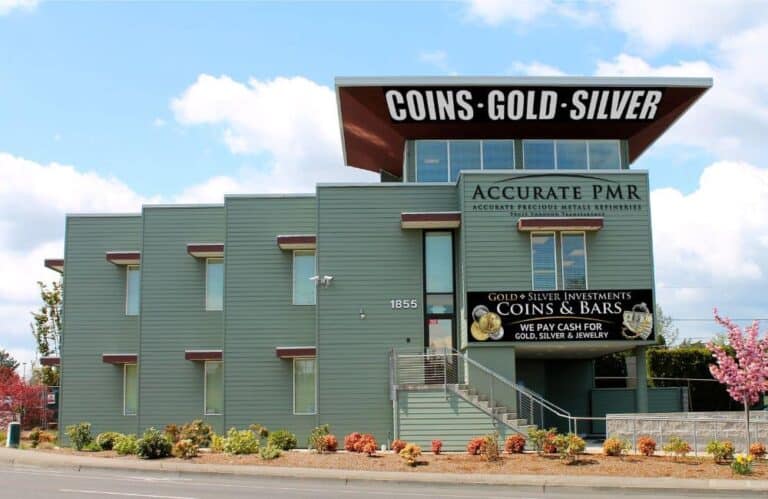
- Reputable dealers, like Accurate Precious Metals, have the expertise and resources to help you avoid counterfeits. Visit them in person at 1855 Hawthorne Ave NE, Salem OR 97301!
- Coin grading and authentication services provide valuable support in confirming a coin’s authenticity.
- Knowing the specifics of commonly counterfeited coins can help you spot fakes.
- Always stay alert and keep learning about new counterfeiting methods.
FAQs
Q: How can I detect counterfeit gold coins?
A: There are several ways to detect counterfeit gold coins. Some of the common methods include checking the weight and size of the coin, conducting a specific gravity test, examining the details and quality of the coin, using a magnetic test, and seeking the assistance of a professional coin dealer or using a fake gold coin detector.
Q: What is a specific gravity test?
A: A specific gravity test is a method used to determine the density or purity of a gold coin. It involves weighing the coin in the air and then in water to calculate its specific gravity. Genuine gold coins will have a specific gravity of around 19.3, while counterfeit coins may have a different specific gravity due to the use of different metals.
Q: Are there any specific characteristics I should look for when examining a gold coin?
A: Yes, there are several characteristics you should look for when examining a gold coin. These include checking the weight and size, examining the design and details, looking for any inconsistencies or imperfections, and comparing it to a genuine coin for reference.
Q: How can I differentiate between a genuine gold coin and a counterfeit?
A: To differentiate between a genuine gold coin and a counterfeit, it’s important to know the specific characteristics and details of the coin you’re dealing with. You can compare the weight, size, design, and overall quality of a known genuine coin. Additionally, conducting tests like the specific gravity test or using a fake gold coin detector can help determine a coin’s authenticity.
Q: Why is it important to know the weight of a gold coin?
A: Knowing the weight of a gold coin is important because genuine gold coins have a specific weight that is consistent among all coins of the same type. If a coin deviates significantly in weight, it may indicate that it is a fake.
Q: Can fake gold coins be made to look like real coins?
A: Yes, counterfeiters can make fake gold coins that closely resemble real coins. These fake coins often have similar designs and details, making it difficult to distinguish them from genuine coins without conducting thorough examinations and tests.
Q: What are some common types of counterfeit gold coins?
A: Some common types of counterfeit gold coins include fake gold American Eagle coins, fake gold bars, and counterfeit gold coins and bars from various countries. These counterfeit coins can be made from different alloys and may have a gold coating to give them the appearance of genuine coins.
Q: Where can I buy genuine gold coins?
A: Genuine gold coins can be purchased from reputable coin dealers, online marketplaces specializing in precious metals, and authorized mints. It’s important to ensure that you are buying from a trusted source to avoid purchasing counterfeit coins.
Q: How can I determine the gold content of a coin?
A: To determine the gold content of a coin, you can refer to the coin’s specifications provided by the mint or manufacturer. Genuine gold coins are usually made of pure gold or alloys with specific gold content, such as 22-karat or 24-karat gold. Counterfeit coins may have a different gold content, so it’s important to verify the authenticity of the coin before making a purchase.
Q: What is gold bullion?
A: Gold bullion refers to gold bars, coins, or ingots that are made from pure gold. These are typically used for investment purposes and are valued based on the gold content they contain.
Q: How can I spot fake gold coins?
A: There are several methods you can use to detect counterfeit gold coins. These include performing a specific gravity test, checking for weight and size discrepancies, looking for inconsistencies in the design and details of the coin, and using a fake gold coin detector.
Q: Why is it important to know how to detect counterfeit gold coins?
A: It is important to learn how to detect counterfeit gold coins to avoid being scammed or purchasing fake coins. Genuine gold coins hold value and can be a valuable investment, while fake ones are essentially worthless.
Q: Can fake gold coins be the same weight as real coins?
A: Yes, counterfeit coins can sometimes be made to match the weight of genuine coins. That’s why it’s important to use multiple methods, such as conducting a specific gravity test and examining the details of the coin, to determine its authenticity.
Q: What are some common types of counterfeit gold coins?
A: Some common types of counterfeit gold coins include fake gold American Eagle coins, counterfeit gold bars, and replica gold coins of popular bullion coins like the Krugerrand or the Canadian Maple Leaf.
Q: How can a coin dealer help in determining the authenticity of a gold coin?
A: Professional coin dealers have experience and expertise in dealing with gold coins. They can use various authentication methods to determine the genuineness of a coin, such as examining its weight, size, and design, and using detecting tools.
Q: Why is it important to buy gold coins from reputable sources?
A: Buying gold coins from reputable sources ensures that you are getting genuine coins with the correct gold content. Reputable sources have established reputations and adhere to industry standards, minimizing the risk of purchasing counterfeit or fake gold coins. Accurate Precious Metals is a reputable source for buying gold coins due to its wide selection, competitive pricing, and commitment to customer satisfaction. They offer a secure and convenient buying experience online and cater to customers nationwide. With their expertise in precious metals and transparent pricing, Accurate PMR is a trusted option for anyone looking to invest in gold coins. You can visit Accurate Precious Metals in person at 1855 Hawthorne Ave NE, Salem OR 97301, or give them a call at (503) 400-5608. Their dedicated team is ready to assist you with all your precious metal needs, whether you prefer to stop by their physical location or speak with them over the phone.

