

Are Copper Pennies Worth More Than One Cent? Uncover Now!

Disclaimer
Accurate Precious Metals is not a financial advisor. We encourage everyone to consult a financial advisor or CPA. They can help determine the best investment strategies. Our mission is to provide educational content about precious metals. Accurate Precious Metals is committed to transparency and reliability. They offer top-tier precious metal products and information.
This information is subject to change due to market fluctuations, world events, and factors beyond our control. Additionally, the content may not fully reflect our company’s values, as personnel, staff, and authorship may change over time.
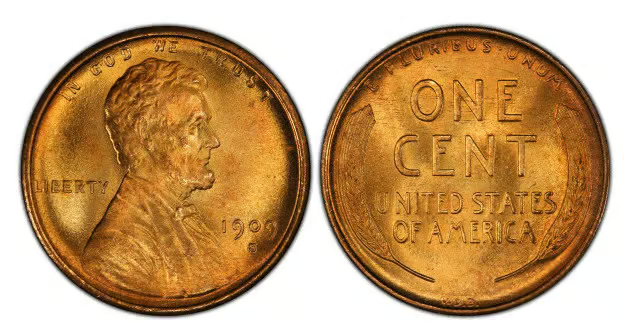
Curious about the true value of copper pennies? This article dives deep into the fascinating world of U.S. pennies, specifically focusing on their material composition, historical context, and current market value. As a coin collector or someone interested in the intricacies of currency, understanding whether these copper coins hold more than their face value is crucial. Read on to discover if your penny collection is worth more than one cent!
What Are Copper Pennies?
Copper pennies refer to U.S. one-cent coins minted before 1982, composed of 95% copper and 5% tin and zinc. The United States Mint produced these coins from 1793 until 1982, making them a significant part of American currency history. The 1982 transition to copper-plated zinc pennies, which contain only 2.5% copper, marked a substantial shift in minting practices due to the rising cost of copper.
The term “copper penny” often brings to mind the iconic Lincoln cent, which has been a staple in American pockets for over a century. These pre-1982 coins not only hold sentimental value but also a substantial copper content that can be more valuable than their face value depending on the current market price of copper. This change sparked interest among coin collectors and investors alike, leading many to question the worth of their penny collections.
Understanding the Risks of Investing in Copper Pennies
Investing in copper pennies might seem like a clever strategy, banking on the increasing value of copper and other metals. However, there are significant risks to consider before diving in.
Legal Risks
In 2006, the U.S. Government implemented strict measures to discourage the melting of pennies and nickels for their metal content. Engaging in this practice could lead to severe legal consequences, including hefty fines of up to $10,000, imprisonment for up to five years, or even both.
The Legal Stance on U.S. Coin Handling
The United States government takes the protection of its currency seriously, especially when it comes to coins made from valuable metals like copper. In 2006, due to the rising values of these metals, strict regulations were put into place regarding the melting or exporting of U.S. pennies and nickels.
Key Points to Remember:
- Prohibited Actions:
- Melting down pennies or nickels for their metal content is prohibited by law.
- Exporting these coins outside of the United States is also restricted.
- Penalties for Violation:
- Individuals caught melting or exporting these coins can face severe consequences.
- Legal repercussions include a fine that can reach up to $10,000.
- There is also the potential for imprisonment for up to five years.
- Long-Term Investment Considerations:
- Given these regulations, those interested in collecting coins for their metal value should view them as long-term investments.
- The legal restrictions should discourage any short-term plans to profit through metal extraction.
These regulations are enforced to maintain the integrity and value of U.S. currency, ensuring that coins remain in circulation and are not depleted for their raw materials.
Market Volatility
The market for metals like copper is highly volatile. Prices can fluctuate dramatically due to various factors, including economic shifts, market demand, and global trade influences. This volatility means that any investments in copper pennies could be subject to significant changes in value.
Long-term Holding
Because of these legal and market considerations, copper penny investments should be viewed as long-term commitments. The potential returns might not become evident until well into the future, and one must be prepared for the possibility of holding onto these coins for an extended period before seeing substantial gains.
Liquidity Issues
Finally, converting copper pennies back into liquid assets could be challenging. Due to the legal restrictions and niche nature of this investment, finding a market or buyer to profitably offload your pennies may not be straightforward.
In summary, while investing in copper pennies has its allure, it’s crucial to weigh the legal implications, market volatility, long-term holding considerations, and liquidity challenges before proceeding.
Investors and collectors often approach penny hoarding with a keen eye for detail and long-term potential. They focus particularly on acquiring pre-1982 pennies due to their higher copper content, making them more valuable as the metal’s price rises. This strategy involves a meticulous process of sorting through pennies to separate the copper-rich coins from those made with cheaper metals.
Collectors often seek out these coins through various channels, such as attending coin shows, visiting antique shops, or even through bulk purchases from banks. Meanwhile, investors might use online marketplaces or auctions to source large quantities. By building a substantial collection of these copper-heavy pennies now, both groups hope to see significant returns in the future.
Here’s how they typically get started:
- Research: Understand the value proposition, especially the rising copper prices and historical data.
- Sorting: Use tools like digital scales or magnifying glasses to differentiate between the high-copper and newer coins.
- Acquisition: Buy in bulk or through established platforms to efficiently expand their collection.
- Storage: Maintain the physical quality of the coins by using protective cases or vaults.
This methodical approach to hoarding pennies isn’t just about the potential monetary gain; it also involves a passion for numismatics and an appreciation for historical artifacts.
How Many Copper Pennies Were Minted?
The U.S. Mint produced a staggering number of pennies throughout its history, particularly during the late 19th and early 20th centuries. For example, in 1943, the Mint produced a steel penny due to copper shortages during World War II. However, millions of copper pennies were minted in previous years, with the peak production year being 1944 when over 1.1 billion Lincoln cents were produced.
Collectors often focus on specific years and mint marks to determine the rarity and value of their pennies. For instance, pennies dated before 1982 are sought after due to their higher copper content. The more significant the production numbers for a specific year, the less valuable those coins typically are in terms of collector interest. However, rarer coins, such as the 1909-S V.D.B. penny, can fetch high prices at auctions, further emphasizing the importance of understanding what makes certain pennies more valuable than others.





What Is the Value of Copper Content in Pennies?
Their article provides a more detailed and methodical approach to answering the question “How much is a copper penny worth?” by offering a precise formula for calculating the value of the copper content in a penny. Here’s how it achieves this more thoroughly:
- Formula Presentation: Their article gives a specific formula to calculate the meltdown value of a penny. This formula includes variables like the price of copper per pound, the weight of the penny, and the percentage of copper in the penny. By showing the exact calculation process, it enables readers to understand and apply the formula themselves.
- Filled-in Example: The article provides an example with unchanging values filled in, which serves as a practical illustration of how the formula is used. This step-by-step breakdown can be especially helpful for those unfamiliar with such calculations.
- Comparison to Other Coins: It extends the explanation to other coins, mentioning that the same method can be applied by substituting copper’s values with those of the predominant metal in other coins. This adds depth to the explanation by indicating the formula’s broader applicability.
In contrast, Your article offers a more general overview:
- It provides a snapshot of the current market value of copper and a brief calculation of the copper content’s worth in a penny.
- While it effectively communicates the point that pre-1982 pennies are worth more than their face value due to copper content, it lacks the detailed breakdown and formulaic approach found in Their article.
Overall, Their article gives readers the tools to independently verify and calculate the value, making it a more comprehensive answer to the question.
Calculating the Meltdown Value
To understand the calculation behind these values, you can use the following formula:
- (price of copper per pound x weight of penny x percentage of penny that’s copper) / number of grams in a pound = value of copper in a penny
Plugging in the numbers gives you:
- (price of copper per pound x 3.11 grams x 0.95) / 453.59 grams = value of copper in a penny
This formula breaks down the components involved in determining the penny’s value purely based on its copper content. By substituting different metal prices and weights, you can apply a similar calculation to other coins.
Applicability to Other Coins
The same principle applies to coins predominantly made of other metals. For coins like the mostly zinc penny, simply replace copper’s values with those of zinc or the primary metal. This flexibility allows collectors to assess the potential value of a wide range of coins based on their metal content rather than face value.
By understanding both the market dynamics and the mathematical calculations, you can make informed decisions about the potential profitability of collecting or selling pre-1982 copper pennies.
Are Zinc Pennies Worth Less Than Copper Pennies?
Zinc pennies, minted from 1982 onwards, contain only 2.5% copper and 97.5% zinc. This significant difference in metal composition leads to a lower intrinsic value compared to their copper counterparts. While zinc pennies still serve as legal tender, their worth primarily lies in their face value of one cent.
Coin collectors often overlook zinc pennies due to their lack of copper content. However, some rare zinc pennies, such as the 1982-D small date penny, can be valuable due to minting errors or low production numbers. Generally, though, most zinc pennies do not carry the same collectible value or intrinsic metal value as copper pennies.
Since 2000, zinc prices have experienced fluctuations, reaching a notable high of $2.06 per pound in November 2006 before declining. By December 10, 2019, the price had settled at $1.02 per pound. This shift in zinc value directly impacts the worth of the zinc in post-1982 pennies, which contain 2.43 grams of zinc each. At the 2019 zinc price, the zinc content equates to roughly six-tenths of a cent per penny.
These changes highlight how market dynamics can influence not only industrial applications but also everyday items like coins. The value of zinc is crucial for determining whether the metal content of a penny is worth more or less than its face value.
How to Identify Copper Pennies?
Identifying copper pennies involves checking the date and understanding their composition. Any penny minted before 1982 is a copper penny, while those produced in 1982 can be either copper or zinc, depending on the minting date and type. To determine if a penny is copper, collectors can weigh the coin. Pre-1982 pennies weigh 3.11 grams, while zinc pennies weigh 2.5 grams.
Additionally, collectors can conduct a simple magnet test. Copper pennies will not be attracted to a magnet, while steel or zinc pennies may show some attraction. This method quickly helps collectors sort through their collections and identify which coins are worth more due to their copper content.
Challenges of Collecting and Storing Large Quantities of Pennies
Collecting a large number of pennies might seem like a fun or quirky endeavor, but it comes with its own set of challenges. Here’s what you might face when embarking on this copper-filled journey:
Sheer Volume and Weight
- Massive Quantity: Gathering sizeable amounts quickly adds up. For instance, accumulating $10,000 in pennies means handling a whopping 1 million coins.
- Heavy Load: Pennies are surprisingly hefty. Imagine moving or storing the significant weight of thousands or even millions of these small coins.
Storage Challenges
- Spatial Constraints: Finding enough space to house such a voluminous collection can be daunting. This is not just about needing physical room but also ensuring structural safety, especially considering the heavy load.
- Secure Housing: Large quantities of coins require secure storage to prevent theft or loss. Investing in a sturdy, lockable container or safe becomes a necessity.
Organizational and Handling Issues
- Sorting and Counting: Keeping track of so many individual coins can quickly become a logistical nightmare. Accurate counting and sorting demand time, patience, and possibly even specialized equipment.
- Access and Mobility: If you ever need to transport these pennies, logistics become complex. Moving such dense and valuable cargo is not easy and may require special arrangements.
Collecting pennies in bulk can be an interesting venture, but it’s important to prepare for the practical implications that come with storing and managing such a vast collection.
How to Acquire Copper Pennies
If you’re interested in collecting copper pennies, there are a few strategies you can consider:
- Visit Local Banks: Head to your nearest bank and request rolls of pennies. While you’ll receive them at face value, be prepared to spend some time sorting through them to separate the copper ones from the rest.
- Network with Small Businesses: Many small businesses handle a lot of cash transactions and often have rolls of coins. Establish a relationship and ask if you can purchase pennies directly from them.
- Coin Roll Hunting: Dedicate some time to coin roll hunting. Buy penny rolls in bulk and sort through them at your convenience. While it’s labor-intensive, it can be rewarding if you enjoy the hunt.
- Online Marketplaces: If you prefer a quicker method, look for sellers on online marketplaces who offer pre-sorted copper pennies. Keep in mind, you’ll likely have to pay a premium for the convenience of not having to sort the pennies yourself.
- Coin Shows and Clubs: Attend local coin shows or join coin collecting clubs. Here, you might find fellow enthusiasts who are willing to trade or sell copper pennies.
By applying these methods, you’ll be able to increase your collection of copper pennies, whether through patience with sorting or by spending a little extra for sorted batches.
Why Finding Pre-1982 Pennies Might Get Tougher
Tracking down pre-1982 pennies could soon become quite a challenge. One key reason is the rising value of copper. These older coins are composed of 95% copper, a metal that has seen its price climb over the years. As copper becomes more valuable, interest in these coins is escalating.
Factors Contributing to Scarcity
- Investor Interests: Many investors are snapping up these pennies as a hedge against inflation, banking on copper’s increasing worth.
- Collector Demand: Coin collectors treasure these historical pennies, adding them to their collections, further reducing the number in circulation.
- Melting for Value: Though currently illegal in some areas, there’s a temptation to melt these coins down for their metallic content, which diminishes their availability.
In summary, economic trends and collector passions are driving a surge in demand, making pre-1982 pennies harder to come by as time goes on.
What Are the Most Valuable Copper Pennies?
Some copper pennies are worth significantly more than their face value due to rarity, historical significance, or collector demand. However, there are other factors that contribute to a penny’s value beyond these elements.
Material Composition and Market Influence
Pennies minted before 1982 were composed of 95% copper, a material whose value has surged since the turn of the century. This increase in copper prices means that the intrinsic, or meltdown, value of these older pennies can exceed their face value. The price of copper, like many commodities, is subject to market fluctuations, which affects the current value of these coins.
Rare and Collectible Pennies
The 1943 copper penny, for instance, is one of the most sought-after coins among collectors, as it was mistakenly minted in copper instead of the intended steel. A single 1943 copper penny can fetch tens of thousands of dollars at auction, making it a prized possession for any collector.
Other valuable copper pennies include the 1909-S V.D.B. Penny and the 1914-D penny. These coins command high prices due to their limited production and unique characteristics. Collectors often seek out these rare coins to enhance their collections, emphasizing the importance of understanding the market and the factors that contribute to a penny’s value.
Understanding the Broader Picture
It’s crucial to recognize that a penny’s worth can be influenced by both its material composition and collectible status. By considering historical production changes and current commodity prices, one gains a comprehensive understanding of why some pennies are worth more today than their face value.
Can You Sell Copper Pennies for Their Metal Value?
Their article provides a more direct and thorough explanation of why the value of the copper penny has increased since 2000. It specifically addresses the key factor contributing to this rise: the increase in the price of copper.
Pennies minted before 1982 were made from 95% copper, and since 2000, the price of copper has risen dramatically. This increase in copper prices elevates the meltdown value of these pennies beyond their nominal face value.
Additionally, Their article touches on the broader context of commodity prices and market volatility, which further affect the value of copper pennies. It highlights how the prices of most commodities have risen substantially since the turn of the century, making even the coins in your pocket or piggy bank potentially more valuable today. This combination of detailed explanation and broader economic context provides a comprehensive understanding of the factors influencing the value of copper pennies.
In contrast, Your article focuses more on the potential for selling copper pennies based on their metal value and the costs associated with producing pennies. While it mentions the rising costs of materials like copper, it does not explicitly connect these rising costs to the increase in the value of copper pennies since 2000. Instead, it emphasizes the sales aspect and production costs, leaving out the detailed explanation of why the intrinsic value of copper pennies has increased over time.
What Is the Cost to Make a Penny?
Their article addresses the potential future of U.S. Penny production by directly mentioning the U.S. Mint‘s consideration of halting penny production due to high minting costs. It provides a broader context by noting that many other countries have already eliminated their versions of the penny. This comparison offers insight into a possible trajectory for the U.S. Penny, suggesting that such a move is feasible and may be imminent.
Furthermore, Their article touches on the legal implications by speculating that if the penny is discontinued, it might become legal to melt the coins for their copper content. This adds an additional layer of information regarding what could happen to existing pennies if production ceases.
- Potential Legal Change: If and when the U.S. Penny is abandoned, it is likely to become legal to melt the coins down for their copper content. This potential policy change highlights a practical outcome, transforming the penny from a currency to a source of raw material.
By weaving these elements together, the article paints a comprehensive picture of the possible future for the U.S. Penny. From international comparisons to potential legal shifts, it provides a well-rounded view of the implications of stopping penny production.
In contrast, Your article primarily focuses on the cost of penny production and the debate surrounding it. While it mentions the rising production costs and hints at discussions about eliminating the penny, it doesn’t explicitly address the potential legality of melting pennies or provide a comparative analysis with other countries. As a result, Their article offers a more comprehensive view of both the potential production changes and legal considerations for the penny’s future.
What Should Collectors Look For?
Collectors interested in copper pennies should focus on several key factors. The year of minting, mint mark, and condition of the penny play significant roles in determining its value. Coins in excellent condition or with unique features, such as errors or rare dates, often command higher prices among collectors.
Additionally, understanding market trends and prices for copper can help collectors estimate the potential worth of their collections. Keeping abreast of news in the numismatic community allows collectors to make informed decisions about buying or selling their copper pennies.
Frequently Asked Questions
Q: Are all pennies made of copper worth more than one cent?
A: Not all pennies made of copper are worth more than one cent. Only specific coins, particularly those minted before 1982, are primarily made of copper, while those minted after are typically made of copper-plated zinc.
Q: What is the significance of the year 1982 in relation to pennies?
A: The year 1982 is significant because it marks the transition in penny composition. Before 1982, pennies were made of 95% copper and 5% zinc, while after that, they were primarily made of copper-plated zinc.
Q: How can I tell if my penny is made of copper or zinc?
A: You can identify the composition by checking the date. Pennies minted before 1982 are mostly made of copper, while those minted in 1982 and later are primarily made of zinc with a thin copper plating.
Q: What are the most valuable pennies made of copper?
A: Some of the most valuable pennies made of copper include the 1943 steel penny, the 1856 Indian Head cent, and certain 1982 pennies that were mistakenly struck on copper planchets.
Q: Why were pennies made of copper changed back to bronze?
A: Pennies were changed back to bronze in 1982 due to rising copper prices, which made it more expensive to produce coins made from pure copper. The U.S. Mint opted for a more cost-effective copper-plated zinc formula.
Q: Are 1982 pennies worth more than one cent?
A: Some 1982 pennies might be worth more than one cent, especially if they are the rare varieties made on copper planchets instead of zinc. Collectors often pay a premium for these unique coins.
Q: Is it illegal to melt down pennies made of copper?
A: Yes, it is illegal to melt down pennies made of copper for their metal value. The U.S. Mint prohibits the melting of coins to preserve their face value and prevent the loss of coins from circulation.
Q: What is the current value of a penny currently made of copper?
A: The current value of a penny made of copper can vary based on collector demand and condition. While its face value is one cent, certain copper pennies, especially those from before 1982 or rare varieties, can be worth significantly more.
Q: How much copper metal is in a copper cent from before 1982?
A: A copper cent from before 1982 contains approximately 95% copper and 5% zinc, making it a valuable piece for collectors interested in the metal content. Each of these pennies holds about 2.95 grams of copper. Considering that there are 453.59 grams in a pound, the copper content becomes significant when evaluated at market prices.
As of December 10, 2019, the price of copper was $2.75 per pound. This means that the copper in each pre-1982 penny is worth approximately 1.7 cents. This value is about 70% higher than the coin’s face value, illustrating the hidden worth these pennies hold beyond their nominal designation.
For enthusiasts and investors alike, the intrinsic value of these pennies is not just in their historical allure but also in their tangible worth.
Sources
“Copper Pennies: What You Need to Know.” CoinWorld. https://www.coinworld.com/news/coin-collecting/
“The Value of Copper Pennies.” PCGS. https://www.pcgs.com/
“Is it Time to Retire the Penny?” National Geographic. https://www.nationalgeographic.com/history/


