

A Practical Guide to Sell Jewelry for Cash Near Me

Disclaimer
Accurate Precious Metals is not a financial advisor. We encourage everyone to consult a financial advisor or CPA. They can help determine the best investment strategies. Our mission is to provide educational content about precious metals. Accurate Precious Metals is committed to transparency and reliability. They offer top-tier precious metal products and information.
This information is subject to change due to market fluctuations, world events, and factors beyond our control. Additionally, the content may not fully reflect our company’s values, as personnel, staff, and authorship may change over time.
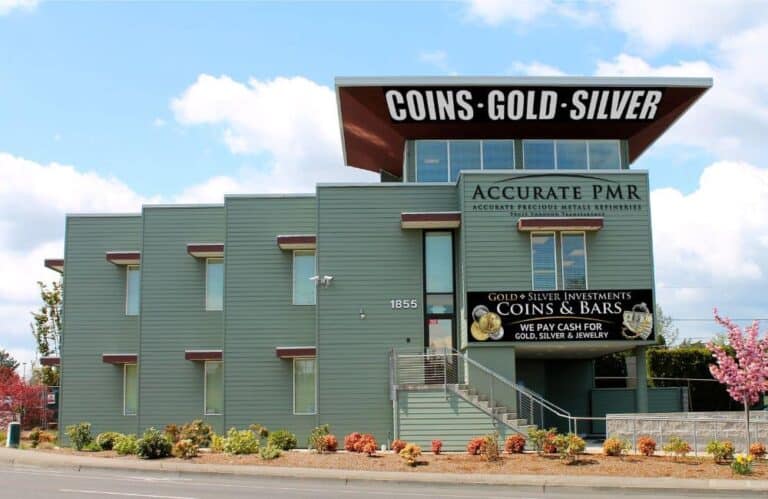
When you want to sell jewelry for cash near me, the options can feel overwhelming – pawn shops, gold buyers, estate dealers, mail-in services. The good news is that old, broken, or unwanted jewelry often holds real value, and knowing how to find the right buyer makes a significant difference in what you walk away with.
This guide breaks down exactly how scrap gold pricing works, which buyer types pay the most, and how to prepare your pieces before you sell. Whether you are in Salem, Oregon or anywhere else in the country, the same principles apply.
What Makes Scrap Jewelry Valuable
Old jewelry is not junk. It is raw material.
Gold, silver, platinum, and palladium have been used in jewelry for thousands of years because they are scarce, durable, and resistant to corrosion. Once modern commodity markets began pricing metals by weight and purity, unwanted jewelry became a recyclable resource. A scratched ring, a broken chain, a single earring – each one still contains metal that can be melted down and refined into something new.
That is why a buyer will pay cash for a piece that has no resale value as jewelry. The design does not matter. The condition barely matters. What matters is the metal content.
How Gold Purity Affects What You Get Paid
The most important number to know before you sell is the karat of your gold. Karat tells you what percentage of the piece is actually gold.
| Karat Marking | Gold Content | % Pure Gold |
|---|---|---|
| 24K | Nearly pure gold | 99.9% |
| 18K | 18 parts gold, 6 parts alloy | 75.0% |
| 14K | 14 parts gold, 10 parts alloy | 58.5% |
| 10K | 10 parts gold, 14 parts alloy | 41.7% |
The math is straightforward. A 14K ring weighing 10 grams contains about 5.85 grams of pure gold. At today’s gold spot price of roughly $4,550 per troy ounce, that 5.85 grams equals about 0.188 troy ounces – a gross metal value of around $855.
A buyer will not pay you the full $855. They need to cover refining costs, testing, overhead, and their own margin. But that number tells you the ceiling, and it helps you spot a lowball offer immediately.
Gold Scrap Value Calculator – Accurate Precious Metals Refineries
For silver jewelry, the most common marking is .925, which means sterling silver – 92.5% pure. With silver spot around $78 per ounce, sterling pieces can still add up, especially flatware, heavy chains, or large cuffs.
Platinum and palladium appear less often in jewelry, but both are high-value metals. Platinum spot sits near $1,960 per ounce and palladium near $1,420. If you have a piece stamped PT950 or PLAT, treat it carefully – it may be worth more than a comparable gold piece.


Scrap vs. Jewelry: Know the Difference Before You Sell
One of the most expensive mistakes a seller can make is treating a valuable piece as plain scrap. Before you hand anything over, ask yourself whether the item has value beyond its metal content.
A branded piece from Tiffany, Cartier, or Van Cleef can be worth three to five times its melt value on the secondary market. Even a mid-century piece with an interesting hallmark can attract estate buyers willing to pay a premium. Check for signatures, stamps, and maker’s marks before you decide anything is just scrap.
For a deeper look at maximizing your return on scrap jewelry, it pays to do a little homework first.
Types of Buyers and What to Expect From Each
Searching “sell jewelry for cash near me” will surface several different buyer types. They are not all equal.
Pawn Shops
Pawn shops offer walk-in convenience and fast cash. The tradeoff is price – they buy low because they need room to resell at a profit or hold the item as collateral. For maximum payout, a pawn shop is rarely the best choice.
Local Jewelry Stores and Gold Buyers
Established jewelry stores and dedicated gold buyers often pay more than pawn shops because their business model focuses on metal value rather than resale margin. Many use XRF scanners or acid testing to assess purity accurately, which means a fairer calculation for you.
Estate Buyers and Auction Specialists
If your piece has designer value, antique appeal, or significant gemstones, an estate buyer or auction house may pay well above melt value. They are not the right call for a plain 10K chain, but they can be the right call for a signed Art Deco brooch.
Coin Shops and Bullion Dealers
Coin shops sometimes buy gold and silver jewelry, particularly simple scrap. A bullion dealer is especially useful if your jewelry is straightforward – heavy chains, plain bands, or pieces where the metal content is the whole story.
Mail-In Buyers
Mail-in services let you ship your jewelry to a buyer and receive an offer remotely. Convenience is the appeal. The risk is that you are shipping valuables before you see a final number. Only use services that offer insured shipping, transparent testing, and a clear process for returning your items if you decline the offer.
How to Compare Offers Like a Pro
Getting one offer and accepting it is the most common way sellers leave money on the table. A few steps can change that.
Know your metal before you go. Look for karat stamps (10K, 14K, 18K, 925, PT950). Weigh your pieces on a kitchen scale – even an approximate weight helps you check math.
Check the current spot price. Gold is near $4,550/oz today. Silver is near $78/oz. These are your benchmarks.
Visit or contact at least two or three buyers. Prices vary more than most people expect.
Watch the process. A reputable buyer will weigh your items in front of you and explain how purity was assessed – whether by acid test, electronic tester, or XRF analysis.
Ask for the math. The buyer should be able to show you: weight x purity x spot price x their payout percentage. If they won’t show the calculation, walk away.
Separate your metals. Keep gold, silver, platinum, and costume jewelry in separate groups. Mixing them gives a buyer room to average down.
Common Misconceptions About Selling Jewelry for Cash
A few false beliefs cost sellers real money.
“Old jewelry has no value.” Wrong. Even a broken piece with no wearable life left contains metal worth real dollars at today’s prices.
“Buyers pay spot price.” They do not, and they cannot. Refining, testing, overhead, and margin all come out of the gross metal value. Expect to receive a percentage of spot – how high that percentage is depends on the buyer and the piece.
“All gold jewelry pays the same.” A 10K ring and an 18K ring of the same weight are not worth the same. The 18K piece has 75% gold content versus 41.7% for the 10K piece. The difference is significant.
“Gemstones always add value.” In a scrap transaction, small diamonds and melee stones often add nothing. Larger or higher-quality stones may be appraised separately, but do not assume every stone increases your payout.
“Pawn shops and gold buyers are the same.” Pawn shops lend money against items and also buy outright. Dedicated gold buyers focus on purchasing metal. The business models are different, and the prices often reflect that.
Safety Tips When Selling Locally
Selling jewelry in person is generally safe when you stick to established businesses. A few habits protect you further.
- Meet at a legitimate business address – not a parking lot or private residence.
- Watch the scale. Your items should be weighed in front of you on a visible, calibrated scale.
- Ask how purity is determined. Acid testing, XRF scanning, and electronic verification are all legitimate methods. Guessing is not.
- Request a written offer. A reputable buyer will put their number on paper.
- Do not rush. A buyer who pressures you to decide on the spot may not be offering a fair price.
For anyone new to selling precious metals, this guide on selling your jewelry and diamonds covers what to expect from start to finish.
In-Person vs. Mail-In: Which Is Right for You
Both options work well when you choose a trustworthy buyer. The right choice depends on your location and how much you value convenience versus in-person interaction.
| Factor | In-Person | Mail-In |
|---|---|---|
| Speed | Same-day payment possible | Typically 2-5 business days after receipt |
| Price transparency | Watch the process live | Depends on buyer’s reporting practices |
| Convenience | Requires travel | Ship from anywhere in the US |
| Risk | Low if at established business | Low with insured shipping and reputable buyer |
| Best for | Local sellers, large or complex pieces | Remote sellers, straightforward scrap |
If you are local to Salem, Oregon, visiting a physical location gives you the ability to watch every step of the process. If you are anywhere else in the country, a well-run mail-in program with insured shipping and clear terms is a practical alternative.
What Collectors Should Check Before Selling
Collectors and enthusiasts sometimes inherit or acquire pieces without knowing their full value. Before treating anything as scrap, take a few minutes.
Look for hallmarks stamped inside rings or on clasps – these identify the metal content and sometimes the maker. Designer signatures can appear as small stamps, engravings, or marks on the back of pendants and brooches. Check stones: a piece with a significant diamond or colored gemstone may warrant a separate appraisal before any sale.
Compare similar pieces on auction platforms to see recent sold prices. A piece that looks like a plain gold chain might be a signed mid-century piece worth far more intact than melted.
The guide to turning old gold into cash walks through exactly this process – identifying what you have before deciding how to sell it.
Why Accurate Precious Metals Is the Right Choice
Accurate Precious Metals has been buying and selling precious metals for over 12 years from its Salem, Oregon location. With more than 1,000 five-star customer reviews, the business has built a reputation for transparent pricing, fair offers, and a process that treats sellers with respect.
Unlike a pawn shop, Accurate Precious Metals is a specialized precious metals dealer. That distinction matters. The team evaluates jewelry based on actual metal content – assessed through trusted and transparent testing methods – and explains every step of the calculation. You see the weight. You see the purity result. You see the math.
Accurate Precious Metals buys gold, silver, platinum, and palladium in any form: broken jewelry, estate pieces, scrap chains, dental gold, silverware, luxury watches, diamonds, and more. Condition is not a barrier. A bent ring and a pristine bracelet are both welcome.
Local sellers in the Salem area can visit the physical location for an in-person evaluation and same-day offer. The address and phone number – (503) 400-5608 – are on AccuratePMR.com.
Sellers anywhere in the United States can use the mail-in jewelry program, which includes a free insured shipping kit, GIA-certified appraisals, and fast payment once the offer is accepted. There is no obligation to sell if the offer does not meet your expectations.
Whether you want to sell your gold jewelry or have a mixed lot of silver, platinum, and estate pieces, Accurate Precious Metals handles it all in one place – with pricing that reflects live spot prices and a track record that speaks for itself.
Frequently Asked Questions
How do I find a trustworthy jewelry buyer near me?
Look for established businesses with verifiable reviews, a physical address, and transparent pricing. Ask how they test purity and whether they will show you the scale. Compare at least two or three offers before deciding.
Will I get spot price when I sell my gold jewelry?
No. Spot price is the wholesale benchmark for one troy ounce of pure metal. A buyer deducts refining costs, testing, overhead, and margin. The percentage of spot you receive varies by buyer and piece type.
Does broken jewelry still have value?
Yes. A broken chain, bent ring, or single earring still contains metal. Condition affects resale value as jewelry but has little impact on scrap metal value.
How do I know if my piece is worth more as jewelry than scrap?
Check for designer signatures, hallmarks, antique or vintage characteristics, and significant gemstones. If any of these apply, get an appraisal or compare recent sold listings before selling for scrap.
Is it safe to use a mail-in gold buyer?
It can be, provided the service offers insured shipping, clear terms, and the option to decline the offer and have your items returned. Accurate Precious Metals offers all three through its mail-in program.
What metals does Accurate Precious Metals buy?
Gold, silver, platinum, and palladium in any form – jewelry, coins, bars, scrap, dental gold, silverware, luxury watches, and diamonds. Both in-person and mail-in options are available.
How is purity tested?
Reputable buyers use acid testing, electronic testers, or XRF analysis. Each method assesses the actual metal content of your piece. Accurate Precious Metals uses trusted and transparent testing methods and explains the result before making an offer.

