

9K Gold Value US Rarity: Why 9K Isn’t Common in the US

Disclaimer
Accurate Precious Metals is not a financial advisor. We encourage everyone to consult a financial advisor or CPA. They can help determine the best investment strategies. Our mission is to provide educational content about precious metals. Accurate Precious Metals is committed to transparency and reliability. They offer top-tier precious metal products and information.
This information is subject to change due to market fluctuations, world events, and factors beyond our control. Additionally, the content may not fully reflect our company’s values, as personnel, staff, and authorship may change over time.
Understanding 9K gold value US rarity starts with a simple legal fact: the United States does not recognize 9K gold as “gold” at all. Federal law sets the floor at 10 karats, which means any piece containing less than 41.7% pure gold cannot legally be stamped or marketed as gold in this country. That single rule explains why you almost never see 9K jewelry on American store shelves – and why finding a piece marked “375” or “9K” in the US almost always means it was imported from the UK, Ireland, or Australia.
That does not make 9K gold worthless. Far from it. At the time of writing, with gold spot at $4,070 per ounce, a full ounce of 9K gold carries a melt value of roughly $1,526. The metal is real. The gold is real. The legal barrier is what keeps it off American shelves, not any flaw in the metal itself.
What 9K Gold Actually Is
9K gold is an alloy containing 37.5% pure gold and 62.5% other metals, typically copper, silver, or zinc. The number 9 refers to 9 parts gold out of 24 total parts in the alloy. That ratio is expressed on jewelry as the stamp “375” – meaning 375 parts per thousand are pure gold.
Because of its high alloy content, 9K gold is physically harder than 18K or 14K gold. It resists scratching and bending better than higher-karat options, which makes it practical for everyday rings and chains. The trade-off is color. The elevated copper content gives 9K gold a slightly brassy, muted yellow tone compared to the richer color of 18K or 22K pieces.
In the UK, Ireland, and Australia, 9K is the legal minimum for jewelry to be sold as gold. It is a mainstream product in those markets – affordable, durable, and widely available. In the US, it occupies a legal gray zone that keeps it almost entirely off the market.
The Melt Value of 9K Gold
The melt value of any gold piece is calculated from the spot price and the purity percentage. At the time of writing, gold spot is $4,070 per troy ounce.
The math for 9K:
- $4,070 x 0.375 = $1,526.25 per troy ounce of 9K gold
- $4,070 ÷ 31.1035 ≈ $130.85 per gram of pure gold
- $130.85 x 0.375 ≈ $49.07 per gram of 9K gold
- Per pennyweight (dwt): roughly $67.03
So a 10-gram 9K ring holds about $490 in melt value at current spot prices. That is real money. But spot prices move constantly – always check live prices before making any selling or buying decision.
Gold Scrap Value Calculator – Accurate Precious Metals Refineries
If you bring that same ring to a scrap buyer, expect an offer below the theoretical melt value. Dealers factor in processing costs, refining fees, and the difficulty of reselling 9K material in a market built around 10K minimums. Competitive offers for 9K scrap in the US typically land somewhere between $43 and $49 per gram depending on the buyer and current market conditions.




Why US Law Blocks 9K Gold
The primary reason 9K gold is rare in the US is the National Gold and Silver Stamping Act and Federal Trade Commission (FTC) guidelines. Together, these rules prohibit any jewelry seller from stamping or describing a piece as “gold” unless it meets the 10K minimum – 41.7% pure gold.
Under those rules, 9K gold at 37.5% purity falls below the legal threshold. A seller who stamps it “9K Gold” or markets it as gold is committing a deceptive trade practice. The FTC treats sub-10K gold-colored alloys similarly to brass from a labeling standpoint.
| Standard | US | UK / Australia |
|---|---|---|
| Minimum karat for “gold” label | 10K (41.7%) | 9K (37.5%) |
| Can sellers stamp “9K”? | No – illegal | Yes – standard |
| Consumer preference | 14K or 10K | 9K accepted widely |
| Legal consequence of selling below minimum | Deceptive practice violation | N/A |
Because of this legal wall, American jewelers simply do not source or manufacture 9K pieces for the domestic market. There is no commercial incentive to import something that cannot legally be called what it is.
For a broader look at how karat purity affects gold’s worth, the relationship between karat number and actual gold content shapes every buying and selling decision in this market.
How 9K Compares to 10K and 14K
American consumers encounter 10K and 14K gold constantly. Understanding where 9K sits relative to those standards clarifies why the US market drew the line where it did.
- 9K vs. 10K: The difference in pure gold content is only 4.2 percentage points, but that gap crosses a legal threshold in the US. A 10K piece can be stamped and sold as gold; a 9K piece cannot. In terms of melt value at $4,070 spot, 10K gold is worth about $53.60 per gram versus $49.07 for 9K – a difference of roughly $4.50 per gram.
- 9K vs. 14K: 14K gold contains 58.3% pure gold, giving it a melt value of about $76.30 per gram at current spot. That is more than 55% higher than 9K on a per-gram basis. The color difference is also visible – 14K reads as clearly yellow gold, while 9K can look slightly dull or brassy.
- 9K vs. 18K: 18K gold at 75% purity has a melt value near $98.14 per gram at current spot. The gap widens further. 18K is the dominant standard for fine jewelry in much of Europe, while 9K handles the budget end of the same markets.
If you are comparing 10K versus 14K gold value for a purchase or sale, the purity gap matters more than the karat number alone.
Where 9K Gold Shows Up in the US
Despite the legal barrier, 9K gold does appear in the American market – just not through new retail jewelry channels.
- Imported vintage pieces: Jewelry made in the UK or Australia before being brought to the US carries legitimate 9K hallmarks. A lion passant stamp (British) or other Commonwealth hallmarks confirms the piece is genuine 9K gold made legally in its country of origin.
- Estate sales and auctions: Inherited jewelry collections often include pieces acquired abroad. A grandmother’s 1950s British chain or an Australian signet ring from the 1970s might surface at an estate sale with a “375” stamp.
- Online resale platforms: Private sellers sometimes list 9K pieces without fully understanding US labeling rules. These pieces are often priced low because buyers are uncertain about their legitimacy.
- Antique jewelry dealers: Shops specializing in Georgian, Victorian, or Edwardian jewelry frequently carry 9K pieces, since 9K was the British standard throughout those eras.
Identifying 9K Gold: What to Look For
If you think you have a piece of 9K gold, start with the stamps. Understanding karat stamps and what they reveal about gold content is the fastest way to confirm what you have.
Look for “375” or “9K” stamped inside a ring band, on a clasp, or on a pendant bail. “375” is the most common mark on British and Australian pieces.
British pieces often carry a lion passant (assay mark), a date letter, and an assay office mark. Australian pieces use different regional marks. These confirm the piece is legitimate gold from a regulated market.
Real gold is dense. A piece that feels light for its size may be gold-filled or plated rather than solid 9K. Weigh it on a gram scale and compare the weight to the expected melt value.
XRF analysis (X-ray fluorescence) can identify the exact alloy composition without damaging the piece. A reputable dealer can assess purity quickly using this method.
If you are unsure, bring the piece to a qualified precious metals dealer rather than guessing. A wrong assumption about purity can cost you money in either direction.
The Collector’s Angle: Hidden Value in 9K Pieces
For collectors, 9K gold occupies an interesting niche. The low gold content keeps the melt value modest, but the historical and aesthetic value of vintage 9K pieces can exceed what the metal alone is worth.
A Victorian-era 9K gold locket from Birmingham, hallmarked in 1890, is not just a lump of metal at $49 per gram. It is a documented antique with provenance, craftsmanship, and collector demand. The same logic applies to Art Deco pieces from the 1920s and 1930s, when 9K was the dominant standard for British fine jewelry.
On the flip side, 9K gold is a “scrap headache” for US sellers. Most American refineries and scrap buyers are calibrated for 10K and above. Some buyers will reject 9K outright; others will accept it but offer lower rates because the material requires additional processing steps. Knowing this before you walk into a sale helps you set realistic expectations.
Common Misconceptions About 9K Gold
“9K gold isn’t real gold.” It is real gold. It contains 37.5% pure gold by weight. The remaining 62.5% is base metal alloy, but the gold content is genuine and measurable. Calling it fake is incorrect.
“9K gold is worthless.” At $4,070 per ounce spot (at the time of writing), a troy ounce of 9K gold holds over $1,500 in melt value. That is not worthless by any measure. It is simply less valuable than higher-karat gold.
“You can buy new 9K gold jewelry in the US.” You cannot legally buy new 9K jewelry marketed as gold in the US. Any new piece marketed as “9K gold” in an American retail setting is likely being sold in violation of FTC guidelines.
“9K gold is the same as brass.” Brass contains zero gold. 9K gold contains 37.5% gold. They may look similar in color due to copper content, but they are chemically and legally distinct materials.
“Selling 9K gold in the US is simple.” It is more complicated than selling 10K or 14K. Fewer buyers accept it, and those who do may offer lower rates. Working with a buyer experienced in all karat grades makes the process smoother.
Selling 9K Gold: Practical Options
If you have a 9K piece and want to sell it, your best outcome comes from finding a buyer who understands what it is and can assess it fairly. The factors that affect cash-for-gold value go beyond just the karat – weight, condition, and the buyer’s experience all play a role.
Accurate Precious Metals buys gold at all karat levels, including 9K pieces. With over 12 years in business and more than 1,000 five-star reviews, the team at AccuratePMR.com has the experience to evaluate imported vintage pieces, identify hallmarks, and make competitive offers based on current spot prices.
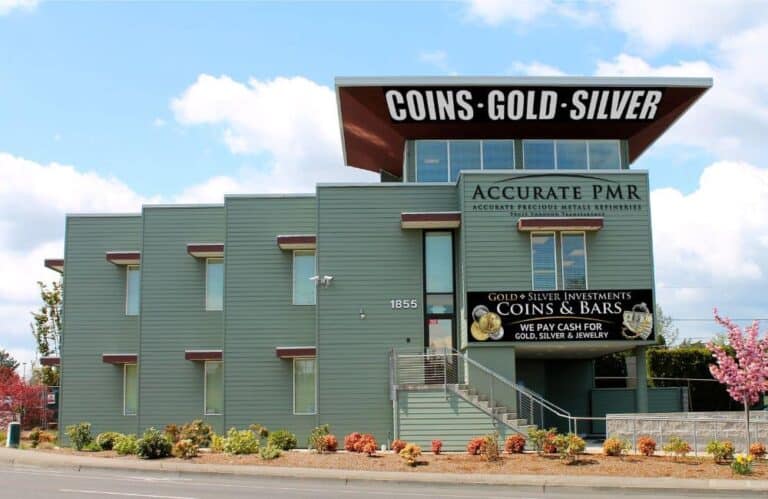
If you are local to Salem, Oregon, bring your piece in person. The team can assess it on the spot, answer questions about its origin or hallmarks, and give you a fair offer the same day.
If you are anywhere else in the US, the mail-in service makes the process straightforward. You request a free insured shipping kit, send your piece, and receive a competitive offer based on current spot prices – with fast payment once you accept. There is no need to drive to a dealer or settle for a lowball offer from a buyer who does not specialize in precious metals.
Frequently Asked Questions
Is 9K gold legal to own in the United States?
Yes. You can own and possess 9K gold without any legal issue. The restriction applies to marketing and labeling – sellers cannot legally stamp or advertise it as "gold" in the US because it falls below the 10K minimum.
How much is a gram of 9K gold worth right now?
At the time of writing, with gold spot at $4,070 per ounce, 9K gold is worth approximately $49.07 per gram in melt value. Spot prices change daily, so check live prices before making any transaction.
Why does my 9K ring say "375" instead of "9K"?
"375" is the European and British hallmarking system. It means 375 parts per thousand are pure gold – the same as 37.5%, which is the 9K standard. Both stamps indicate the same purity.
Can I sell 9K gold to a US scrap dealer?
Some US scrap dealers accept 9K gold; others do not. Those who do may offer lower rates than they would for 10K or 14K because the material is less common in the US refining pipeline. Accurate Precious Metals accepts 9K gold and makes competitive offers based on current spot prices.
How do I know if my 9K piece is real gold or gold-filled?
Look for a "375" or "9K" stamp on a solid, uninterrupted surface. Gold-filled pieces are often marked "GF" or "1/20" along with a karat number. If you are unsure, XRF testing by a qualified dealer can confirm the exact metal composition without damaging the piece.
Is 9K gold a good investment?
As a pure investment vehicle, 9K gold is less efficient than higher-karat bullion because a larger portion of its weight is base metal. For collectors, vintage 9K pieces can hold value beyond their melt price due to historical and aesthetic factors. Accurate Precious Metals does not provide financial advice – consult a qualified advisor for investment decisions.
Where can I get a fair price for my 9K gold jewelry?
Accurate Precious Metals in Salem, Oregon buys 9K gold and all other precious metals. Local customers can visit in person; customers anywhere in the US can use the mail-in service at AccuratePMR.com for insured shipping and fast payment.

