

1866, Indian Head Cent: A Scarce Civil War-Era Coin for Collectors

Disclaimer
Accurate Precious Metals is not a financial advisor. We encourage everyone to consult a financial advisor or CPA. They can help determine the best investment strategies. Our mission is to provide educational content about precious metals. Accurate Precious Metals is committed to transparency and reliability. They offer top-tier precious metal products and information.
This information is subject to change due to market fluctuations, world events, and factors beyond our control. Additionally, the content may not fully reflect our company’s values, as personnel, staff, and authorship may change over time.
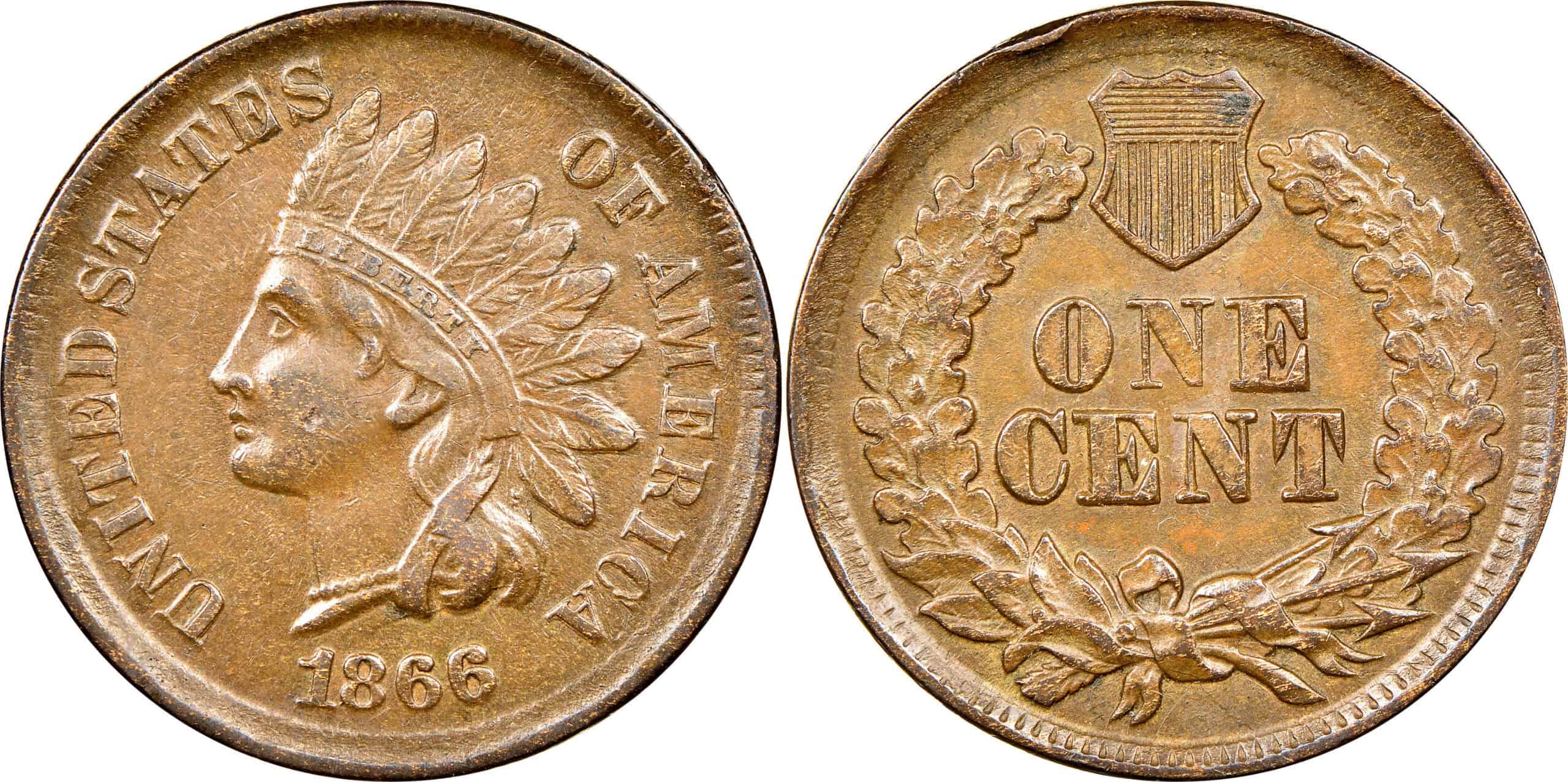
The 1866 Indian Head Cent sits at a fascinating crossroads of American history and numismatic collecting, arriving just one year after the Civil War ended and carrying with it the weight of a nation rebuilding itself. For collectors of 19th-century U.S. coinage, this date occupies a special place – scarce enough to be a genuine challenge, affordable enough in circulated grades to remain accessible, and historically charged enough to reward the research that goes into finding a quality example.
Whether you are new to Indian Head cents or a seasoned specialist hunting die varieties, the 1866 offers layers of depth that few coins in the series can match. This guide covers everything from its design and technical specs to pricing by grade, color designations, and where to buy or sell one with confidence.
Historical Background: A Coin Born from Reconstruction
The Indian Head Cent series launched in 1859, designed by James B. Longacre and replacing the short-lived Flying Eagle design. By 1866, the country was deep in the early stages of Reconstruction. The economy was unsettled, coinage was still returning to normalcy after wartime disruptions, and copper cents were circulating heavily in everyday commerce.
That context matters. Coins from this period saw hard daily use. They passed through countless hands in a country where small change was essential and savings accounts were rare. That wear is exactly why high-grade survivors are so uncommon today.
The 1866 is part of a tight cluster of scarce dates within the Indian Head series. Numismatic experts consistently group 1866, 1867, and 1868 together as approximately equal in rarity – and all three are definitively scarcer than the 1864 and 1865 issues. If you are building a complete date set of Indian Head cents, the 1866 is one of the dates that will test your patience and your budget.
Design and Physical Specifications
The obverse of the 1866 Indian Head Cent shows Liberty in profile, wearing a Native American feathered headdress with a plume extending across the crown of her head. “UNITED STATES OF AMERICA” circles the portrait, and the date appears at the bottom. It is a dignified, carefully composed design – one that has aged well and remains visually appealing to modern eyes.
The reverse features a wreath of oak and olive branches encircling the denomination “ONE CENT.” The edge is smooth, with no reeding.
| Specification | Details |
|---|---|
| Metal Composition | 95% Copper, 5% Tin and Zinc (Bronze) |
| Diameter | 19 mm |
| Weight | 3.11 grams |
| Designer | James B. Longacre |
| Mint Mark | None (Philadelphia Mint) |
| Mintage | 9,826,500 |
The bronze composition replaced the earlier copper-nickel alloy that had been used for Indian Head cents from 1859 to 1864. Bronze struck more cleanly and gave the coins a warmer color – which is one reason original red examples are so prized today.





Rarity: What the Mintage Number Does Not Tell You
Nearly 9.8 million 1866 cents were struck. On paper, that sounds like a common coin. It is not.
Survival rates for 19th-century small cents are low. Most circulated coins were used until they wore smooth, then lost or discarded. Uncirculated examples – coins that never saw pocket wear – are genuinely scarce. The 1866 ranks 54th out of 55 dates in relative rarity across all grades within the Indian Head Cent type. In grades of MS-60 or better, it ranks 47th out of 55.
Red gem examples (MS-65 Red or better) are very rare. Finding one that has retained strong original mint color across more than 150 years is a real accomplishment.
1866 Indian Head Cent Value by Grade
Condition drives pricing more than almost any other factor for this date. The jump from circulated to uncirculated is steep, and within uncirculated grades, color designation pushes prices even higher.
| Grade | Estimated Value |
|---|---|
| Good (G-4) | $73 |
| Very Good (VG-8) | $91 |
| Fine (F-12) | $103 |
| Very Fine (VF-20) | $132 |
| Extremely Fine (EF-40) | $257 |
| About Uncirculated (AU-50) | $344 |
| Uncirculated (MS-60) | $407 |
| Uncirculated (MS-63) | $556 |
| Proof (PR-63) | $438 |
These figures represent general market estimates for Brown-designated examples or standard strikes. Red and Brown (RB) coins carry premiums over Brown, and full Red (RD) examples – especially in MS-63 and above – can exceed these figures significantly.
The Proof issue is worth noting. At roughly $438 in PR-63, it is actually less valuable than a strong MS-63 business strike. Rarity and condition outweigh the proof designation alone.
Color Grades: Brown, Red and Brown, and Red
Professional grading services assign a color designation to copper coins in addition to the numeric grade. For the 1866 Indian Head Cent, this distinction matters a great deal.
Brown (BN): The most common designation. These coins have fully toned to a natural brown patina. They are the most affordable and still historically interesting.
Red and Brown (RB): These coins retain some original mint luster mixed with toning. Approximately 65% of professionally graded 1866 cents fall into this category.
Red (RD): The rarest and most desirable color. Only about 12% of graded examples qualify. Full red coins with strong original mint color are genuinely difficult to find in any grade above MS-63.
PCGS & NGC Coin Verification – Accurate Precious Metals Refineries
About 9% of graded examples receive a Cameo designation, indicating strong contrast between the design elements and the fields – a visual quality that collectors prize.
Die Varieties and Specialist Collecting
The 1866 Indian Head Cent is well-documented for its die varieties, which attract a dedicated group of specialists. The two most significant are:
1866 1C DDO FS-101: A Doubled Die Obverse, where the die shows doubling on design elements of the obverse face.
1866 1C RPD FS-301: A Repunched Date, where the date was punched into the die more than once, leaving visible secondary impressions.
Each of these varieties exists in all three color designations (Brown, Red and Brown, and Red), creating multiple collecting targets within a single year. Variety collectors often pay premiums for well-attributed examples, and the detective work involved in identifying these pieces adds an educational dimension to the hobby.
For collectors interested in the broader 1866 coinage market, the 1866-1883 Shield Nickels article covers another coin series from the same era that shares similar variety-hunting appeal.
Common Misconceptions About the 1866 Cent
“High mintage means it’s common.” Nearly 10 million coins struck does not translate to 10 million survivors in collectible condition. Most wore out. Most were lost. The ones that remain in high grades are genuinely scarce.
“Proof coins are always worth more.” The 1866 Proof at $438 in PR-63 is less valuable than a business-strike MS-63. Proof status alone does not guarantee higher value – condition and rarity of the specific coin matter more.
“The copper content drives the value.” The melt value is roughly four cents. Collectors pay for history, condition, and scarcity – not the metal itself. This is one of the clearest examples of the difference between numismatic and bullion value.
“All 1866 cents are priced the same.” A VG-8 example at $91 and an MS-63 at $556 are both 1866 Indian Head cents. Color, die variety, and grade create an enormous range of prices within a single date.
How to Evaluate an 1866 Indian Head Cent Before Buying
Look for sharp detail on the feathers of the headdress and the hair above the ear. These are the first areas to show wear.
Original red coins should show warm copper luster, not artificial brightening. Be cautious of coins that look “too clean.”
Hairlines under magnification suggest the coin was cleaned, which reduces value significantly.
Compare the date position and obverse details against published variety references if you are buying for a specialty collection.
For any coin valued above $200, professional grading from PCGS or NGC protects your investment and makes future resale easier.
The 1865 Indian Head Penny value guide offers useful comparison context – the 1865 is a slightly more common date, and seeing how the two differ in pricing helps calibrate expectations for the 1866.
Buying and Selling the 1866 Indian Head Cent
If you are selling an 1866 Indian Head Cent, the condition of the coin determines everything. A cleaned or heavily worn example will fetch significantly less than a problem-free circulated coin. Uncirculated examples, especially those in original red or red-brown color, are worth having evaluated before selling.
For collectors looking to add the 1866 to a date set or type collection, numismatic coins from reputable dealers with transparent pricing and clear grading standards are the safest route. Avoid raw (ungraded) examples in higher grades unless you have the expertise to evaluate them yourself – or are buying from a source you trust completely.
When comparing the 1866 to nearby dates in the series, the 1860 Indian Head Cent guide and the 1892 Indian Head Penny provide useful context for how rarity and pricing shift across the series.
Where to Buy or Sell Your 1866 Indian Head Cent
Accurate Precious Metals, based in Salem, Oregon, has spent more than 12 years building a reputation as one of the most trusted coin and precious metals dealers in the country. With over 1,000 five-star customer reviews and a broad inventory that spans bullion, numismatic coins, jewelry, and diamonds, Accurate Precious Metals is built for collectors and investors alike.
As an NGC Authorized Dealer, Accurate Precious Metals can assist with professional grading submissions – a meaningful advantage when you are dealing with a coin like the 1866, where the difference between a Brown and a Red designation, or between MS-62 and MS-63, can be worth hundreds of dollars.
If you are local to the Salem, Oregon area, stop in and speak with the team in person. For collectors anywhere else in the United States, the mail-in service at AccuratePMR.com makes the process straightforward – request a kit, ship your coin with free insured delivery, and receive a transparent offer backed by GIA-trained appraisers and fast payment. There is no obligation to sell.
Accurate Precious Metals buys coins in all conditions – circulated, uncirculated, raw, or professionally graded. Whether you have a single 1866 cent or a full Indian Head set, the process is the same: honest evaluation, transparent pricing, and no pawn-shop tactics.
For collectors ready to buy, the inventory at AccuratePMR.com is updated regularly with competitively priced numismatic material. Call (503) 400-5608 to ask about current availability or visit in person at the Salem location.
Frequently Asked Questions
How many 1866 Indian Head Cents were made?
The Philadelphia Mint struck 9,826,500 business-strike examples in 1866. Despite this large original mintage, high-grade survivors are scarce due to heavy circulation and low survival rates for 19th-century small change.
What is the 1866 Indian Head Cent worth?
Values range from about $73 in Good (G-4) condition to $556 or more in MS-63 uncirculated. Red-designated examples in high grades can exceed these figures. The Proof version is valued around $438 in PR-63.
What makes an 1866 Indian Head Cent rare?
The coin ranks 54th out of 55 dates in the Indian Head series for overall rarity. Most original coins circulated heavily and were lost or discarded. Mint-state examples – especially those retaining original red color – are genuinely difficult to find.
What is the melt value of an 1866 Indian Head Cent?
The coin is 95% copper and 5% tin and zinc. Its melt value is approximately $0.04. Numismatic value far exceeds melt value for all but the most heavily damaged examples.
Are there varieties of the 1866 Indian Head Cent?
Yes. The two major varieties are the DDO FS-101 (Doubled Die Obverse) and the RPD FS-301 (Repunched Date). Both exist in Brown, Red and Brown, and Red color designations and can command premiums from variety collectors.
Should I have my 1866 Indian Head Cent professionally graded?
For any example in About Uncirculated condition or better, professional grading from PCGS or NGC is strongly recommended. It protects the coin’s value, confirms the color designation, and makes future resale significantly easier.
Where can I sell my 1866 Indian Head Cent?
Accurate Precious Metals buys numismatic coins including Indian Head cents. If you are in the Salem, Oregon area, visit in person. If you are elsewhere in the U.S., use the mail-in service at AccuratePMR.com for free insured shipping and a transparent offer.
Sources
- USA Coin Book – 1866 Indian Head Cent Specifications and Pricing
- Golden Eagle Coins – Indian Head Cent Historical Context
- PCGS CoinFacts – 1866 Indian Head Cent Rarity and Population Data
- NGC Coin Explorer – 1866 Indian Head Cent Die Varieties
- Greysheet – 1866 Indian Head Cent Market Pricing
- Stack’s Bowers – 1866 Indian Head Cent Color Grade Distribution


